“I need Martín’s mother’s address,” Dolores said. “I already have it.” Carmela handed her a piece of paper.
“But be careful, ma’am. Whoever made that man disappear can make you disappear too.”
Dolores put the paper in her pocket. “At my age, Carmela, I’m no longer afraid of disappearing. I’m afraid of disappearing without having done justice.”
Five years earlier, two weeks before the tragedy, Gonzalo Fuentes’ office was on the tenth floor of a glass building in the financial center.
Sara entered unannounced with a manila folder in her hands and fire in her eyes.
“What does this mean?” she asked, throwing the documents onto Gonzalo’s desk. He looked at them without flinching. “Sara, what a surprise!”
Shouldn’t you be taking care of my niece? Don’t change the subject. I found your parents’ original will, the real one.
Ramiro was entitled to half of those lands. You forged them. Gonzalo stood up slowly, closing his office door.
Be careful with your accusations, sister-in-law. They’re very serious words. They’re not accusations, they’re facts. I hired an expert. The signature on the will you presented is forged.
The lines don’t match. I’m going to report you, Gonzalo.
I’m going to make sure Ramiro gets back what you stole from him. Gonzalo walked toward her with calculated calm. And you think anyone’s going to believe you? My partner Aurelio is a prosecutor.
My connections reach all the way to the governor. Your word against mine is worthless. I have proof. Proof can disappear, and so can people.
Sara felt the weight of the threat, but she didn’t back down. You have one week to return what you stole. If you don’t, I’m going to the police.
I go to the newspapers. I go wherever necessary.
Gonzalo smiled. That cold smile Sara had learned to fear. One week, I understand. Outside the office, someone had overheard the entire conversation.
Martín Reyes, the gardener, had come to deliver some documents and had frozen behind the door. What he had just heard could cost him his life, and he was right.
The town where Martin’s mother lived was called San Jerónimo.
It was a place forgotten by time, with dirt streets and adobe houses that seemed to be held up by a miracle.
Dolores arrived after a 4-hour journey. She found Consuelo Reyes’s house at the end of an unpaved street, next to a mango tree that shaded half the patio.
Consuelo was a 75-year-old woman with a face marked by decades of hard work and recent years of pain.
She opened the door suspiciously. “What do you want?” “I’m a lawyer. I’m investigating a case involving the Fuentes family.”
I think your son Martin can help me. Her eyes filled with tears of comfort.
My son disappeared 5 years ago. The police never looked for him.
They told me he’d probably gone to another country for work, but I know something happened to him. Martín would never have abandoned me. I had contact with him before he disappeared.
Consuelo hesitated for a moment. Then she went inside and came back with a crumpled letter. This arrived three days before she disappeared. Read it yourself. Dolores took the letter with trembling hands.
Mom, if anything happens to me, I want you to know that I saw something terrible at the house where I work, something that involves very powerful people.
I can’t say more in a letter, but I’m keeping evidence in a safe place. If anyone asks, say, “You don’t know anything. I love you.”
“Where did your son Martín keep the evidence?” Dolores asked. “I don’t know, but if Martín says he has it, he has it.”
My son never lied. Dolores looked at the modest house, the empty yard, the mango tree. Martín Reyes had seen something that night. He had proof, and someone had made him disappear, so the question was, was he still alive?
In an exclusive restaurant in the city center, Gonzalo Fuentes and Judge Aurelio Sánchez were having dinner in a private room.
The tension was palpable. “That lawyer is asking too many questions,” Aurelio said as he cut his steak.
He visited the prison, spoke with the warden, went to the home where the girl is being held, and now I know he went to San Jerónimo. Gonzalo stopped eating. San Jerónimo, why would he go there?
The gardener’s mother lives there; the one who disappeared. Martín is dead.
We made sure of that. Are you sure? We never found the body. What if he talked before we reached him?
What if he left something that could incriminate us? Gonzalo felt a cold sweat run down his back. What do you suggest? Your brother’s execution is in 48 hours.
Once that happens, the case is closed for good. No one is going to reopen an investigation into a man who’s already been executed. We need those 48 hours to pass without incident.
And the lawyer Aurelio took a sip of wine.
She’s 68 and has heart problems. Accidents happen. Older people fall. She forgets to take her medication.
He has emergencies in the middle of the night. Are you suggesting anything? I’m not suggesting anything. I’m saying you have 48 hours to resolve this issue.
How you resolve this is your business. But if that woman files a lawsuit before the execution, we’ll both be down.
Gonzalo nodded slowly. He had come too far to stop now. One more death wouldn’t change anything, it would only secure his future.
Dolores arrived home exhausted. The trip to San Jerónimo had worn her out, but what she discovered was worth every kilometer.
Martín Reyes was the key. She had proof; she just needed to find him. She checked her email before going inside. Among invoices and advertising, there was a package with no return address, a heavy, padded envelope.
He opened it carefully. Inside was a drawing. A drawing made with crayons, clearly by a very young child.
It showed a house, a figure lying on the ground, and a man standing next to it.
The man was wearing a blue shirt. At the bottom, someone had written a date: 5 years ago, three days after Sara’s death.
Dolores turned the drawing over. On the back was a message written in adult handwriting. If anyone sees this, it’s too late, but if there’s still time, keep looking.
The truth is closer than you think. Mr. Martín Reyes. D
The smells made her heart beat strongly.
Martín was alive. He had kept this drawing for 5 years waiting for the right moment and now, with the execution just days away, he had decided to act.
But why send a drawing of a little girl? What was she trying to say?
She examined the drawing again, the blue shirt, the photos Carlos had shown her. Gonzalo always wore blue shirts. Salomé had drawn what she saw that night.
At the age of 3, he had created the evidence that could save his father, and someone had kept it all this time.
Dolores needed to confirm that the drawing was authentic. She contacted an old friend, Patricia Méndez, a forensic psychologist with 30 years of experience in cases of childhood trauma.
They met in Patricia’s office the next day. Time was running out.
Less than 40 hours remained. Patricia examined the drawing with a magnifying glass, taking notes. The strokes were consistent with a child between three and four years old, she said.
The pressure of the crayon, the shape of the figures, the limited perspective. This drawing is authentic. Dolores, a young child, made it. Could it represent a real trauma?
Undoubtedly, children who witness traumatic events often process them through art.
This drawing shows a violent scene, one figure on the ground, another standing in a dominant position.
The use of the color red here indicated stains on the reclining figure. It suggests that the child understood there was blood, and the man in the blue shirt is the most significant detail.
Traumatized children remember specific elements: colors, smells, sounds. If the girl drew a blue shirt, it’s because the actual abuser wore a blue shirt. That’s a sensory memory, not a fabrication.
Dolores showed the photographs of Gonzalo that Carlos had collected.
In every single one, without exception, she wore shades of blue. Ramiro Fuentes always wore dark colors, Dolores said. Black, gray, brown, never blue. Patricia nodded.
If you can prove that the girl drew this days after the event, you have psychological evidence that she saw someone other than her father commit the crime.
It’s not legal evidence on its own, but combined with other elements it could reopen the case. Exactly. Dolores carefully kept the drawing.
I had one piece of the puzzle, but I needed more. I needed to find Martin.
Carlos arrived that night with more information. He had investigated Sara Fuentes’ past and found something crucial. Sara had a close friend, Beatriz Sánchez.
They had known each other since university. According to phone records I was able to obtain, Sara spoke with Beatriz the night before she died.
A 40-minute phone call. Beatriz Sánchez, a relative of Aurelio, his cousin, but they haven’t spoken in years. There was a family fight some time ago.
Beatriz lives on the outskirts of the city. She is a retired nurse. Dolores visited Beatriz that same afternoon.
She was a 60-year-old woman who lived alone with three cats and memories of better times. Sara called me that night, Beatriz confirmed. She was scared.
She told me she’d discovered something about Gonzalo, Ramiro’s brother, a fraud involving their parents’ will. What else did she tell me? That Gonzalo had been harassing her since before they were married.
Ramiro never knew. Sara didn’t want to cause problems between the siblings, but in recent months Gonzalo had become more aggressive.
He threatened her if she didn’t keep quiet about the will. Why did she never report this to the police? Beatriz lowered her gaze.
My cousin Aurelio visited me two days after Sara died. He told me that if I opened my mouth, he would investigate my taxes and find irregularities I didn’t know about.
He told me he could destroy my life with one phone call. I was afraid, Dolores. I was afraid and I kept quiet. And I’ve lived with that guilt for five years. Would you be willing to testify now?
Beatriz looked out the window where the sun was beginning to set. Sara was my best friend. I let her innocent husband be condemned out of cowardice.
If testifying now can fix some of the things I did wrong, I’m willing. Dolores left Beatriz’s house with a recording of her testimony and renewed hope.
But when he got to his car he noticed something strange, a black vehicle parked at the end of the street, the same model he had seen in front of his house days before.
She pretended not to notice and drove home. The black car followed her at a distance. Dolores changed her route, taking side streets.
The car was following her. Her heart was pounding, but she remained calm. In her years as a lawyer, she had faced worse threats.
Finally, it stopped in a well-lit area in front of a police station. The black car drove past, but something fell from its window as it accelerated.
Dolores waited a few minutes before leaving, picked up the object from the floor, a religious medal of the kind that mothers give to their children for protection.
It had his initials engraved on it.
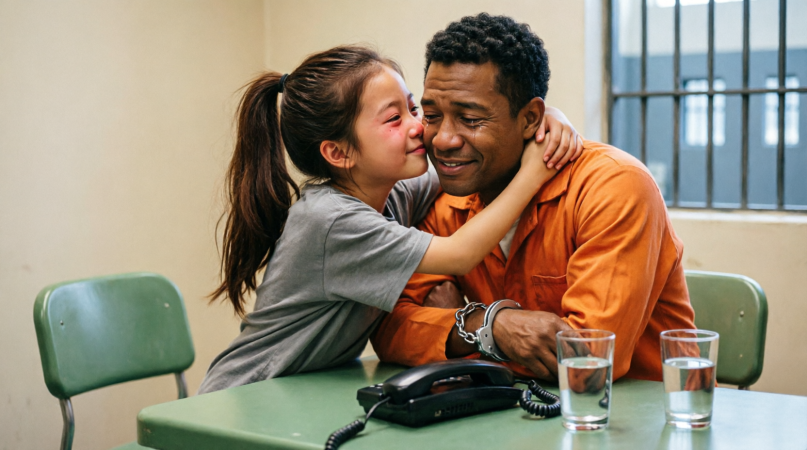
Mr. Martín Reyes. He was following her. Not Gonzalo’s men. Martín. Dolores looked around for the black car, but it had disappeared.
However, now she had one certainty. Martín was alive, he was close, and he was trying to communicate. The question was, why wasn’t he showing himself openly?
Who was she so afraid of that she preferred to remain in the shadows for five years? The answer would come sooner than she expected. That night Dolores couldn’t sleep.
He gathered all the pieces on his table: Salome’s drawing, Martin’s medal, the forged will, Beatriz’s engraving, the connections between Gonzalo and Aurelio.
Everything pointed in one direction. Ramiro was innocent. Gonzalo had attacked Sara to silence her.
Aurelio had manipulated the case to protect his partner, but something was missing: the direct testimony of someone who had seen what happened that night.
Salome couldn’t speak. Martin was hiding. Without an eyewitness, everything else was circumstantial.
The clock read 3 a.m., less than 30 hours remained until the execution.
Then Dolores’s phone rang, an unknown number. Mrs. Medina. The voice was male, trembling. Who’s speaking?
My name is Martín. Martín Reyes. I know he’s been looking for me, and I know time is running out. Dolores felt her heart stop. Where is he? Why is he hiding?
Because if they find me, they’ll eliminate me, just like they tried to do five years ago. But I can’t stay silent any longer.
They’re going to execute an innocent man, and I have the evidence to save him. What evidence?
A long silence. The night Sara died, I was there. I saw everything, and I saw something else that no one knows, something that changes everything you think you know about this case.
What did you see? Sara Fuentes didn’t die that night, Mrs. Medina. I got her out of that house before Gonzalo finished her off.
Sara is alive and has been waiting for this moment for five years. And Dolores couldn’t process what she had just heard.
Sara Viva, who spent five years in hiding while her husband awaited execution, said, “That’s impossible.”
There was a funeral, a death certificate. The body, the body was so badly damaged that identification was made through dental records, Martin interrupted.
Records that Aurelio Sánchez commissioned to be falsified. The body they buried wasn’t Sara’s. Whose was it then? A woman with no family who died that same week in a hospital.
Aurelio has contacts at the morgue. He made the switch. It was all planned to bury the case along with the alleged victim.
Dolores needed to see it to believe it. Where is Sara now? Close by, but I can’t tell you where over the phone.
We don’t know who might be listening. I need you to come to my mother’s house in San Jerónimo tomorrow. I’ll explain everything there. Time is running out, Martín.
There are less than 30 hours left. I know, that’s why I decided to speak. Sara wanted to wait until she had all the legal evidence, but there’s no time left.
If Ramiro dies, Gonzalo wins for good. And Sara has sacrificed too much to allow that.
Dolores hung up the phone, her hands trembling. If this was true, it was the most extraordinary case of her career.
A woman who faked her death to protect her daughter. An innocent husband convicted of a crime that never happened.
A brother willing to destroy everything out of greed packed a small suitcase. Tomorrow he would travel to San Jerónimo. Tomorrow he would learn the whole truth.
What he didn’t know was that someone had intercepted the call. In his cell, Ramiro Fuentes slept for the first time in years without nightmares.
His daughter’s words had ignited something in him: hope.
But that night, sleep brought back memories he had blocked for five years. He saw himself on his couch at home, drunk, about to pass out.
She heard voices, Sara’s voice, first calm, then frightened, and another voice, a voice she knew well. “You shouldn’t have gotten involved in this, Sara. I warned you,” said Gonzalo.
Ramiro tried to move in his sleep. He tried to get up to defend his wife, but his body wouldn’t respond.
The alcohol had paralyzed him. He heard a bang, a scream, silence.
Then footsteps approaching him, a hand placing something in his, the cold of metal. When you wake up, this will be over, and you’ll be the perfect culprit, brother.
Ramiro woke up drenched in sweat, screaming. The guards rushed to his cell thinking he was trying to hurt himself, but Ramiro was just repeating a phrase.
Now I remember. Now I remember everything. My brother was my brother. I heard his voice. He put the gun in my hands while I slept.
The younger guard looked at his partner
Do you think he’s telling the truth? The veteran shook his head. Everyone tells the truth when the end is near, but that doesn’t matter anymore. It mattered more than he imagined.
At the Santa María home, Carmela watched Salomé with concern. Since she stopped speaking, the girl communicated only through drawings.
He drew obsessively, filling page after page with the same image. Carmela gave him a new box of crayons.
Can you show me what you see in your dreams, little one?
Salomé picked up the crayons and began to draw. This time the drawing was different, more detailed, as if five years of maturity allowed her to express what she couldn’t before.
She drew the house, the room, a figure on the floor, another standing with a blue shirt, but she added something new, a half-open door in the background and behind it another small figure, a girl with yellow hair, herself observing everything.
And in the corner of the drawing, something Carmela did not expect: a hand sticking out of the window of the house, as if someone were helping the figure on the ground to escape.
“What is this, Salome?” Carmela asked, pointing at the hand. The girl wrote a single word beneath the drawing.
Mom. Carmela felt the air leave her lungs. Your mom escaped. Your mom is alive. Salomé looked at her with those enormous eyes that seemed to carry the weight of the world. She nodded slowly.
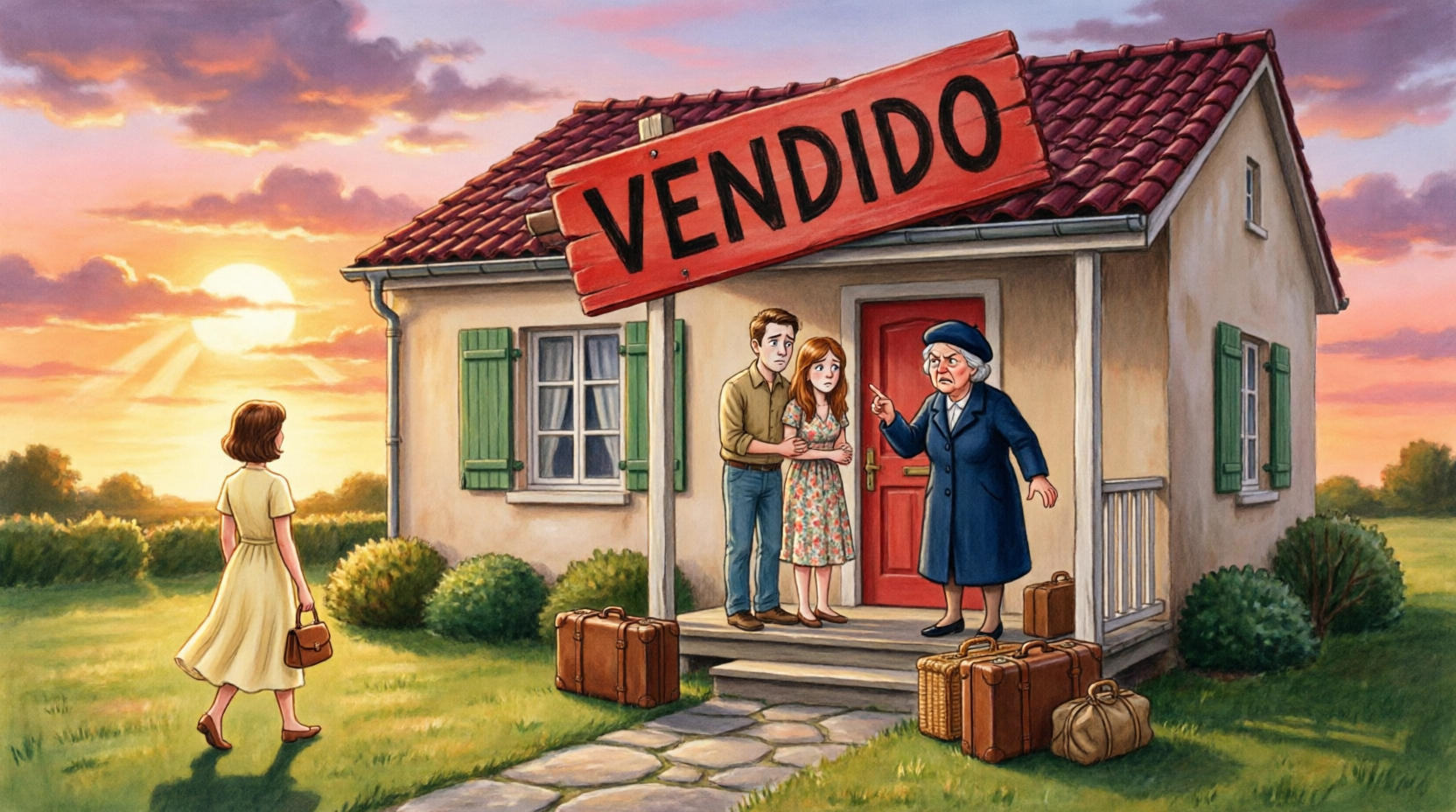
Then he wrote another hidden word and one last one, waiting. Gonzalo Fuentes arrived at the Santa María home two hours later, accompanied by two men in dark suits. He carried documents that supposedly returned temporary custody of Salomé to him.
Order from the Third Family Court, he announced, handing the papers to Carmela. Signed by Judge Aurelio Sánchez.
I’ve come to take my niece. Carmela examined the documents. They seemed legitimate, but something inside her screamed at her not to hand that girl over.
“I need to verify this with the relevant authorities,” he said.
I can’t release a minor without confirmation. The confirmation is in those papers, ma’am. Don’t waste my time. It’s not a matter of time, it’s a matter of protocol.
Gonzalo took a step forward, invading Carmela’s space. Listen carefully, that girl is my blood.
Her father is being executed tomorrow. She needs a family, not a charity home full of orphans. What that girl needs is protection, not more violence. Violence is accusing me of something.
Carmela looked him straight in the eyes. The bruises Salomé arrived with six months ago speak louder than any words I could utter. Gonzalo’s face hardened.
I can get this place shut down. I can get you to lose your license.
I can make sure she never works with children again. I just need one phone call. What Gonzalo didn’t know was that Carmela had activated the security recording system as soon as she saw him arrive.
Every word, every threat was recorded. Leave, Mr. Fuentes.
I’m not going to hand that girl over to him, and if he threatens me again, I’ll use everything I have to destroy him. Gonzalo smiled coldly. I’ll be back, and when I do, I won’t be so nice.
Three hours later, Gonzalo returned.
This time he didn’t knock. His men broke down the door. Carmela was prepared. She had called the police after the first visit, but they still hadn’t arrived.
When he heard the door slam, he took Salome by the hand and led her to the safe room he had prepared for emergencies.
Stay here, little one, no matter what happens, don’t leave until I come for you.
Salomé nodded, her eyes filled with terror. Carmela went out to confront Gonzalo.
The two men held her down while he checked every room looking for the girl.
“Where is she?” Gonzalo shouted. “Where did you hide her?” “Far from you, where you’ll never find her.” Gonzalo approached Carmela and grabbed her by the neck.
I’m going to ask you just one more time. Where is Salome?
Go to hell. At that moment, police sirens filled the air. Someone had seen the men break down the door and had called emergency services.
The officers entered with their weapons drawn.
 :
: