1. The Million-Dollar Menu
The air inside the marble foyer of L’Orchidée was thick, cloying, and aggressively expensive. It smelled heavily of imported white truffles, aged balsamic, and the unmistakable, suffocating stench of stolen money.
I stood just inside the heavy, brass-handled glass doors, feeling entirely out of place in my sensible, off-the-rack grey wool coat and practical flat shoes.
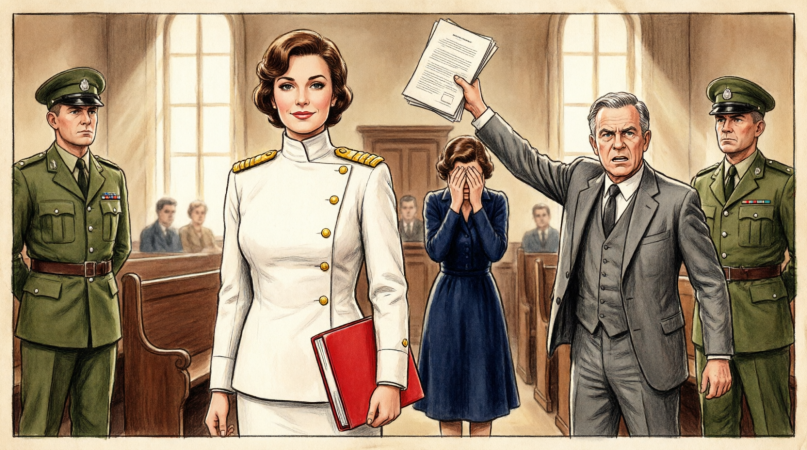
L’Orchidée was the city’s newest, most pretentious, and highly anticipated five-star dining establishment. The dining room was a sprawling, multi-tiered monument to modern opulence. Massive, custom-blown crystal chandeliers dripped from the vaulted ceilings, casting a warm, golden glow over plush velvet booths and tables set with heavy silver cutlery. The menu displayed outside boasted $150 dry-aged steaks and $500 bottles of vintage champagne.
It was a monument to my older brother Julian’s staggering, unearned ego.
But more importantly, and infinitely more devastatingly, it was a monument built entirely, brick by imported brick, upon the foundation of my stolen future.
Just two hours prior, I had been sitting in the quiet, dusty office of my late grandmother’s estate attorney. I was twenty-eight years old, a woman who worked grueling sixty-hour weeks in a windowless government office, saving every penny, driving a ten-year-old sedan. My grandmother, a sharp, fiercely independent woman who had always seen through my family’s toxic dynamics, had recently passed away.
I had gone to the lawyer’s office expecting to finally, formally initiate the transfer of the irrevocable trust fund she had explicitly, legally set up in my name when I was eighteen. The trust was intended to secure my future, to buy a home, to ensure I would never be financially dependent on the family that had always treated me like an inconvenient afterthought.
The trust was supposed to hold exactly one million dollars.
Instead, the deeply apologetic, sweating attorney had slid a thin, terrifyingly empty manila folder across his desk.
He showed me a series of heavily redacted, legally complex documents. They were withdrawal authorizations, wire transfer mandates, and a formal dissolution of the trust account.
They had all been executed exactly six months ago.
Every single document bore a signature that looked remarkably, horrifyingly similar to my own. But beneath the forged signatures was the authorizing stamp of the trust’s original, temporary custodian—my mother, Eleanor. She had exploited a microscopic, expiring legal loophole in the trust’s archaic setup language just weeks before her custodial oversight officially terminated, draining the account down to absolute zero.
Six months ago was the exact month Julian had suddenly, miraculously announced he had “secured private venture capital” to begin the massive, multi-million dollar construction on L’Orchidée.
The devastating, sickening math was undeniable. My family had cannibalized my inheritance to fund my brother’s vanity project.
I scanned the bustling, pre-dinner chaos of the restaurant lobby. I found my mother, Eleanor, standing near the polished mahogany host stand.
She was wearing a brand-new, impeccably tailored Chanel suit, her hair freshly blown out, a heavy diamond necklace resting against her collarbone. She was sipping casually from a crystal flute of vintage Moët & Chandon champagne, laughing softly with the maître d’, acting the part of the wealthy, aristocratic matriarch.
A few feet away, near the swinging doors of the kitchen, Julian was in his element. He was wearing a pristine, custom-embroidered white chef’s coat that hadn’t seen a single drop of grease. He was currently, loudly, and viciously berating a terrified teenage busboy for improperly folding a linen napkin, his face flushed with the thrill of absolute, unchecked authority.
I walked across the marble floor. My legs felt heavy, my heart hammering a frantic, erratic rhythm against my ribs.
“Mom,” I said.
My voice wasn’t a scream. It was a low, trembling vibration, thick with a terrifying mixture of profound, agonizing grief and a rapidly expanding, white-hot rage.
Eleanor stopped laughing. She turned her head slowly, her smile freezing as her eyes swept over my practical, unassuming work clothes. The aristocratic warmth vanished instantly, replaced by a look of profound, irritated disappointment. I was a stain on her perfect, expensive aesthetic.
“Maya,” Eleanor sighed heavily, setting her champagne flute down on the host stand with a sharp clink. She didn’t ask how I was. She didn’t ask why I looked so pale. “What on earth are you doing here dressed like that? We are opening the doors for the soft launch in an hour. You are completely ruining the ambiance.”
I ignored the insult. I stepped closer, invading her personal space.
“Where is Grandma’s money, Mom?” I asked, my voice cracking, the raw devastation bleeding through. “I was just at the lawyer’s office. The trust is empty. You forged my signature. You stole it.”
Eleanor didn’t flinch. She didn’t gasp in horror. She didn’t even have the basic human decency to look ashamed.
She simply rolled her eyes, letting out a sharp, patronizing scoff.
“Oh, for heaven’s sake, keep your voice down, Maya,” Eleanor scolded, glancing nervously around the lobby to ensure none of the staff were eavesdropping. “Don’t be so incredibly dramatic. Nobody stole anything.”
“It’s gone!” I hissed, tears of pure frustration pricking the corners of my eyes.
“It was reallocated,” Eleanor corrected me smoothly, her tone dripping with condescending superiority. “Julian needed capital. He had a vision for this place, Maya, a brilliant vision, and the banks were being unreasonably tight with commercial loans. You are a single woman working some boring little IT job for the government; what on earth do you urgently need a million dollars in liquid cash for? Your brother has a destiny. We simply invested your grandmother’s stagnant money into the family’s legacy. When the restaurant is profitable, I’m sure Julian will pay you back a fair percentage.”
She had justified grand larceny as a familial obligation. She truly, deeply believed that my life, my security, and my future were inherently, biologically worth less than Julian’s delusions of grandeur.
“That wasn’t an investment, Mom,” I said, the trembling in my voice suddenly stopping. The grief evaporated, leaving behind a cold, hard, terrifying clarity. “That was federal wire fraud and grand larceny. I want every single cent of that money back in my account by Friday morning, or I am walking straight into a precinct and calling the police.”
Julian, having finished verbally abusing the busboy, heard the sharp, elevated tone of my voice. He caught the word ‘police.’
He swaggered over to the host stand, wiping his clean hands on his pristine apron, a smug, incredibly arrogant smirk plastered across his handsome face.
He didn’t look worried. He looked amused.
Julian let out a loud, barking, abrasive laugh that echoed sharply off the high ceilings, drawing the curious attention of several early-arriving, wealthy diners waiting near the bar.
“Call the cops?” Julian shouted, stepping aggressively into my personal space, towering over me. He smelled of expensive cologne and stolen confidence. “Are you out of your mind, Maya? Call the cops, loser. I dare you. Let’s see exactly what happens.”
2. The Eviction of the Beggar
“Are you deaf, Maya, or just incredibly stupid?” Julian sneered, leaning in so close I could feel the heat radiating from his face. The amusement had hardened into a vicious, bullying threat.
He crossed his arms over his chest, his chef’s coat stretching over his shoulders.
“Have you conveniently forgotten who your sister is married to?” Julian asked, his voice dropping to a mocking whisper. “Chloe’s husband is Chief Sterling. He runs the entire municipal police department in this city. He plays golf with the mayor. You honestly think some beat cop at the local precinct is going to walk in here and arrest the Chief of Police’s family over a ‘misunderstanding’ about some dead woman’s old money?”
Julian laughed again, a dark, ugly sound.
“They won’t even write the report, Maya,” Julian stated with absolute, terrifying certainty. “They’ll laugh you right out of the station for wasting their time. You have absolutely no power here. You are nothing.”
As if summoned by her brother’s arrogance, Chloe materialized from the VIP lounge area near the bar.
My older sister was dressed in a slinky, silver cocktail dress, dripping in diamonds. She was married to Chief Sterling, a man twenty years her senior, a marriage brokered entirely by our mother to secure the family’s untouchable social and legal status in the city.
Chloe walked over, holding a martini glass by the stem. She didn’t look concerned by the confrontation. She looked bored.
She raised her glass toward me in a slow, highly exaggerated, mocking toast. The entire front-of-house staff, and the few wealthy patrons in the lobby, were now openly watching the spectacle.
“Maya,” Chloe drawled, her voice lazy and cruel. “If you’re going to throw a jealous tantrum because Julian is successful and you aren’t, do it outside. You’re upsetting Mother, and you look like a homeless person who wandered in off the street.”
The public humiliation was profound, coordinated, and entirely deliberate. They weren’t just stealing from me; they were actively enjoying my powerlessness.
Eleanor, bolstered by her golden children’s aggressive defense, stepped forward.
She didn’t just ask me to leave. She reached out with her manicured, diamond-ringed hand and grabbed my upper arm. Her acrylic nails dug painfully through the wool of my coat, pinching my skin.
With a sudden, surprising burst of physical force, my mother shoved me backward.
I stumbled on the slick marble floor, my sensible shoes fighting for traction, nearly losing my balance as she physically propelled me toward the heavy, brass-handled glass front doors.
She was treating me like a diseased vagrant, a threat to the pristine aesthetic of her stolen empire.
“Get out of my son’s establishment right now,” Eleanor hissed, her face contorted with a malice so pure it took my breath away. She shoved me again, forcing me out the doors and onto the cold concrete of the sidewalk.
She stood in the doorway, blocking my re-entry, looking down her nose at me with absolute, unvarnished disgust.
“We don’t serve beggars here, Maya,” Eleanor stated, her voice carrying clearly into the cool evening air for the passing pedestrians to hear. “Don’t you ever come back to this restaurant until you learn how to respect your brother’s success and appreciate what this family has accomplished.”
She stepped back inside. The heavy, tinted glass doors slammed shut in my face with a definitive, airtight thud, the automatic locks engaging with a sharp click.
I stood alone on the bustling city sidewalk. The cold, biting wind whipped my hair across my face, carrying the scent of exhaust fumes and impending rain.
I looked up through the glass. I could see them laughing. Julian was patting our mother on the back. Chloe was sipping her martini. They were celebrating their victory, entirely convinced that their corrupt connections and stolen wealth made them invincible.
I looked at the elegant, gold-leaf lettering painted elegantly across the massive front window: L’Orchidée.
I didn’t cry. I didn’t pound my fists against the glass demanding to be let in. I didn’t scream at the injustice of it all.
In that single, freezing moment on the sidewalk, the desperate, yearning daughter who had spent twenty-eight years trying to earn her family’s love died permanently. The naive girl who believed in fairness and familial loyalty was completely, violently eradicated.
What remained in her place was a woman forged entirely of cold, calculating, and absolute steel.
I reached into the pocket of my coat and pulled out my smartphone.
Julian had mocked my “boring little IT job.” Chloe had laughed at my practical clothes. They thought I spent my days fixing jammed printers or resetting passwords in a windowless government basement.
They were breathtakingly, dangerously ignorant.
They had absolutely no idea that my official, classified title was Senior Director of Forensic Cyber-Auditing for the Federal Reserve’s Financial Crimes Enforcement Network (FinCEN). I didn’t fix computers. I spent my life hunting down, freezing, and dismantling the hidden, multi-million-dollar offshore accounts of international drug cartels, corrupt politicians, and white-collar sociopaths.
Julian was right about one thing. The local police chief would never arrest him. The local precinct would have laughed me out of the building.
But I wasn’t going to call the local police. I was about to call the federal government.
And I was about to audit his entire existence into absolute oblivion.
3. The Forensic Executioner
The anger didn’t make me erratic; it made me hyper-focused.
I didn’t go home to my apartment to lick my wounds. I hailed a cab and directed the driver straight back to the towering, heavily secured federal building in the financial district.
I badged through three layers of biometric security, the familiar, sterile hum of the federal servers instantly calming my racing heart. I walked into my corner office, locked the heavy door, and sat down at my multi-monitor workstation.
I didn’t rely on screaming matches or emotional appeals. I relied on data. Data was emotionless, irrefutable, and utterly lethal.
I logged into the highly classified FinCEN database. I opened a secure, encrypted communications channel and initiated a direct video link with Special Agent Marcus Vance, the lead investigator for the FBI’s White-Collar Crimes Division in our sector. Vance and I had spent the last three years dismantling a massive, highly sophisticated real estate money-laundering syndicate. He trusted my audits implicitly.
Vance’s face appeared on my screen, looking tired but alert. “Maya. It’s late. What do you have?”
“I have a localized, high-value wire fraud and grand larceny case, Marcus,” I said, my voice dead, flat, and entirely professional. “The perpetrators utilized forged, notarized trust documents to illegally liquidate exactly one million dollars from a protected inheritance account. The funds were subsequently laundered through a series of rapid, obfuscated LLC transfers to purchase commercial real estate and operational licenses for a luxury restaurant in the downtown district.”
I didn’t tell him it was my family. To the federal government, they were simply targets.
I transmitted the digital file I had demanded from the estate lawyer earlier that day. It contained the high-resolution scans of the forged withdrawal authorizations, the routing numbers of the destination shell companies, and the final deed of trust for L’Orchidée, which was officially registered under an LLC controlled jointly by Julian and Eleanor.
Vance’s eyes scanned the documents on his end. I could hear the rapid clicking of his keyboard.
“This is sloppy,” Vance noted, his professional brow furrowing in disgust. “The routing hops are basic. The signature forgery on the primary release document is visible to the naked eye. The notary stamp they used expired two years ago.”
He looked up at the camera.
“Wire fraud across state banking lines, grand larceny of a protected trust, and forging a deceased person’s financial directives,” Vance summarized, shaking his head. “It’s a slam-dunk federal indictment waiting to happen. Give me forty-eight hours to get a federal judge to sign the warrants.”
“I don’t just want an indictment, Marcus,” I said coldly, leaning forward toward the camera. “The primary asset purchased with the stolen funds—the restaurant—is preparing for a massive, highly publicized Grand Opening Gala this Friday. They are expecting the mayor, wealthy investors, and local law enforcement. I want a full, spectacular, and highly visible tactical raid on the premises.”
Vance raised an eyebrow, recognizing the personal edge in my voice, but he didn’t question it. “A Friday night raid on a five-star restaurant? It’ll be a media circus. We’ll need absolute, airtight probable cause to freeze the operational accounts before we breach.”
“I am already initiating the financial chokehold,” I assured him.
I ended the call and went to work.
While the FBI built the criminal warrants, I utilized the full, terrifying power of my federal clearance. I flagged the primary operating accounts of L’Orchidée’s parent LLC for suspected, active money laundering under the Patriot Act.
The freeze was instantaneous and absolute.
Julian’s ability to process credit card payments through his merchant terminals, pay his high-end food vendors, or access a single cent of the restaurant’s operational capital was completely paralyzed. The bank would not notify him; the system simply locked the doors from the inside.
But I wasn’t finished. I wanted the pressure to be unbearable.
Utilizing public municipal databases, I accessed the restaurant’s initial health and safety inspection reports. Julian, arrogant and inexperienced, had rushed the construction to open faster. I anonymously, but highly specifically, flagged several severe, actionable code violations regarding the commercial kitchen’s ventilation and refrigeration systems directly to the State Health Department’s emergency response team.
I built an inescapable, multi-agency cage around my family.
They thought they were untouchable behind their corrupt police chief. They had no idea that while they were busy polishing crystal wine glasses and preparing to serve caviar, a massive, unyielding federal guillotine was being hoisted directly above their heads.
4. The Gala Raid
Three days later, Friday night descended on the city.
The sidewalk outside L’Orchidée was a chaotic, glittering spectacle. A red carpet had been rolled out over the concrete where my mother had thrown me. A velvet rope held back a small crowd of curious onlookers and local food bloggers. Valets were sprinting frantically, parking a continuous stream of luxury vehicles.
It was the highly publicized Grand Opening Gala. The event was packed to capacity with the city’s wealthy elite, prominent investors, the local mayor, and, sitting at a VIP table near the front, Chief of Police Sterling and my sister, Chloe.
Eleanor was holding court near the bar, draped in a stunning, custom-designed emerald gown that cost upwards of five thousand dollars—a dress paid for entirely by the money stolen from my future. She was laughing, sipping champagne, completely in her element.
I stepped out of a yellow cab half a block away.
I wasn’t wearing a sensible wool coat or practical flats. I was wearing a razor-sharp, tailored black power suit, my hair pulled back into a severe, uncompromising knot. In my right hand, I carried a thick, heavy leather legal folder.
I didn’t look like a beggar. I looked like the landlord arriving to collect a debt.
I bypassed the velvet rope, ignoring the protests of the bouncer, and pushed through the heavy glass doors into the deafening, opulent chaos of the restaurant.
Julian was standing on the elevated landing near the grand staircase leading to the private dining rooms. He was wearing a pristine white chef’s coat, holding a microphone in one hand and a glass of vintage champagne in the other. He was preparing to give his grand, self-congratulatory toast to his “vision.”
I walked slowly, deliberately to the absolute center of the main dining room floor.
Eleanor spotted me almost immediately.
Her joyous, aristocratic smile vanished. Her face contorted into an ugly, furious mask of pure rage. She slammed her champagne glass down onto a passing waiter’s tray and marched aggressively across the dining room toward me.
She was flanked instantly by Chief Sterling, who stood up from his VIP table, his face set in a look of bored, irritated authority, ready to throw his weight around to protect his mother-in-law’s party.
“I told you never to come back here, Maya!” Eleanor hissed, her voice vibrating with malice, reaching out to grab my arm just as she had three days ago.
I took a sharp step back, slapping her hand away with a resounding smack that turned the heads of the guests nearby.
“Don’t touch me,” I said, my voice echoing clearly in the sudden, tense quiet of our immediate area.
Eleanor gasped in shock at the physical rejection. She turned frantically to her son-in-law. “Sterling! Arrest her! Arrest her right now for trespassing and assault! She is ruining Julian’s night!”
Chief Sterling puffed out his chest, stepping forward, his hand resting casually on his belt near his holstered weapon. He looked at me with absolute, arrogant disdain.
“Ma’am,” Sterling barked, his deep voice carrying over the ambient noise of the gala. “You need to turn around and leave these premises immediately, or I will personally detain you and have you thrown in a holding cell for the weekend.”
He reached out to grab my shoulder.
“You won’t be detaining anyone tonight, Chief,” a booming, impossibly loud voice echoed from the front entrance.
The heavy glass doors of L’Orchidée didn’t just open; they were violently breached.
The red carpet outside was suddenly illuminated by the harsh, strobing red and blue lights of a dozen unmarked federal SUVs screeching to a halt on the street, completely blocking traffic.
A dozen FBI agents, wearing heavy, dark blue tactical windbreakers with the bright yellow letters FBI emblazoned across their backs, flooded into the opulent dining room. They moved with terrifying, coordinated speed, fanning out and blocking every single exit.
Behind them marched a team of stern-faced state health inspectors carrying clipboards, and three IRS-CID auditors holding heavy briefcases.
The string quartet playing on the balcony screeched to a horrific, discordant halt. The mayor, sitting near the window, dropped his silver fork, his face turning pale. The three hundred wealthy guests froze in absolute, uncomprehending terror.
“FEDERAL AGENTS! NOBODY MOVE!”
Special Agent Vance stepped into the center of the room, his voice amplified by the sheer authority of his presence. He held a thick stack of federal warrants high in the air.
Chief Sterling, his face flushing a furious, indignant red, stepped away from me and marched toward Agent Vance.
“Hey! What the hell do you think you’re doing?!” Sterling bellowed, his ego blinding him to the reality of the situation. “I am the Chief of Police in this city! This is a private, permitted event! You have no jurisdiction to storm in here like this! What is the meaning of this?!”
Agent Vance didn’t blink. He didn’t look intimidated. He looked at the local police chief with a mixture of profound pity and absolute disgust.
Vance stepped forward and aggressively shoved a copy of the federal search and seizure warrant directly into Sterling’s chest.
“The meaning, Chief,” Vance stated coldly, his voice echoing in the dead-silent restaurant, “is that this entire establishment, the building, the liquor licenses, and the operational accounts, were purchased using over one million dollars in stolen, wire-frauded federal funds. The owners are currently under indictment for grand larceny and forgery.”
Vance took a step closer, towering over the local police chief.
“So back off, Chief,” Vance growled, a lethal threat in his eyes. “Or I will arrest you right here, in front of the mayor, for obstruction of an active federal investigation.”
5. The Kitchen Nightmares
The illusion of absolute power completely shattered.
Chief Sterling went deathly pale. He looked at the federal warrant in his hands, then looked at the dozen heavily armed FBI agents surrounding the room. The arrogant, untouchable police chief realized, in a fraction of a second, that his badge was utterly worthless against the crushing weight of the federal government.
He immediately dropped his hands, taking three massive, frantic steps away from Eleanor, physically distancing himself from the blast radius of her crimes. He threw his mother-in-law completely under the bus to save his own pension and political career without a single moment of hesitation.
Up on the elevated landing, Julian stood absolutely frozen.
The microphone in his hand emitted a high-pitched squeal of feedback before slipping from his trembling fingers and hitting the floor with a loud thud. The crystal champagne glass he had been holding shattered against the stairs, spilling expensive vintage wine like blood across the marble.
The arrogant, “visionary” chef looked like a terrified child who had just been caught stealing from a candy store.
“This is a mistake!” Eleanor screamed. Her aristocratic composure entirely disintegrated into hysterical, shrill panic. She looked wildly around the room at her wealthy friends, who were now staring at her with profound horror and disgust. “This is a mistake! My son owns this restaurant! We have investors! It’s all completely legitimate!”
I stepped past the federal agents, walking calmly toward the center of the room, holding up my heavy leather folder.
“It was legitimate, Mom,” I said.
My voice wasn’t a shout, but it carried effortlessly over the dead-silent room, slicing through her hysterical screams with surgical precision.
“It was a legitimate business,” I continued, stopping a few feet away from her trembling form. “Right up until the actual owner of the stolen trust fund showed up to collect the rent.”
The FBI agents moved with terrifying, practiced efficiency. Two agents marched past me, grabbing Julian roughly by the arms as he tried to back away up the stairs. They slammed him hard against the pristine, polished mahogany host stand—the exact same spot where Eleanor had mocked my clothes and called me a beggar three days ago.
The harsh, metallic click-click of heavy steel handcuffs ratcheting around Julian’s wrists echoed loudly in the silent restaurant.
“Maya! Tell them!” Julian sobbed.
The arrogant swagger was entirely gone. He was weeping openly, tears and snot running down his face, ruining his pristine chef’s coat. He looked pathetic.
“Maya, please!” Julian begged, struggling weakly against the agents. “I’m your brother! You have a million dollars, you have a great job! You don’t need the money! I’ll pay you back from the profits! Please, Maya, I can’t go to jail! I’ll be ruined!”
I looked at the man who had laughed in my face and dared me to call the cops. I felt absolutely nothing. No pity. No sisterly affection. The emotional bond had been cauterized permanently.
“You didn’t just borrow money, Julian,” I said, my voice cold and unyielding. “You forged a dead woman’s signature to steal my future so you could buy white truffles and pretend to be a king. You aren’t a chef. You’re a thief.”
Eleanor, seeing her golden child in handcuffs, let out a horrific, animalistic wail. Her knees buckled, and she fell heavily to the floor, her $5,000 emerald gown pooling around her on the marble.
“Maya, please!” Eleanor shrieked, crawling forward on her hands and knees, reaching out with desperate, trembling hands to grab the hem of my trousers. “Please, stop them! We’re your family! I’m your mother! You can’t let them take me! I’ll do anything! Please, have mercy!”
I looked down at the woman who had shoved me out into the cold street.
“I’m sorry, Eleanor,” I said smoothly, my voice a perfect, icy replication of the exact tone she had used on me. I didn’t step back. I stood my ground, looking down at her with absolute disgust. “But we don’t serve beggars here.”
I turned my back on her sobbing, pathetic form and looked at Agent Vance.
“Take them away,” I ordered.
I turned my attention to the team of state health inspectors who were waiting near the bar.
“And have your team clear the kitchen and the storage freezers immediately,” I instructed them, assuming total control of the scene. “I want a comprehensive report on exactly how many health codes they violated. I need to know exactly how much it is going to cost me to sanitize my new property before I sell it.”
6. The Michelin Star
I watched with cold, detached satisfaction as the federal agents dragged my mother and brother out the heavy glass front doors in handcuffs.
Their hysterical screams and frantic protests faded quickly, drowned out by the harsh, wailing sirens of the federal vehicles waiting outside.
In the corner of the dining room, Chloe was sobbing uncontrollably into her hands. Her husband, Chief Sterling, was standing ten feet away from her, aggressively whispering into his cell phone, already consulting with damage control experts and divorce attorneys. He was distancing himself from her toxic, criminal family as fast as humanly possible, their marriage likely over before the night even ended.
I didn’t stay to watch the rest of the wealthy guests hastily evacuate the building, desperate to avoid being associated with a major federal fraud bust.
I walked past the shattered champagne glass on the stairs, pushing through the heavy swinging doors into the massive, state-of-the-art commercial kitchen. The stainless steel prep counters gleamed under the harsh, bright industrial lights. It was quiet now, the kitchen staff having fled or been detained for questioning.
I stood alone in the center of the empire my family had stolen from me, preparing to take a meticulous, forensic inventory of my newly reclaimed property.
A year later.
The trial of Eleanor and Julian Vance was a mere formality, a swift and brutal execution of federal justice.
Faced with the undeniable, irrefutable forensic evidence of the forged trust documents, the complex wire transfer logs, and the explicit testimonies of the bank managers they had defrauded, their high-priced defense attorneys advised them to take a plea deal to avoid decades behind bars.
Julian and Eleanor both received ten-year sentences in a federal penitentiary for grand larceny, wire fraud, and identity theft.
Chief Sterling, desperate to save his political career and his pension from the radioactive fallout of his association with them, formally divorced Chloe exactly one month after the raid. Stripped of her husband’s income, her family’s stolen wealth, and entirely alienated from her high-society social circle who treated her like a pariah, Chloe was left completely broke and isolated.
I didn’t keep the restaurant. I wasn’t a chef, and I had absolutely no desire to manage a hospitality business tainted by the memories of my family’s staggering arrogance.
After the federal government formally seized the assets and returned them to my control, I sold L’Orchidée and the building it occupied to a massive, international hospitality conglomerate. Because Julian had inadvertently chosen a prime, highly coveted piece of downtown real estate, the bidding war was fierce.
I sold the property for just over three million dollars, effectively tripling my grandmother’s original, stolen trust fund.
I used the massive influx of capital to quit my government job and expand my own, independent cyber-security and forensic auditing firm. I hired top-tier talent, secured massive corporate contracts, and built a fortress of a life that absolutely no one could ever forge a signature to steal.
It was a quiet Friday evening.
I sat on the expansive, glass-enclosed balcony of my new penthouse apartment, high above the bustling city streets. I was reviewing a quarterly financial report for my firm on a tablet, a glass of incredibly expensive, entirely legally purchased vintage wine resting on the small table beside me.
The city skyline glittered brilliantly against the dark night sky.
I took a slow, satisfying sip of the wine.
Julian had looked at me in the lobby of that restaurant and called me a loser. He had assumed that my quiet life, my practical clothes, and my lack of performative wealth meant I was weak, stupid, and easily manipulated.
He didn’t understand the fundamental truth of the world.
He didn’t understand that when you steal a million dollars from a woman who spends her entire professional life tracking invisible money across the globe for the federal government, you don’t just commit a crime. You hand her the exact, detailed, inescapable blueprint she needs to utterly destroy your entire existence.
I leaned back in my comfortable chair, feeling a profound, unshakeable sense of absolute peace.
I looked out at the sprawling city, knowing with absolute, terrifying certainty that I would never, ever have to beg for a seat at anyone’s table again.
Because I didn’t just have a seat. I owned the whole building.