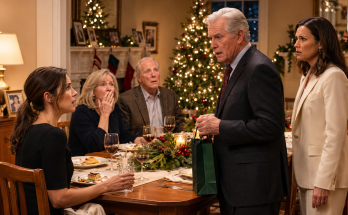
“What if the daughter I buried in my heart had never been buried at all?”
The question echoed inside my head.
For a moment, I couldn’t hear the grandfather clock.
I couldn’t hear Emily calling my name.
I couldn’t even hear my own breathing.
I was back in a hospital room in January 1978.
Thirty-three years old.
Exhausted.
Frightened.
And begging a doctor to let me hold my newborn daughter.
“Please,” I remembered whispering. “Just let me see her.”
But the doctor had shaken his head.
“I’m sorry, Mrs. Whitmore. Your baby didn’t survive.”
I remembered the white walls.
The smell of disinfectant.
Walter standing beside my bed with tears running down his face.
And the terrible emptiness of leaving that hospital without my little girl.
We had named her Grace.
Grace Elizabeth Whitmore.
I had knitted her a yellow blanket.
I had painted the nursery pale pink.
I had imagined Greg holding his baby sister.
And then, in a single afternoon, all those dreams disappeared.
For forty-eight years, I had believed she was dead.
Now Daniel stood in my living room telling me a woman had been waiting almost half a century to explain what happened to her.
“Grandma?”
Emily’s voice brought me back.
She was kneeling in front of me.
Her hands were wrapped around mine.
“Grandma, look at me.”
I stared at her.
“Grace,” I whispered.
Emily’s eyes filled with tears.
“Your daughter?”
I nodded.
“My little girl.”
Greg slowly approached.
“Mom, what are you talking about?”
I looked at him.
“You had a sister.”
His face changed.
“I know. Dad told me she died when I was little.”
I closed my eyes.
“That’s what we were told.”
Daniel stepped closer.
“Aunt Maggie, I don’t know what the woman meant. The officers only told me she insisted on speaking with you.”
I looked up.
“Then we need to go.”
Mr. Harrison raised a hand.
“Margaret, we should wait until the authorities confirm it’s safe.”
I turned toward him.
“Henry, I have waited forty-eight years without knowing whether my daughter lived or died. I am not going to ignore someone who may finally have answers.”
Rebecca nodded carefully.
“We can ask the officers to arrange a safe meeting. But we shouldn’t assume the woman’s story is true until we have evidence.”
I understood.
I really did.
A mother who has spent forty-eight years grieving learns how dangerous hope can be.
Hope can lift you.
And hope can break you.
But something deep inside me had already begun to stir.
Something I had buried with that tiny yellow blanket.
Dana suddenly spoke.
“Margaret, please.”
I turned toward her.
She was standing near the doorway.
Her face was pale.
Her hands were pressed together.
“Don’t go.”
I stared at her.
“What?”
“Don’t go to Thomas’s house.”
“Why?”
She shook her head.
“Because you’re going to hear things you don’t understand.”
I felt anger rise inside me.
“Then perhaps you should explain them.”
Dana began crying.
“I didn’t know. I swear I didn’t know.”
“Know what?”
She covered her mouth.
Greg moved toward her.
“Dana, what is going on?”
She looked at him.
And for the first time, I saw something that looked like genuine shame.
“Greg, there’s something about my childhood I’ve never told you.”
He stopped.
“What?”
She swallowed.
“I wasn’t raised by my birth parents.”
Silence filled the room.
Emily slowly straightened.
Daniel stared at Dana.
I felt a strange chill run through me.
“What do you mean?” Greg asked.
Dana wiped her cheeks.
“Richard and Evelyn Carter adopted me.”
My heart began beating faster.
Greg shook his head.
“You told me they were your parents.”
“They were. They raised me.”
“But they weren’t your biological parents?”
Dana shook her head.
“No.”
I gripped the arm of the chair.
“How old were you when they adopted you?”
Dana looked at the floor.
“I don’t know exactly.”
Greg frowned.
“How can you not know?”
“Because Richard never let me see the original papers.”
Mr. Harrison stepped forward.
“Dana, do you have an amended birth certificate?”
She nodded.
“Yes.”
“What’s your date of birth?”
“January 16, 1978.”
The room tilted.
January 16.
The day my daughter was born.
I stopped breathing.
Emily’s hand flew to her mouth.
Greg stared at his wife.
Daniel whispered, “Oh my God.”
I looked at Dana.
She was trembling.
“Margaret,” she whispered, “please don’t look at me like that.”
But I couldn’t look away.
January 16, 1978.
The same date.
The same year.
The same hospital.
Could it be?
Could the woman who had humiliated me for two years be the daughter I had mourned for almost half a century?
I pressed a hand against my chest.
“No,” I whispered.
Dana began crying harder.
“I didn’t know.”
I shook my head.
“No.”
The word came out louder.
Because suddenly I remembered something.
Something that made the entire possibility even more frightening.
Dana had a small crescent-shaped birthmark behind her left ear.
I had noticed it once when she pulled her hair into a bun.
Walter had noticed it too.
I remembered his reaction.
He went very still.
Then he left the room.
When I asked him what was wrong, he said he had a headache.
I believed him.
But our baby Grace had been born with a small crescent-shaped mark behind her left ear.
I remembered seeing it before the nurse carried her away.
It was one of the last things I saw.
My voice trembled.
“Dana.”
She looked at me.
“Yes?”
“Pull your hair back.”
She frowned.
“What?”
“Please.”
Her hands shook as she lifted her dark hair.
And there it was.
A tiny crescent-shaped mark.
Faded with age.
But unmistakable.
I covered my mouth.
The room seemed to disappear.
I could almost hear a newborn crying.
I could almost feel the yellow blanket beneath my fingers.
Then I heard Walter’s voice in my memory.
Our little girl, Maggie.
I stumbled backward.
Emily caught me.
“Grandma!”
I looked at Dana.
The woman who had threatened to send me to a nursing home.
The woman who had taken my bedroom.
The woman who had called me crazy.
And suddenly I felt the most terrible conflict of my life.
Because if she was Grace—
If she was my daughter—
Then I had spent two years being mistreated by a child I thought I had lost forever.
Greg stepped between us.
“Stop.”
His voice shook.
“Everyone just stop.”
He looked at Dana.
Then at me.
Then at Daniel.
“No. This is impossible.”
Mr. Harrison spoke carefully.
“We cannot draw conclusions from a birth date and a birthmark. We’d need to verify the records and arrange appropriate DNA testing.”
Rebecca nodded.
“Exactly. There may be other explanations.”
Greg stared at Dana.
But his face was changing.
Slowly, the same realization was reaching him.
“Dana,” he whispered, “you told me you were born in Cleveland.”
She shook her head.
“That’s what my certificate says.”
“Where were you actually born?”
“I don’t know.”
Greg looked at Mr. Harrison.
Then at me.
And his expression became one of pure horror.
“Mom…”
I couldn’t answer.
Because I was remembering Walter.
The way he sometimes stared at Dana during family gatherings.
The way he seemed uncomfortable whenever she talked about her childhood.
The way he once asked me whether I thought people could be forgiven for terrible mistakes.
I thought he meant Thomas.
Now I wondered if he had been asking about something else entirely.
Greg backed toward the wall.
“If Dana is Grace…”
He stopped.
Nobody finished the sentence.
Nobody needed to.
Because Greg and Dana were married.
And if they shared the same parents, the truth could destroy everything they believed about their lives.
Dana shook her head desperately.
“No. No, that can’t be true.”
She turned toward me.
“Margaret, tell them it’s impossible.”
I stared at her.
“I don’t know, Dana.”
“Please.”
“I don’t know.”
She sank into a chair.
Her shoulders shook.
Greg stood frozen.
For the first time that day, he didn’t look greedy.
He didn’t look angry.
He looked frightened in a way I had never seen.
And despite everything, my heart ached for him.
Because whatever sins Greg had committed, he had not chosen the circumstances of his birth.
Neither had Dana.
If someone had stolen my baby and raised her under another name, then both of them had been victims of something monstrous.
But that didn’t erase the things they had done as adults.
And I wasn’t going to pretend otherwise.
Rebecca stepped toward the table.
“There’s something important we need to address before anyone assumes a biological relationship.”
We all looked at her.
“The birth records must be examined. If necessary, a properly documented DNA test can help establish the truth.”
I nodded.
“Then let’s do it.”
Dana looked up.
Her eyes were swollen.
“What if I don’t want to know?”
I stared at her.
For the first time since she had married Greg, I saw a frightened little girl beneath the expensive clothes and carefully arranged hair.
And I realized I couldn’t force her to face something she wasn’t ready for.
“You have to decide that for yourself,” I said quietly.
She began crying again.
“But I need to know what happened to my daughter.”
Dana looked at me for a long moment.
Then she whispered, “I understand.”
A few minutes later, Daniel’s phone rang.
It was the officer handling the welfare check.
Daniel answered and listened.
His expression shifted from fear to relief.
Then to confusion.
“Yes,” he said. “She’s here with me.”
He glanced toward me.
“Yes, Margaret Bennett.”
I stepped closer.
“Daniel?”
He held up one finger.
Then nodded.
“All right. Thank you.”
He ended the call.
“The officers say my father is safe. The person who entered his house left before they arrived.”
I exhaled.
“Thank God.”
Daniel continued.
“They found him with an elderly woman who identified herself as Evelyn Carter.”
Dana stared at him.
“That’s impossible.”
Daniel nodded.
“The officers haven’t confirmed her identity yet.”
I gripped the table.
“Does she still want to speak with me?”
“Yes.”
“Then I want to speak with her.”
Daniel hesitated.
“She’s asking that you come in person.”
I looked at Emily.
She nodded.
“I’ll take you, Grandma.”
Mr. Harrison stepped forward.
“I’ll contact the officers about arranging the meeting safely.”
I agreed.
Then I turned toward Greg.
He was sitting on the sofa, his face buried in his hands.
“Greg.”
He looked up.
His eyes were red.
“Mom?”
“I need you to stay here.”
He nodded.
“But I also need you to do something.”
“What?”
“Tell Rebecca everything you know about the loan applications, the documents, and Arthur Bell.”
He swallowed.
“Everything?”
“Everything.”
Dana looked up.
“Margaret—”
I turned toward her.
“And you.”
She froze.
“If you want the truth about your childhood, you’re going to have to stop hiding the truth about what you’ve done.”
She stared at me.
Then slowly nodded.
For the first time, I saw the possibility of honesty.
Not forgiveness.
Not yet.
Just honesty.
And after two years of lies, that was something.
I packed my suitcase again.
But this time, it wasn’t because someone was sending me away.
It was because I was choosing where I wanted to go.
Emily helped me into her car.
Daniel sat in the passenger seat.
Mr. Harrison arranged to meet us at the police station near Thomas’s home, where the officers had agreed to help coordinate a conversation.
As we drove away, I looked back at the house.
Walter’s house.
My house.
Emily’s house now.
The place where I had raised my family.
The place where I had been humiliated.
The place where I had finally stood up for myself.
I rested my hand on the little velvet pouch holding Walter’s wedding ring.
“Well, Walter,” I whispered, “I suppose you have a lot of explaining to do.”
Emily glanced at me in the rearview mirror.
“Grandma?”
I smiled sadly.
“Nothing, sweetheart.”
The drive took almost two hours.
I watched the countryside pass.
Small towns.
Fields.
Old barns.
Places Walter and I had driven past on Sunday afternoons.
I thought of Thomas.
I thought of Grace.
I thought of Dana.
And I wondered how many lives could be twisted by one terrible secret.
When we arrived, an officer met us outside a small police station.
“Mrs. Bennett?”
“Yes.”
“I’m Officer Miller. Thank you for coming.”
I nodded.
“Is Thomas here?”
“Yes, ma’am. He’s inside.”
My heart pounded.
“And the woman?”
“She’s here too.”
I took a breath.
“May I see her?”
The officer hesitated.
“Before that, there’s something you should understand.”
My stomach tightened.
“What?”
“She’s very elderly. And she’s frightened. She says she has spent decades carrying information that could hurt several families.”
I nodded.
“I understand.”
He opened the door.
We entered a quiet room.
Thomas Whitmore sat beside the window.
Older.
Thinner.
His hands rested on a cane.
But when he looked up and saw me, his eyes filled with tears.
“Maggie?”
I couldn’t speak.
I crossed the room as quickly as my legs allowed.
And wrapped my arms around him.
For a moment, forty-seven years disappeared.
I could almost hear Walter laughing in the backyard.
I could almost see Thomas chasing little Greg around the maple tree.
“Oh, Thomas,” I whispered.
He held me tightly.
“I’m so sorry.”
I shook my head.
“You’re here. That’s what matters.”
He began crying.
“I wanted to come home.”
“I know.”
“I wanted to tell Walter everything.”
“He knew you loved him.”
Thomas closed his eyes.
“Did he?”
“Yes.”
He held my hands.
“Then perhaps I can finally forgive myself.”
Daniel stood in the doorway.
Watching us.
Thomas opened his arms.
“Come here, son.”
Daniel crossed the room.
And for the first time in almost half a century, father and son embraced.
I turned away because their grief was too private and too beautiful to interrupt.
When they finally separated, Thomas looked toward the hallway.
“Maggie, there’s someone you need to meet.”
My heart began pounding.
He nodded toward a second door.
Officer Miller opened it.
An elderly woman sat at a small table.
Her hair was completely white.
Her hands were thin.
Her face was lined with age.
But I recognized her immediately.
The woman in the photograph.
Evelyn Carter.
She looked up.
And when she saw me, tears filled her eyes.
“Margaret.”
I stood in the doorway.
“Do I know you?”
She shook her head.
“Not personally.”
“Then how do you know about my daughter?”
Her lips trembled.
“Because I was there when she was born.”
The room went silent.
I gripped the doorframe.
“You were at the hospital?”
Evelyn nodded.
“I worked there as an administrative assistant before Richard convinced me to join the factory office.”
My hands began shaking.
“What happened to my baby?”
She began crying.
“Margaret, I have spent forty-eight years trying to find the courage to tell you.”
I stared at her.
“Then tell me now.”
She wiped her cheeks.
“Your daughter was born alive.”
The words struck me like lightning.
I couldn’t move.
Couldn’t breathe.
Couldn’t speak.
Evelyn continued.
“She was small, but she was breathing. The doctors were concerned, but there was no reason to tell you she had died.”
Tears streamed down my face.
“Then why?”
Evelyn looked toward Thomas.
He lowered his head.
She whispered, “Because Richard arranged for her to be taken.”
I covered my mouth.
My little girl.
My Grace.
Alive.
Someone had taken her.
“Why?” I whispered.
Evelyn closed her eyes.
“Richard was desperate. He owed money. And he discovered that a wealthy couple wanted a baby but couldn’t adopt through the usual channels.”
I felt sick.
“You mean he sold my daughter?”
Evelyn began sobbing.
“I believe money was exchanged. I saw records, but I didn’t understand the full arrangement until later.”
I shook my head.
“No.”
“I’m so sorry.”
I stared at her.
“Where did they take her?”
Evelyn looked at me.
“The couple lived in Ohio.”
My heart pounded.
“Who were they?”
She swallowed.
“Richard and a woman named Eleanor Vale helped arrange the placement.”
My hands grew cold.
“What was the baby’s new name?”
Evelyn shook her head.
“I was never told. I only knew she was taken away.”
I felt my knees weaken.
Emily rushed forward.
“Grandma.”
I held her arm.
“Please,” I whispered to Evelyn, “tell me there’s a way to find her.”
Evelyn reached into her handbag.
She removed a small envelope.
Inside was a faded hospital bracelet.
Tiny.
Pink.
Almost weightless.
She placed it in my palm.
On the bracelet were the words:
BABY GIRL WHITMORE — JANUARY 16, 1978.
I began crying.
Not quietly.
Not with dignity.
I cried the way I had wanted to cry in that hospital when the doctor told me my daughter was gone.
I held the bracelet against my chest.
“My baby.”
Emily wrapped her arms around me.
Daniel lowered his head.
Thomas wiped his eyes.
Even Officer Miller looked away.
When I could finally speak, I asked one question.
“Did Walter know?”
Evelyn nodded slowly.
My heart broke all over again.
“When?”
“Not until many years later.”
I looked toward Thomas.
He nodded.
“Walter found out when Richard’s old records began resurfacing.”
I swallowed.
“Then why didn’t he tell me?”
Thomas’s face crumpled.
“Because he couldn’t prove where she was. He was afraid to make you grieve the loss all over again without knowing whether she was alive.”
I closed my eyes.
Oh, Walter.
You carried so much.
Too much.
I wished I could hold him.
I wished I could tell him that protecting me didn’t mean facing everything alone.
But there was no time left for that conversation.
Only the truth he had left behind.
Evelyn touched my hand.
“Margaret, there’s something else.”
I looked at her.
“What?”
“The child Richard arranged to place in Ohio was taken to a family connected to his business.”
My heart began pounding.
“What family?”
She hesitated.
“The Carters.”
I stopped breathing.
“Richard and Evelyn Carter?”
She shook her head.
“Not me, Margaret. My name was Evelyn Carter because Richard was my brother-in-law. I married his younger brother, Samuel. Richard later used my name on documents because I had worked at the hospital.”
I stared at her.
She continued.
“Richard and his wife raised a little girl. But they told people that child was adopted through a legitimate agency.”
My hands began trembling.
I thought of Dana.
Her birthday.
Her birthmark.
Her missing adoption papers.
I looked at Evelyn.
“Are you telling me that little girl was my daughter?”
Evelyn began crying.
“I believe she may have been. But I can’t say for certain without the original records and a DNA test.”
I felt the room spinning.
Dana.
The woman who had threatened to remove me from my home.
The woman who married my son.
The woman who might be my daughter.
I gripped the table.
“What about Greg?”
Evelyn closed her eyes.
“I didn’t know about the marriage until years later.”
I looked toward Thomas.
His expression was devastated.
“Neither did I, Maggie.”
I couldn’t speak.
For a moment, I wanted to scream.
At Richard Carter.
At the doctor.
At everyone who had taken my child and built a mountain of lies around her.
But instead, I whispered, “We need proof.”
Thomas nodded.
“Yes.”
Evelyn reached into her handbag again.
“There is a way.”
She removed a photograph of a young woman holding a baby.
The photograph was dated February 1978.
My breath caught.
The woman was Richard Carter’s wife.
And the baby—
The baby was wrapped in a yellow blanket.
My yellow blanket.
The one I had knitted for Grace.
I began shaking.
“Where did you get this?”
Evelyn looked at me.
“Richard kept it in his private files.”
I stared at the yellow fabric.
The tiny embroidered flower in the corner.
I had stitched that flower myself.
There was no mistaking it.
“That’s my blanket,” I whispered.
Emily began crying.
“Grandma…”
I held the photograph closer.
Then I noticed something written on the back.
A name.
A date.
And a single sentence.
“Baby Grace placed with Carter family — February 3, 1978.”
My knees nearly gave way.
Thomas reached for me.
But I was already crying.
Because after forty-eight years, I finally had something I had never been given.
Evidence that my daughter had lived beyond the day I was told she died.
I looked at Evelyn.
“Does Dana know?”
She shook her head.
“I don’t believe so.”
I stared at the photograph.
The baby.
The blanket.
The handwriting.
Then I asked the question that had been building inside me for hours.
“Did Richard know who Greg was when Dana married him?”
Evelyn looked away.
“Richard died before their wedding.”
My heart sank.
“Then perhaps nobody knew.”
Thomas shook his head slowly.
“Someone knew, Maggie.”
I turned toward him.
“Who?”
He reached into his coat.
And removed a folded letter.
The paper was old.
Yellowed.
Written in Walter’s handwriting.
My breath caught.
“Thomas?”
He placed it in my hands.
“Walter wrote this after he learned about the child.”
I unfolded it.
The first line made my stomach drop.
“Thomas, I have found Grace, but I am afraid I may already be too late.”
I stared at the words.
Walter had found her.
He had found our daughter.
And never told me.
I continued reading.
“The woman Richard raised is now married to Greg. I cannot explain how this happened. I have begun searching for the original records, because I cannot confront them with something so terrible unless I am absolutely certain.”
My hands shook.
I could barely see through my tears.
The next sentence was underlined.
“If the records confirm what I fear, Maggie must be told. No matter what it does to our family.”
I looked at Thomas.
“When did Walter write this?”
He swallowed.
“Eight months before he died.”
I closed my eyes.
Eight months.
Walter had lived eight months knowing the possibility that our lost daughter was living in our house.
Eating at our table.
Calling him Dad.
And treating me like a stranger.
I felt a grief so complicated that I couldn’t name it.
Then Thomas said something unexpected.
“Maggie, Walter wasn’t certain Dana was Grace.”
I looked up.
“What?”
“He found conflicting records.”
“What records?”
Thomas reached into the wooden box marked M.W.
He opened it carefully.
Inside were several envelopes.
A small silver necklace.
And a sealed medical document.
He handed me the document.
I stared at the heading.
PRIVATE LABORATORY REPORT.
My heart began pounding.
“Walter ordered a test?”
Thomas nodded.
“He tried to verify the identity of the child. But he never received a complete answer.”
I frowned.
“Why?”
“Because someone interfered with the records.”
I turned the page.
There was a line at the bottom.
A notation.
And a name.
SPECIMEN REJECTED — IDENTITY DISCREPANCY.
I stared at Thomas.
“What does that mean?”
“It means the sample couldn’t be reliably connected to the person it was supposed to represent.”
I looked toward Evelyn.
Her face had gone pale.
“What is it?” I asked.
She shook her head.
“Margaret, there’s something I need to tell you about Richard’s records.”
My stomach tightened.
“What?”
She looked at Thomas.
Then back at me.
“Richard didn’t arrange the placement of just one baby.”
The room went completely silent.
I stared at her.
“What?”
Her eyes filled with tears.
“There were two infant girls involved in the records from that hospital.”
I gripped the edge of the table.
“Two?”
She nodded.
“One was your daughter.”
My voice trembled.
“And the other?”
Evelyn began crying.
“The other was born to a young woman who died shortly after giving birth.”
I felt cold.
“What happened to that baby?”
Evelyn looked down.
“Richard arranged for one child to go to the Carter household. The other was placed elsewhere.”
I stared at her.
“Which one was Grace?”
She shook her head.
“That’s what nobody could prove.”
I felt the hope inside me tremble.
Because suddenly everything made sense.
The rejected laboratory report.
The conflicting records.
Walter’s uncertainty.
Dana’s birthday.
The yellow blanket.
Someone had moved two babies through an illegal arrangement.
And nobody knew for certain which child had gone where.
I looked at Thomas.
“Then Dana might not be my daughter.”
He nodded.
“That’s possible.”
“And Grace might be somewhere else.”
“Yes.”
I closed my eyes.
For a moment, I felt exhausted beyond words.
But then I remembered something Walter used to say.
When the road gets dark, Maggie, you don’t stop walking. You find a light.
I opened my eyes.
“Then we’re going to find both women.”
Emily squeezed my hand.
“Grandma, we’ll help you.”
I nodded.
But before anyone could speak, Officer Miller appeared in the doorway.
“Mrs. Bennett?”
I turned.
“Yes?”
“There’s been a development in the investigation.”
My heart pounded.
“What happened?”
He held a small evidence bag.
Inside was an old photograph.
A photograph of two babies lying side by side in a hospital nursery.
On the back were two handwritten names.
GRACE WHITMORE.
ANNA REED.
I stared at the photograph.
Two tiny girls.
Two lives stolen from their beginnings.
Officer Miller continued.
“We found this among the documents recovered from Thomas’s house.”
I swallowed.
“Do you know what happened to Anna?”
He nodded cautiously.
“We have a possible lead on the identity she was given later.”
My hands began shaking.
“What name?”
The officer looked toward Evelyn.
She closed her eyes.
Then he answered.
“Emily Carter.”
I frowned.
“Emily Carter?”
He nodded.
“That’s the name attached to one of the later placement records.”
My heart stopped.
Because I had heard that name before.
Years ago.
At a family gathering.
Dana had mentioned a woman who used to visit her parents.
A woman she called her older cousin.
A woman who looked so much like her that people sometimes mistook them for sisters.
I looked at Evelyn.
“Are you saying that woman could be Grace?”
Evelyn’s eyes filled.
“I don’t know, Margaret.”
Officer Miller nodded.
“But we may be able to locate her.”
I gripped the photograph.
“Then find her.”
He hesitated.
“There’s something else.”
I looked up.
“What?”
“The woman we’re trying to locate contacted the department this morning.”
My breath caught.
“She contacted you?”
“Yes.”
“What did she say?”
He looked at Thomas.
Then at me.
“She said she knew Margaret Bennett would eventually come looking for her.”
Tears filled my eyes.
“Did she give a number?”
He nodded.
“Yes.”
“Then call her.”
Officer Miller hesitated.
“Mrs. Bennett, she also left a message.”
My heart pounded.
“What message?”
He took a folded note from his pocket.
Then read it aloud.
“Tell Margaret I remember the yellow blanket. Tell her I’ve waited my whole life to ask why she never came back for me.”
My entire body went cold.
I clutched the photograph against my chest.
Because somewhere out there was a woman who might be my daughter.
A woman who believed I had abandoned her.
A woman who had spent forty-eight years waiting for a mother who never knew she was alive.
And as tears ran down my face, I whispered the only words I wanted her to hear.
“Oh, my darling girl. I never stopped looking for you in my dreams.”
Then Officer Miller looked at his phone.
His expression changed.
“Mrs. Bennett, she’s calling again.”
I stared at him.
“Now?”
He nodded.
He answered, identified himself, and asked whether she was willing to speak with me.
A moment later, he handed me the phone.
My hands trembled.
“Hello?”
Silence.
Then a woman’s voice.
Soft.
Uncertain.
Frightened.
“Margaret?”
I closed my eyes.
“Yes, sweetheart.”
She began crying.
I could hear it through the phone.
Then she whispered something that shattered my heart.
“My name isn’t Emily Carter anymore. I changed it when I discovered who my real mother was.”
I held my breath.
“What is your name?”
She paused.
Then answered.
“My name is Grace.”
For a moment, I couldn’t speak.
And then she said the words I had waited forty-eight years to hear.
“Mom… I think I’m your daughter.”
END OF PART 8 — TO BE CONTINUED…
PART 9 — THE DAUGHTER I LOST CAME HOME, BUT SHE BROUGHT ONE FINAL SECRET
“Mom… I think I’m your daughter.”
For forty-eight years, I had imagined hearing that word again.
Mom.
I had heard Greg say it thousands of times.
I had heard Emily say Grandma with the same tenderness.
But hearing that frightened woman’s voice call me Mom made something inside my chest break open.
I pressed the telephone against my ear.
“Sweetheart,” I whispered, “where are you?”
She began crying.
“I’m closer than you think.”
My heart pounded.
“What does that mean?”
“I’m sitting outside the police station.”
I turned toward the window.
A blue sedan was parked beneath a large oak tree.
Inside sat a woman with dark hair streaked with gray.
She was holding a phone against her ear.
And staring directly at the building.
“Oh, my God,” I whispered.
“Mom?”
I couldn’t answer.
Because suddenly I was thirty-three years old again.
Lying in a hospital bed.
Waiting for someone to bring me my baby.
Only this time, nobody was going to tell me she was gone.
“Come inside, sweetheart.”
There was silence.
Then she whispered, “I’m afraid.”
I closed my eyes.
“So am I.”
Another pause.
Then I said the words I wished someone had allowed me to say forty-eight years earlier.
“But you don’t have to be afraid alone anymore.”
The call ended.
I stood at the window.
I watched the blue car door open.
The woman stepped out slowly.
She wore a simple cream-colored sweater and dark trousers.
Her shoulders were tense.
Her hands trembled.
And when she looked toward the entrance, I saw something that nearly brought me to my knees.
Walter’s eyes.
Not exactly.
Not enough to prove anything.
But enough to make a grieving mother’s heart recognize a hope she had carried for almost half a century.
Emily moved beside me.
“Grandma?”
I wiped my cheeks.
“She’s here.”
My granddaughter looked outside.
Then she wrapped an arm around me.
“Whatever happens, I’m right here.”
I kissed her forehead.
“I know, sweetheart.”
The door opened a minute later.
Officer Miller entered first.
Behind him stood the woman from the blue car.
She stopped when she saw me.
Neither of us spoke.
We simply stared at each other.
Forty-eight years separated us.
Forty-eight birthdays.
Forty-eight Christmas mornings.
Forty-eight years of ordinary moments that had been stolen from both of us.
Then she whispered, “Margaret?”
I nodded.
She took one step forward.
“My name is Grace Mercer.”
Daniel looked up sharply.
“Mercer?”
She turned toward him.
Then she looked back at me.
“That was the name I chose after I found my adoption records. I wanted a name that connected me to the family I thought had lost me.”
My hands trembled.
“Why Mercer?”
Her eyes filled.
“Because Thomas Mercer helped me find you.”
I turned toward Thomas.
He lowered his head.
“Thomas?”
He wiped his eyes.
“I found her six months ago, Maggie.”
I stared at him.
“You found my daughter?”
“I found a woman who might be your daughter. I couldn’t be sure.”
Grace nodded.
“He told me about the hospital. About the two babies. About the names that were changed.”
My voice shook.
“And you believed him?”
“Not at first.”
She gave a small, painful smile.
“I had spent most of my life believing my birth mother had abandoned me. When Thomas said that might not be true, I didn’t know whether to be angry or hopeful.”
I stepped closer.
“Sweetheart, I never abandoned you.”
Her face crumpled.
“I wanted to believe that.”
I reached for her hands.
They were cold.
So cold.
Just as mine had been when I first held the tiny hospital bracelet.
“I was told you died,” I whispered. “They told me you were gone before I could even hold you properly.”
Grace began crying.
“I know.”
“I buried your memory in my heart because they never gave me a grave.”
She covered her mouth.
“Oh, Mom.”
And then she stepped into my arms.
I held her.
I held her as though the world might take her away again.
She was a grown woman.
Older than I had ever imagined my little girl would be.
Her hair smelled faintly of lavender.
Her shoulders shook against mine.
And I cried into her sweater.
Not because I knew every answer.
Not because all the terrible years had disappeared.
But because the woman standing before me might be the baby I had spent my life grieving.
For several minutes, nobody interrupted us.
Then Grace whispered against my shoulder.
“I used to dream about you.”
I pulled back.
“What?”
“When I was little, I had a recurring dream. A woman was singing while she wrapped me in a yellow blanket.”
My heart stopped.
“Yellow?”
She nodded.
“There was a tiny flower stitched into one corner.”
I covered my mouth.
The blanket.
My blanket.
She looked into my eyes.
“I thought it was just a dream.”
I shook my head.
“No, sweetheart.”
My voice broke.
“I made that blanket.”
Grace began crying again.
I reached into my pocket and removed the photograph Evelyn had given me.
The baby wrapped in yellow.
The embroidered flower.
Grace stared at it.
Her lips trembled.
“That’s it.”
I nodded.
“Yes.”
She pressed her fingers against the photograph.
Then whispered, “I’ve been looking for that blanket my whole life.”
Thomas stepped forward.
“There’s something important you both need to understand.”
I turned.
His expression was serious.
“The memories and documents are meaningful, but we still need to confirm which baby went where.”
Grace nodded.
“I know.”
She reached into her handbag.
“That’s why I brought this.”
She removed a white envelope.
On the front was the name of a medical laboratory.
I stared at it.
“What is that?”
She swallowed.
“A DNA report.”
The room went completely silent.
Emily stepped forward.
“You already had a test?”
Grace nodded.
“Thomas helped arrange a comparison between my sample and his.”
Daniel frowned.
“With Dad?”
“Yes.”
Thomas looked toward me.
“The results showed a biological relationship consistent with Grace being my niece.”
My heart pounded.
“But that doesn’t prove I’m her mother.”
Grace shook her head gently.
“Not by itself.”
She opened the envelope.
“And that’s why I asked for something else.”
She handed a second sheet to Mr. Harrison.
He studied it.
Then looked at me.
“Margaret, this report indicates that a preserved medical specimen attributed to your 1978 hospital admission was used for a comparison.”
I stared at him.
“A specimen?”
Grace nodded.
“An archived blood sample. The hospital had records from the old laboratory, and the testing company worked with the appropriate records custodian to verify it.”
My hands began shaking.
Henry continued.
“The report states that the DNA profiles support a parent-child relationship between the tested individuals.”
I couldn’t breathe.
“Henry…”
He looked up.
“Margaret, assuming the sample identification is accurate, the findings strongly support that Grace is your biological daughter.”
Grace began sobbing.
I looked at her.
She looked at me.
And for the first time in forty-eight years, the word didn’t feel like a question.
My daughter.
My Grace.
Alive.
I opened my arms.
She collapsed against me.
“Mom.”
I held her face between my hands.
“Oh, my beautiful girl.”
She cried harder.
“I’m sorry I wasn’t there,” I whispered. “I’m sorry I missed your birthdays. Your first steps. Your first day of school.”
She shook her head.
“You didn’t know.”
“I should have found you.”
“Mom, you were told I was dead.”
I pressed my forehead against hers.
“Then let me spend whatever time I have left making sure you know how much I love you.”
She closed her eyes.
And whispered, “That’s all I ever wanted.”
Behind us, Emily was crying.
Daniel stood with his father.
Thomas wiped his face with a handkerchief.
Even Officer Miller quietly stepped into the hallway.
But our reunion wasn’t finished.
Because Grace suddenly pulled away.
Her expression changed.
“Mom, there’s something you need to know.”
My stomach tightened.
“What is it?”
She looked toward Thomas.
Then toward the envelope.
“There’s another DNA report.”
I frowned.
“Another?”
She nodded.
“It’s about Dana.”
The happiness in my chest became fear.
I gripped her hands.
“What about her?”
Grace swallowed.
“Thomas told me about the possibility that Dana and I had been switched.”
I nodded.
“Yes.”
“So I contacted Dana several weeks ago.”
My mouth fell open.
“You contacted her?”
Grace nodded.
“She agreed to provide a sample.”
I stared at her.
“Dana knew?”
“She knew someone was looking into her adoption. I don’t think she understood the full story.”
Thomas stepped forward.
“We arranged a comparison between Dana and Grace, using authenticated samples.”
I felt my heart pounding.
“And?”
Grace handed me the report.
I stared at the numbers.
The scientific words.
The lines I didn’t understand.
My hands shook so badly that I almost dropped it.
“Henry,” I whispered, “please.”
Mr. Harrison took the paper.
He read slowly.
Then his expression changed.
“Margaret…”
I looked at him.
“What?”
He swallowed.
“The report indicates that Grace and Dana are not biological sisters.”
I exhaled.
But the relief lasted only a second.
Because there was another page.
Mr. Harrison turned it over.
His eyes widened.
“There’s a second comparison.”
I felt cold.
“With whom?”
He looked at Thomas.
Then at me.
“The preserved specimen attributed to your hospital admission.”
My knees weakened.
“And?”
Henry read silently.
Then he lowered the paper.
“The result does not support Dana being your biological daughter.”
I closed my eyes.
Dana was not Grace.
Greg had not unknowingly married his sister.
The terrible fear that had haunted me since the previous afternoon finally loosened its grip.
But relief brought another kind of sadness.
Because Dana was still someone whose childhood had been built on lies.
Someone who had been raised by Richard Carter.
Someone who had been taught to fear the very family she later married into.
I looked at Grace.
“Then who is Dana?”
Grace’s expression darkened.
“That’s the part I came to tell you.”
She reached into her handbag.
And removed a small leather notebook.
Its cover was cracked.
The pages were yellowed.
I recognized the initials stamped into the corner.
R.C.
Richard Carter.
My heart pounded.
“Where did you get that?”
“From Evelyn.”
I frowned.
“She gave it to you?”
Grace nodded.
“Before she came here. She wanted me to find you, but she was afraid.”
I opened the notebook.
Page after page contained dates.
Names.
Payments.
Addresses.
Some entries were crossed out.
Others had been circled in red.
Then I reached a page dated February 1978.
At the top were two names.
GRACE WHITMORE.
ANNA REED.
Beside Grace’s name was an address in Ohio.
Beside Anna’s name was another.
I stared at the second address.
It looked familiar.
Then I realized why.
It was the old Carter family home.
Dana’s childhood home.
I turned toward Thomas.
“Anna Reed became Dana?”
He nodded.
“That’s what the records suggest.”
I looked back at the notebook.
Then something caught my eye.
Beside Anna’s name were three words.
RICHARD’S BIOLOGICAL CHILD.
My mouth fell open.
“Thomas…”
He lowered his eyes.
“Yes, Maggie.”
I stared at him.
“Richard didn’t adopt Anna?”
Thomas shook his head.
“Not in the way he claimed.”
I felt sick.
He explained carefully.
“From what we’ve found, Richard had a relationship with Anna’s mother. When she died after childbirth, he arranged for the child to be raised by his wife under a false adoption story.”
I looked down.
Dana.
All her life, she had believed Richard Carter was her adoptive father.
But he had been her biological father.
And the woman she thought was her mother had participated in hiding that truth.
I shook my head.
“Why would he do that?”
Thomas sighed.
“Because Richard wanted to conceal the affair. And later, when the financial scandal began, he used the false records to cover other transactions.”
I stared at the notebook.
“Does Dana know?”
Grace shook her head.
“Not yet.”
I closed my eyes.
I thought about Dana sitting in my living room.
The woman who had taken my bedroom.
The woman who had mocked my age.
The woman who had tried to force me out of my own home.
Now she was about to learn the man who raised her had lied to her about the most basic truth of her life.
A part of me wanted to feel satisfied.
But I didn’t.
I felt tired.
And terribly sad.
“She deserves to know,” I whispered.
Grace nodded.
“Yes.”
I looked at my daughter.
Then at Thomas.
Then at Daniel.
For forty-eight years, our family had lived beneath a shadow.
A shadow cast by lies that began before some of us were even born.
Now the truth was finally coming into the light.
But there was one question I still needed answered.
“Grace,” I said, “who raised you?”
She smiled sadly.
“A couple named Robert and Helen Carter. They weren’t Richard’s family. They were distant acquaintances who believed the placement was legal.”
“Were they kind to you?”
Her eyes filled.
“Yes. Very.”
I exhaled.
“Thank God.”
Grace squeezed my hand.
“They loved me, Mom. They gave me a good childhood.”
I began crying again.
“Then I owe them more gratitude than I can ever express.”
She smiled through her tears.
“They both passed away a few years ago. But I think they would have wanted us to find each other.”
I nodded.
For a moment, I simply looked at her.
My daughter.
The child who had been taken from me.
The woman who had lived a whole life without knowing I existed.
And I realized something.
We could not recover the past.
We could not make forty-eight years disappear.
But we could decide what happened next.
I took her hands.
“Grace, would you like to come home with me?”
Her eyes widened.
“Home?”
I smiled.
“The house Walter built.”
She began crying again.
“Mom…”
“There’s a bedroom upstairs. It used to be yours.”
She covered her mouth.
“The nursery?”
I nodded.
“Your father painted it pink before you were born.”
Her voice trembled.
“Is it still there?”
“Not exactly. But the room is.”
She smiled through her tears.
“I’d love to see it.”
I hugged her.
And for the first time in almost half a century, I allowed myself to imagine something wonderful.
My daughter coming home.
Emily laughing in the kitchen.
Daniel visiting with Thomas.
A family rebuilding itself.
But before we could leave, Officer Miller returned.
His face was serious.
“Mrs. Bennett, there’s something else you need to know.”
I turned.
“What happened?”
He looked at Thomas.
Then at Grace.
“We’ve located Arthur Bell.”
Daniel straightened.
“The man who threatened my father?”
The officer nodded.
“He’s being questioned in connection with the threats and the suspicious documents.”
I exhaled.
“That’s good.”
But Officer Miller wasn’t smiling.
“There’s another matter.”
My stomach tightened.
“What?”
“The investigators recovered a recording.”
I frowned.
“A recording?”
“Yes. It appears to have been made during a conversation between Arthur Bell and someone connected to the financial transactions.”
I stared at him.
“Who?”
The officer hesitated.
Then he answered.
“Your son.”
My heart dropped.
“Greg?”
He nodded.
I closed my eyes.
Oh, Greg.
What have you done now?
Officer Miller continued.
“We can’t draw final conclusions from the recording alone, and the investigation is ongoing. But there’s something you should know.”
I gripped the table.
“What?”
“The conversation took place three days before your husband died.”
My breath caught.
“Three days?”
He nodded.
“The recording includes discussion about obtaining Walter’s documents.”
I stared at him.
“And?”
The officer looked uncomfortable.
“Your son appears to have known that someone intended to pressure Walter for access.”
I felt tears burning.
“But did he know his father might be in danger?”
“We don’t know yet.”
I looked at Thomas.
He lowered his head.
Then Grace took my hand.
“Mom, whatever happened, we’ll face it together.”
I looked at her.
My daughter.
My miracle.
The child I had lost and found again.
I nodded.
“Together.”
But I knew one thing.
Before I could begin my new life, I had to return to the house.
I had to confront Greg.
Not as the frightened old woman he had tried to remove.
Not as the mother who kept forgiving everything.
But as Margaret Bennett.
The woman who had survived forty-eight years of secrets.
The woman who had sold her home to protect herself.
The woman who had finally found her daughter.
And I was going to ask my son one final question.
A question he could not avoid.
“Greg, when your father was dying, did you choose money over saving him?”
I didn’t know what his answer would be.
But I knew this.
Whatever he said next would decide whether there was still a place for him in my life.
END OF PART 9 — TO BE CONTINUED…
PART 10 — FINAL PART: THE DAY I CHOSE MY DAUGHTER, MY DIGNITY, AND THE LIFE THEY TRIED TO STEAL
When I returned to the house, the first thing I noticed was my suitcase.
It was still sitting on my bedroom bed.
The same brown suitcase Greg had packed when he planned to send me to a nursing home.
Only now, everything was different.
I wasn’t returning alone.
Grace walked beside me.
Emily carried our bags.
Daniel and Thomas followed behind.
And for the first time in two years, the house felt like it belonged to a family again.
Not because of the deed.
Not because of the money.
But because the people walking through the door wanted to be there with me.
Greg stood in the living room.
He looked as though he hadn’t slept.
Dana sat beside him.
Her face was swollen from crying.
When Greg saw Grace, he frowned.
“Who is that?”
I stopped.
For a moment, I simply looked at my son.
Then I said the words I had waited forty-eight years to say.
“Greg, this is your sister.”
He stared at me.
“What?”
I reached for Grace’s hand.
“Her name is Grace. She’s the baby your father and I were told had died.”
Greg looked at Grace.
Then at me.
Then at Thomas.
His face changed slowly.
“That’s impossible.”
Grace stepped forward.
“That’s what I thought too.”
Greg shook his head.
“How do you know?”
I took the DNA report from my bag.
“We have evidence from the hospital records and genetic testing.”
He read the summary.
His hands began trembling.
Then he looked at Grace again.
For a long moment, neither spoke.
Finally, Greg whispered, “I had a sister all this time.”
Grace nodded.
“Yes.”
He covered his face.
And began crying.
Not the angry tears I had seen earlier.
Not the frustrated tears he shed when he realized the house was gone.
These were different.
These were the tears of a man discovering that his family’s history had been built on lies.
“I didn’t know,” he whispered.
Grace looked at him.
“Neither did I.”
He slowly reached toward her.
But stopped.
As though he didn’t know whether he had the right.
Grace hesitated.
Then gently took his hand.
It wasn’t forgiveness.
It wasn’t a happy ending.
Not yet.
But it was a beginning.
Dana watched them silently.
Then she looked at me.
“Margaret…”
I turned.
She swallowed.
“Am I your daughter?”
The question was barely audible.
I walked toward her.
For two years, I had imagined telling Dana exactly what I thought of her.
I had imagined the day she would finally understand how cruel she had been.
But now she was sitting before me, frightened and exhausted, asking a question that would change her life.
I sat down across from her.
“No, Dana.”
Her face crumpled.
“The testing doesn’t support that.”
She closed her eyes.
For a moment, I thought she might be relieved.
But instead, she began crying.
“I don’t know who I am anymore.”
I took a slow breath.
“There’s something else you need to know.”
She looked at me.
I placed Richard Carter’s notebook on the table.
Then I explained what we had learned.
Anna Reed.
The second baby.
The falsified adoption.
The records indicating that Richard Carter was her biological father.
Dana listened without interrupting.
When I finished, she stared at the notebook.
“Richard was my real father?”
I nodded.
“That’s what the available records indicate.”
She began shaking.
“Then my mother…”
“The woman who raised you may have known more than she told you.”
Dana covered her face.
For the first time, I saw her without the arrogance.
Without the carefully chosen insults.
Without the sharp voice she used whenever she wanted to make me feel small.
I saw a woman whose entire understanding of herself had collapsed.
And I felt something unexpected.
Not forgiveness.
Not pity.
Compassion.
Because I knew what it felt like to have the truth of your life stolen.
But compassion did not mean pretending her cruelty had never happened.
“Dana,” I said quietly, “I am sorry you were lied to.”
She looked up.
Tears streamed down her cheeks.
“But you still made your own choices.”
She nodded slowly.
“You took my bedroom. You mocked my age. You tried to have me removed from my home.”
Her lips trembled.
“I know.”
“You helped submit documents using my name.”
She lowered her head.
“I know.”
“And whatever Richard Carter did to you, he didn’t force you to do those things to me.”
Dana began crying harder.
“You’re right.”
The words surprised me.
For two years, she had never once admitted being wrong.
Now she sat before me, shaking.
“I’m sorry, Margaret.”
I looked at her.
“I hear you.”
She wiped her cheeks.
“Can you ever forgive me?”
I was silent for a long moment.
Then I answered.
“I don’t know.”
Her face fell.
“But I do know that forgiveness cannot be demanded from the person you hurt.”
She nodded.
“You have to show me who you are when there’s nothing left for you to gain.”
She lowered her eyes.
And for once, she didn’t argue.
Then I turned toward Greg.
He was standing beside Walter’s old chair.
My son.
My firstborn.
The little boy I had carried through fevers.
The teenager whose football games Walter never missed.
The man who had put my suitcase by the door.
“Greg.”
He looked up.
“Mom?”
“Sit down.”
He obeyed.
I took the chair opposite him.
For a moment, I studied his face.
He looked older than I remembered.
Tired.
Ashamed.
Frightened.
But beneath all of that, he was still my son.
“Greg, I need to ask you something.”
He nodded.
“Anything.”
I took a breath.
“When your father was dying, did you choose money over protecting him?”
His face crumpled.
The room went silent.
Emily stepped closer to Grace.
Thomas lowered his eyes.
Even Dana stopped crying.
Greg stared at his hands.
Then he whispered, “Yes.”
The word struck me harder than I expected.
I had prepared myself for excuses.
For anger.
For another accusation that I was being dramatic.
But I hadn’t prepared myself for the truth.
I gripped the arms of the chair.
“Tell me.”
Greg began crying.
“Arthur Bell came to me three days before Dad died. He said Dad had documents that belonged to someone else.”
I nodded.
“Go on.”
“He offered me five thousand dollars to let him speak to Dad privately.”
“Why did you agree?”
Greg wiped his face.
“Because I was desperate. My business was failing. I was behind on payments. I thought five thousand dollars could buy me a little time.”
I stared at him.
“Did you know Arthur might threaten Walter?”
His voice broke.
“I knew something wasn’t right.”
I felt my heart sink.
“But I told myself Dad was already in the hospital. There were nurses everywhere. I thought nothing serious could happen.”
He covered his face.
“I wanted the money more than I wanted to ask questions.”
My eyes filled.
“Greg…”
“I’m sorry, Mom.”
He shook his head.
“I’ve been sorry every day since.”
I looked at him.
“Then why did you treat me the way you did?”
He began crying harder.
“Because I couldn’t stand being here.”
I frowned.
“What?”
“Every room reminded me of Dad. Every photograph reminded me of what I did. And every time you talked about how wonderful he was, I felt like I was choking.”
I stared at him.
“So you punished me?”
He nodded.
“Yes.”
The honesty hurt.
But I needed to hear it.
“I blamed you because it was easier than blaming myself.”
His shoulders shook.
“I know how terrible that sounds.”
I wiped my cheeks.
“Greg, your guilt was never permission to hurt me.”
He looked up.
“I know.”
“You could have told me.”
“I was afraid you’d stop loving me.”
My heart broke.
“Oh, sweetheart.”
The word escaped before I could stop it.
I looked at him.
“I never stopped loving you.”
He began sobbing.
“But loving you doesn’t mean allowing you to destroy me.”
He lowered his head.
“I understand.”
I took a slow breath.
“Your father deserved better from you.”
Greg nodded.
“Yes.”
“And so did I.”
His voice was barely audible.
“Yes, Mom.”
For a moment, we sat quietly.
Then he asked the question I knew was coming.
“Can I stay?”
I looked around the room.
The house Walter built.
The walls that had witnessed our happiest days.
The home where I had spent two years feeling like a burden.
I turned back toward my son.
“No, Greg.”
His face collapsed.
“Mom…”
“You and Dana need to find somewhere else to live. Emily and Henry will handle the legal arrangements properly.”
He stared at me.
“But where will we go?”
I looked at him.
“You’re an adult. You will have to work that out.”
He began crying again.
I reached across the table and took his hand.
“Greg, I can love you without living with you.”
He looked at me.
“And I can wish you well without giving you control over my life.”
He squeezed my fingers.
“I understand.”
I wasn’t sure he truly did.
Not yet.
But I hoped someday he would.
Then Emily stepped forward.
“Grandma, there’s something we should discuss.”
I smiled at her.
“What is it, sweetheart?”
She held up the blue folder.
“The house.”
Greg looked away.
Dana lowered her head.
Emily continued.
“When you sold it to me, you said you wanted to feel safe.”
I nodded.
“Yes.”
“And I promised you that you would.”
She placed another document on the table.
I frowned.
“What’s this?”
“A plan to place the property into a properly structured trust, subject to legal review, so your lifetime right to live here stays protected and the home can be managed according to your wishes.”
I stared at her.
“Emily…”
She smiled.
“I never wanted to own Grandpa’s house just to call it mine.”
Tears filled my eyes.
“Then why did you buy it?”
She looked at me.
“Because when you called me that day in March, you sounded like someone who had forgotten she deserved to be safe.”
I began crying.
Emily knelt beside me.
“I wanted you to have choices again.”
I wrapped my arms around her.
“Oh, sweetheart.”
She whispered, “Grandpa would have wanted that.”
I nodded.
“Yes. He would.”
Then Grace stepped forward.
She looked nervous.
“Mom?”
I turned.
“Yes, darling?”
“There’s something I’d like to ask.”
I smiled.
“Anything.”
She looked toward the hallway.
“Would you show me my room?”
My breath caught.
“The nursery?”
She nodded.
“The room you prepared for me.”
Tears filled my eyes.
I stood.
“Come with me.”
We walked upstairs together.
Past the family photographs.
Past the old wooden banister Walter had sanded himself.
Past the hallway window where sunlight spilled across the floor.
I stopped outside a small bedroom.
For years, it had been used for storage.
After Grace was taken, I couldn’t bear to look at the pink walls.
Eventually, Walter painted them white.
We filled the room with boxes.
Christmas decorations.
Old furniture.
Things we didn’t know where else to put.
But I had never forgotten what that room was supposed to be.
I opened the door.
Grace stepped inside.
She looked around slowly.
“Was this really mine?”
I nodded.
“Your father painted it pink.”
She touched the wall.
“And you made a blanket?”
I smiled through my tears.
“Yellow. With a little flower in the corner.”
She began crying.
“I wish I’d grown up here.”
I walked beside her.
“So do I.”
She looked at me.
“Do you think we can still make memories?”
I took her hands.
“Sweetheart, we have an entire future waiting for us.”
She smiled.
And in that moment, I realized something.
I had spent so many years grieving what was gone that I almost forgot to celebrate what had returned.
Grace wasn’t a baby.
She was a woman with a life.
Memories.
Experiences.
A story I had not been allowed to witness.
I couldn’t give her back her childhood.
But I could listen to every story she wanted to tell.
I could learn what made her laugh.
What frightened her.
What she loved.
I could be her mother now.
And that was more than I had dared to hope.
Over the following weeks, our lives changed in ways I never imagined.
The authorities continued investigating the suspicious loan applications, the altered documents, the threats against Thomas, and Arthur Bell’s involvement.
Greg and Dana cooperated with investigators.
Their legal responsibilities remained theirs to face.
And the house was no longer a place where they could pretend nothing had happened.
With legal arrangements made, they moved out.
There were no dramatic speeches.
No shouting.
No final attempt to take my furniture.
Just two people carrying boxes through the front door.
The same door where Greg had placed my suitcase.
I watched from the porch.
Dana approached me before leaving.
She looked tired.
Older.
But something in her expression had softened.
“Margaret,” she said, “I know I don’t deserve your kindness.”
I said nothing.
She swallowed.
“But thank you for telling me the truth about my childhood.”
I nodded.
“You deserved to know.”
She wiped her eyes.
“I’m going to try to become a better person.”
I looked at her.
“Then begin by being honest when nobody is watching.”
She nodded.
And walked away.
Greg came next.
He stood in front of me for a long moment.
Then he whispered, “Mom, I love you.”
I felt tears sting my eyes.
“I love you too, Greg.”
He swallowed.
“Will you ever let me come back?”
I looked toward the house.
Then at my son.
“Perhaps someday you can visit, if we rebuild trust.”
His eyes filled.
“But not to live here.”
He nodded.
“I understand.”
I reached for his hand.
“Greg, I hope you become the man your father believed you could be.”
He began crying.
Then he hugged me.
And for one moment, I allowed myself to hold him the way I had when he was little.
But when he stepped away, I did not ask him to stay.
That was the difference.
I loved him.
But I no longer needed to sacrifice myself to prove it.
The next month, our family gathered in the backyard.
Emily brought flowers.
Daniel brought photographs of Thomas’s childhood.
Grace made a cake.
And Thomas sat beneath the maple tree Walter had planted so many years before.
We placed an old photograph of Walter on the table.
He was smiling.
Wearing his favorite blue shirt.
Looking exactly as I remembered him.
I touched the frame.
“Well, Walter,” I whispered, “your family finally found its way home.”
Grace stood beside me.
She slipped her arm through mine.
“Do you think Dad would have liked me?”
I turned toward her.
“Oh, sweetheart.”
Tears filled my eyes.
“He would have adored you.”
She smiled.
“Really?”
I nodded.
“He used to talk about all the things he wanted to teach you.”
“What things?”
I laughed softly.
“How to ride a bicycle. How to build a birdhouse. How to tell when a thunderstorm was coming.”
Grace smiled.
“I never learned how to build a birdhouse.”
I looked toward Thomas.
He laughed.
“Well, your father taught me. I suppose I could teach you.”
Grace began crying.
Then laughing.
Then crying again.
And the sound of her laughter filled Walter’s backyard.
A sound that should have been there forty-eight years earlier.
But it was there now.
And for the first time, that was enough.
Several months later, I received a letter from Greg.
Not a demand.
Not a complaint.
Not a request for money.
A letter.
Written by hand.
I sat at the kitchen table and opened it.
Dear Mom,
I don’t know if I deserve to call you that after everything I did. But you’re my mother, and I need you to know that I finally understand something Dad tried to teach me.
A home isn’t something you take from the people who love you. It’s something you help them feel safe inside.
I spent so much time worrying about what Dad would leave me that I forgot what he had already given me.
A childhood. A family. A place to belong.
And I threw it away because I wanted more.
I am working now. I’m facing what I’ve done. I don’t expect you to forgive me simply because I’m your son.
But I hope that one day, when you think of me, you remember the boy who brought you dandelions.
I’m trying to become someone that boy would be proud of.
Love, Greg.
I read the letter twice.
Then a third time.
Tears fell onto the paper.
Not because everything was fixed.
It wasn’t.
Some damage takes years to repair.
Some trust may never return completely.
But for the first time, my son wasn’t asking me to carry the weight of his mistakes.
He was finally carrying it himself.
I folded the letter.
Placed it inside Walter’s old leather folder.
And whispered, “That’s a beginning, Greg.”
Then I stood.
Walked to the kitchen window.
And looked outside.
Grace was sitting beneath the maple tree with Emily.
They were laughing over an old family photo album.
Thomas and Daniel were working on a wooden birdhouse at the picnic table.
Sunlight fell across the grass.
And the house was quiet.
Not the lonely quiet I had known after Walter died.
Not the frightened quiet I had lived through while Greg and Dana controlled every room.
This was peaceful quiet.
The kind that comes when you know nobody is waiting to hurt you.
I walked to the flour tin.
The same flour tin where I had hidden the deed after selling the house.
For six months, it had held the secret that saved me.
Now I took out my copy of the recorded deed and the lifetime lease.
I unfolded them.
Smoothed the creases.
And smiled.
It was strange.
A piece of paper had protected me when my own son would not.
A granddaughter had given me safety when the family I raised had taken it away.
And a daughter I had mourned for forty-eight years had finally come home.
I looked at Walter’s photograph.
Then at the old suitcase beside the stairs.
The suitcase Greg had packed for me.
The suitcase he had expected me to carry into a nursing home.
I walked toward it.
Picked it up.
And placed it inside the hallway closet.
Not because I was afraid to leave.
But because I no longer had to.
Then Grace appeared in the doorway.
“Mom?”
I turned.
“Yes, sweetheart?”
She smiled.
“Emily says you’re making your famous apple pie tonight.”
I laughed.
“She told you that?”
Grace nodded.
“She says Grandpa used to sneak pieces before dinner.”
I smiled through my tears.
“Oh, he certainly did.”
Grace stepped closer.
“Can you teach me?”
I looked at my daughter.
Forty-eight years ago, I had imagined teaching her to walk.
To read.
To braid her hair.
To make the same apple pie my mother taught me.
I had lost all those years.
But now she stood in my kitchen, asking me to teach her something simple.
Something ordinary.
Something mothers and daughters do every day.
I took her hand.
“Of course, sweetheart.”
We walked into the kitchen.
I took out the flour.
The apples.
The cinnamon.
The old wooden rolling pin Walter had made for me.
Grace washed her hands.
Then stood beside me.
“What do we do first?”
I smiled.
“First, we make the dough.”
She laughed.
“I’m terrible at baking.”
“Then we’ll make a terrible pie together.”
She threw her head back and laughed.
And suddenly I was laughing too.
We made a mess.
Flour covered the counter.
Apple peels scattered across the table.
Grace put too much cinnamon in the filling.
Emily came inside and stole a slice of apple.
Thomas complained that we weren’t making enough.
Daniel offered to wash the dishes and somehow made an even bigger mess.
And for one beautiful afternoon, the house was full of laughter.
Real laughter.
Not the cruel kind Greg used when he thought I couldn’t hear.
Not the mocking kind Dana shared with her friends.
The kind of laughter Walter had built this house to hold.
That evening, after everyone had gone home, Grace and I sat on the porch.
The sky was turning pink.
The maple tree moved gently in the breeze.
She rested her head on my shoulder.
“Mom?”
“Yes?”
“Do you ever wish things had happened differently?”
I looked toward the horizon.
I thought about the hospital.
The missing years.
Walter’s secrets.
Greg’s betrayal.
The house.
The lawsuit.
The tears.
Then I looked at my daughter.
“Every day,” I whispered.
She nodded sadly.
“But I can’t change what happened.”
“No.”
I took her hand.
“What I can do is decide what those years mean for the ones I have left.”
She looked up.
“What do you mean?”
I smiled.
“I spent two years believing I was a burden. I spent forty-eight years believing my daughter was gone. I spent most of my life thinking that being a good mother meant giving until there was nothing left.”
Grace squeezed my fingers.
“And now?”
I looked at Walter’s house.
At the warm light glowing through the windows.
At the home where I had finally learned to stand up for myself.
“Now I know something I wish I’d learned sooner.”
She waited.
I looked into her eyes.
“Love should never require you to disappear.”
Grace began crying.
I wiped her cheeks.
“Not for your husband. Not for your children. Not for anyone.”
She leaned against me.
“And what about forgiveness?”
I smiled sadly.
“Forgiveness is something you choose when you’re ready. It isn’t a debt you owe the person who hurt you.”
We sat quietly.
Then Grace whispered, “I’m glad you found me.”
I kissed her forehead.
“Oh, my darling girl.”
I held her close.
“You have no idea how glad I am that you found your way home.”
The next morning, I woke before sunrise.
For the first time in two years, I was sleeping in my own bedroom.
My own bed.
The one Walter and I had shared for nearly fifty years.
Sunlight crept through the curtains.
I reached toward the empty side of the mattress.
For a moment, I missed him so badly that I could hardly breathe.
Then I saw something on the bedside table.
Walter’s old photograph.
And beside it, the tiny pink hospital bracelet Grace had given me.
I picked it up.
BABY GIRL WHITMORE — JANUARY 16, 1978.
I held it against my chest.
And whispered, “We found her, Walter.”
A tear slipped down my cheek.
“We found our little girl.”
Then I laughed softly.
Because I could almost hear his voice.
I knew you would, Maggie.
I placed the bracelet beside his photograph.
And looked around the room.
For two years, Greg and Dana had slept here while I lay on a folding bed.
They had taken my space.
My privacy.
My peace.
They had even tried to take the house itself.
But they had forgotten one thing.
A house can be stolen on paper.
A person’s dignity can be wounded.
A family can be broken by greed.
But a woman who finally remembers her worth is not easily defeated.
I stood at the window.
Outside, Grace was walking through the garden.
Emily had arrived with fresh bread.
Thomas and Daniel were coming for breakfast.
And somewhere in another town, Greg was beginning the difficult work of becoming responsible for his own life.
Not everyone had been forgiven.
Not every wrong had been repaired.
The investigations and legal proceedings still had to run their course.
And forty-eight lost years would always be forty-eight lost years.
But I had something I once thought impossible.
A future I wanted to live.
I walked downstairs.
The smell of coffee filled the kitchen.
Grace smiled when she saw me.
“Good morning, Mom.”
I stopped in the doorway.
For a moment, those three words were everything.
Good morning, Mom.
So simple.
So ordinary.
So precious.
I smiled back.
“Good morning, sweetheart.”
She handed me a cup of tea.
“Did you sleep well?”
I looked around the kitchen.
At Walter’s cabinets.
At my mother’s china plates.
At the sunlight falling across the table where my son had once ordered me to sign away my home.
Then I smiled.
“Better than I have in years.”
Grace kissed my cheek.
Emily laughed.
And I sat down.
In my own kitchen.
In my own home.
Surrounded by people who loved me without demanding that I surrender myself.
I thought back to that Friday morning.
Greg wearing his good shirt.
Dana setting out cookies for the realtor.
My suitcase beside the front door.
The transfer paper waiting on the table.
And my son saying, “Sign this house over and leave by Friday.”
I remembered lifting my teacup.
Remembered looking him in the eyes.
Remembered saying, “First ask the man who owns this house.”
At the time, Greg thought I was confused.
He thought I was weak.
He thought I had nothing left.
But I had already made my decision.
I had sold the house.
Protected my right to remain.
And trusted the granddaughter he had abandoned.
I didn’t know then that the decision would uncover forty-eight years of secrets.
I didn’t know it would lead me to Thomas.
To stolen records.
To a daughter I had mourned.
And to the truth about Walter’s final days.
I only knew one thing.
I was not going to let my own son decide that my life was over.
And now, at eighty-one years old, sitting beside the daughter I thought I had lost forever, I finally understood what Walter meant when he told me our house was supposed to be a place where love could grow.
A home isn’t measured by its walls.
Or its furniture.
Or the amount of money someone might get from selling it.
A home is the place where nobody makes you feel unwanted.
I lifted my cup of tea.
Looked at the two young women laughing across the table.
And smiled.
Because the day my son tried to throw me away was the day I finally began finding everything I thought I had lost.
He wanted my house.
He wanted my money.
He wanted me gone.
Instead, I found my daughter.
I found my courage.
And most importantly, I found myself.
And if Walter could have seen me that morning, I think he would have smiled and said what he always said whenever I surprised him.
“That’s my Maggie.”
THE END.
FINAL MESSAGE: Never confuse loving your family with allowing them to destroy your peace. You can love someone deeply, forgive them when you’re ready, and still refuse to give them the power to hurt you again. Because no matter how old you are, it is never too late to reclaim your dignity, rebuild your happiness, and begin a beautiful new chapter.