My Parents STOLE My Brand-New Car For My Sister—So I Called 911 And Pressed Charges…
My name is Natalie Reyes. I’m 30 years old, a software engineer living in Denver, Colorado. It was supposed to be a normal Thursday late meetings, cold coffee, and the quiet satisfaction of heading home after another long day. But when I stepped into the parking lot, something felt wrong. My eyes searched the familiar row of cars, the space where my silver 2023 Toyota Camry always waited for me, gleaming under the street light like a small reward for years of work.
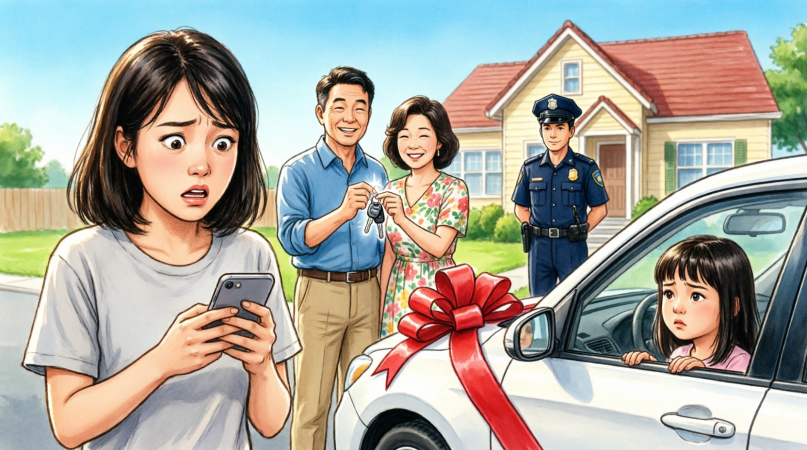
The spot was empty. My heart began to pound so hard it hurt. I checked the road twice, then three times, certain I’d parked somewhere else, but I hadn’t. My car just paid off last month was gone. I froze, the air slicing through my chest. I pulled out my phone with trembling fingers and called my mother. Mom, my car’s missing. Did someone tow it? Her voice was maddeningly calm. Oh, honey, relax. We gave it to Elena. She needs it more than you do.
She just lost hers last week. For a second, I couldn’t speak. My pulse roared in my ears. You what? I whispered. You gave my car to Elena. She has a new job, sweetheart. Don’t make a scene. That’s when something inside me broke. My voice was steady, but my whole body shook. That car was the first thing I ever owned outright. I worked for it, paid for it, protected it, and they called it sharing. I hung up before I said something I couldn’t take back.
Then I dialed 911. Growing up, I learned early that in my family, love had conditions and fairness was never one of them. I was the oldest, the one who figured things out, who never asked for much because I knew it wouldn’t come anyway. By 18, I was working two part-time jobs while studying computer science, saving every dollar I could.
My parents called it good practice for the real world. When Elena turned 18, they surprised her with a brand new MacBook, a camera, and a Gapier trip to Europe because, as mom said, she needs to find her inspiration. I had found mine, too, just not in Italy. Mine came at 3:00 a.m. in a library cubicle, surrounded by empty coffee cups and the hum of old computers, wondering why effort never earned the same applause as chaos. Elena was always the golden child.
At 27, she still lived at home. She’d quit three jobs in two years, finding herself between yoga retreats and online art classes she never finished. Each time she failed, my parents rushed to cushion her fall, blaming bad management, toxic workplaces, or jealous co-workers. The truth was simpler. Elena never learned to stand because they never let her fall. I’d watch from a distance. Half pity, half resentment twisting inside me. Every time she stumbled, they’d empty another piece of their savings to rescue her.
While I was still budgeting groceries by the ounce, paying off my student loans one painful installment at a time. I remember one night vividly. I was 19, sitting on my bedroom floor, counting tips from my cafe shift, trying to decide if I could afford a used laptop for class. Mom knocked and came in smiling, holding a sleek white box. “Isn’t it great?” she said, setting the MacBook on Elena’s bed. Your sister needs it for her group projects.
I just nodded, pretending I didn’t care. But I remember how my chest tightened when I opened my secondhand Dell the next morning, its fan wheezing like it was apologizing for existing. That was the moment I realized in my family. Effort wasn’t admirable. It was invisible. By the time I graduated, I’d stopped expecting fairness. I found a tech job in Denver, moved out, and promised myself I’d never ask them for help again. The freedom was lonely at first, but it was mine.
I paid rent, filed taxes, cooked meals for one, and learned the quiet joy of earning without owing. The years blurred into a rhythm work, save, survive, repeat. Eventually, after six long years of scraping and hustling, I did something monumental. I bought a car. Not a handme-down, not a clunker from a cousin. My car, a 2023 silver Camry, reliable, modest, but new. I made the down payment with shaking hands and spent months watching that loan balance shrink. Each payment was a small victory, proof that independence could be built one stubborn decision at a time.
Whenever I drove home to visit, my parents would look at it like it was some shiny mistake. You should have let your dad cosign, mom would say. It’s dangerous for a woman alone to manage loans. I’d smile politely, gripping my keys tighter. Elena, meanwhile, had totaled three cars, two from texting while driving, one after a night of celebrating. Each time they replaced it within weeks. She’s just unlucky, Dad said once. I remember looking at the photo of her crashed Honda, the front crumpled like paper, and wondering how anyone could be that unlucky three times in five years.
But in our family, bad decisions were just another opportunity for her to be rescued. The irony was almost poetic. I, the responsible one, the steady one, the one they never had to worry about, had become invisible by design. Because I didn’t need saving, I didn’t deserve attention. Because I didn’t beg, they assumed I had enough. And in their world, enough was the same as too much. So, I stopped sharing, stopped explaining my achievements. When I got promoted, I didn’t tell them.
When I hit my savings goal, I celebrated alone with takeout sushi. It was easier that way. I learned to carry my pride quietly, like a secret they couldn’t take from me. until the day they did. That afternoon, standing in the empty parking lot, hearing my mother’s casual tone through the phone, I realized this wasn’t a one-time betrayal. It was the final chapter in a story that had started long ago, a story of taking, excusing, and expecting me to stay silent.
They hadn’t stolen my car out of malice. They’d done it out of habit because in their eyes, what was mine was always theirs to redistribute. They’d never understood the weight of independence, the trembling pride of signing your own check, the quiet relief of paying off your first debt. They didn’t know what it meant to earn something and fear losing it. But they were experts at one thing pulling me down every time Elena fell. And as I stood there in that cold parking lot, listening to the dial tone after hanging up on my mother, a single thought settled in.
They don’t know what it feels like to stand on their own two feet because they’ve spent their whole lives standing on mine. The phone felt heavy in my hand as I pressed 911. My voice shook, but I forced the words out clearly. I’d like to report a stolen vehicle. There was a pause, the calm tone of the dispatcher cutting through my panic. Can you describe the vehicle, ma’am? I swallowed hard. A silver 2023 Toyota Camry, Colorado plates registered under my name, Natalie Reyes.
My reflection in the office window looked strange, like someone else was speaking through me. When did you last see the vehicle? This morning, around 8, I said, glancing at the empty spot again as if my car might magically reappear. And do you know who might have taken it? The question hung in the air like a dare. I took a breath that burned on the way out. My parents, they gave it to my sister Elena without my permission.
There was silence on the line, the kind that makes you question if you’ve just confessed to something unspeakable. Finally, the dispatcher said softly. You believe your family took your car without consent? Not believe, I said. I know. My mother told me. Another pause. Understood, Miss Ray. Please stay where you are. I’m sending an officer to take your statement. One. By the time Officer Ruiz arrived 20 minutes later, the sun had slipped behind the office towers, leaving the parking lot bathed in pale orange light.
She stepped out of the patrol car, collected the kind of presence that makes chaos feel manageable. Her dark hair was tied back, her voice steady but kind. Miss Rays. I nodded, clutching the folder I’d grabbed from my desk on instinct. You reported a stolen vehicle. I handed her everything title, registration, insurance, proof of payment, even the last loan statement stamped paid in full. All of this is under your name, she asked. Yes, completely mine. No co-signers, no shared ownership.
She nodded, flipping through the papers with quiet precision. And you didn’t give anyone permission to take it? No one, I said, my voice firmer now. They used a spare key I left with my parents for emergencies. I never said they could give it to someone else. Ruiz looked up, meeting my eyes. Do you know where your sister might be driving the vehicle? No idea, I said, and a bitter laugh slipped out. She could be anywhere, probably posting about her new gift on Instagram.
Ruiz gave a small sympathetic smile. Family theft cases are complicated, but they’re still theft. Whether it’s a stranger or a relative, the law doesn’t make exceptions for feelings. One, that sentence hit me harder than I expected. The law doesn’t make exceptions for feelings. I’d spent my entire life trapped in those exceptions. She’s your sister. They’re your parents. Family first. But now staring at the empty parking space that had once held the symbol of my independence, I realized those excuses were just another way of saying you don’t matter.
Ruiz took a few photos of the spot, noted the security camera above the lot, and spoke into her radio. Dispatch, run a bolo for a silver 2022 Toyota Camry. License plate CL4 negative 20078 registered to Natalie Reyes, Denver County. Possible suspect driving. Elellanena Reyes. Her voice was steady official. Hearing my sister’s name in that context made my stomach twist. We’ll check nearby traffic cameras, she said, turning back to me. If your sister’s out driving it, we’ll find it.
I can’t believe this is real, I whispered. My parents, they just gave it away. Ruise tucked her notepad into her jacket. You’d be surprised how often family members assume ownership over someone else’s property. It’s not about need, it’s about entitlement. I exhaled shakily, eyes burning. I always thought only strangers could betray you. She studied me for a moment. her voice lowering. Sometimes it’s easier for strangers to be honest, Miss Reyes. Family expects forgiveness before they even say sorry.
I I The street lights flickered on, painting long shadows across the pavement. Ruiz handed me a card. Here’s your case number. Keep it safe. If your sister or parents contact you, don’t engage. Just document everything. We’ll handle the rest. I nodded. my hands trembling as I tucked the card into my wallet. She paused before getting into her patrol car. You did the right thing, you know. I almost laughed. It doesn’t feel like it. Ruiz gave a faint smile.
Doing the right thing rarely does at first, but trust me, this isn’t about the car anymore. It’s about respect, and you’re owed that. As she drove off, the flashing red and blue lights faded down the street, leaving me alone with the quiet hum of distant traffic. I sat on the curb, staring at the dark space where my car used to be. The asphalt still carried faint tire marks, a ghost of what was mine. I thought of my parents’ voices, calm and dismissive, of Elena’s careless laughter, of every time I’d been told to be understanding.
But for the first time, I wasn’t going to understand. I wasn’t going to shrink or rationalize or let it slide. I would make them face what they’d done, not because I wanted revenge, but because I finally understood something crucial. Forgiveness means nothing without accountability. I looked up at the street light flickering above me, the case card still warm in my hand, and whispered into the night, “You don’t get to take from me anymore.” Then I stood, brushed the dust from my skirt, and walked back toward the building.
I wasn’t the same woman who’d parked here this morning. The line had been crossed, and this time I wasn’t going to erase it. I stared at the quiet screen for almost a full minute after Officer Ruiz drove away. The city lights shimmerred on the hood of a stranger’s car nearby. And for a fleeting second, I thought about pretending none of this had happened going home, letting it go, convincing myself it wasn’t worth the fight. But the thought of Elena behind my wheel, laughing, maybe bragging about her new car, burned through my chest like acid.
My thumb hovered, then pressed call mom. She picked up on the second ring, her voice already sharpened with that mix of impatience and guilt she used when she knew she was wrong, but refused to admit it. “Natalie, have you calmed down yet?” “No, Mom,” I said evenly. “I just called the police. I reported my car stolen and I’m following through.” A beat of silence. Then her tone cracked into panic. “What? Natalie?” “No, don’t be ridiculous. You called the police on your own family.
You’re going to destroy us over this. R. I clenched my jaw. The anger rising slow and steady. I’m not destroying anything. Mom, this family destroyed itself the moment it decided theft was an act of love. In the background, I could hear the TV, the muffled clatter of dishes, and my father’s voice asking, “What’s going on?” She must have handed him the phone because the next thing I heard was his low, measured tone, the one he used when pretending to be the reasonable one.
Natalie, listen to me. You’re overreacting. Elena needed a car for her new job. We were going to tell you before or after you took it. He exhaled long and slow. We didn’t take it. We borrowed it. It’s still in the family. You’ll get it back. I laugh. Then a short hollow sound that surprised even me. You’ve said that before about my savings you used for Elena’s tuition, about the furniture I left when I moved out. About the laptop you gave her because she needed it for work.
I never saw any of it again. So no, Dad. I won’t be getting this back. Not this time. He sighed like I was the one exhausting him. She’s your sister, Natalie. She’s trying to get her life together. You can take the bus for a few days. You’re stronger. You’ll manage. There it was. The script I’d heard all my life. You’re stronger. It always sounded like a compliment until I realized it was just permission for them to keep taking.
You’ve spent my entire life rewarding her failures and punishing my stability. I said quietly. Every time she burns something down, you hand her something of mine to rebuild it with. But this this was mine, Dad. My name, my money, my effort, my effort, he cut in sharply. Don’t talk to me like that. You’re being selfish. Family helps family. Then tell me, I said, voice trembling but steady. Who helps me? For a moment, the line went completely silent.
Then mom jumped back in, her voice brittle. If you don’t drop this report, your brother, your sister could be arrested. Is that what you want? To put your own blood in jail? No, Mom. What I want is for my family to understand that consequences exist. If Elena is old enough to drive, she’s old enough to face what comes next. God, listen to yourself. You sound heartless. Maybe I am, I said. Maybe years of being treated like a backup plan have turned me into someone who finally stopped bleeding for everyone else.
I could hear her sniff, her voice softening into guilt. Natalie, please don’t do this. We’ll talk to Elena. We’ll fix it. Then fix it by calling her and telling her to return my car. Otherwise, the police will. You wouldn’t really watch me, I said, and hung up. The quiet that followed was almost physical, pressing against my chest. Within minutes, my phone began vibrating non-stop. Unknown numbers, cousins, aunts, even grandma’s landline flashing across the screen. 14 missed calls in under an hour.
I scrolled through the voicemails mechanically. Nat, it’s Aunt Lydia. Honey, you don’t call the cops on your sister, okay? Family’s family. Another This is Marcus. Look, Elena messed up, but come on, jail. Drop it before it gets out of hand. And another. Your mom’s beside herself. You’re better than this. Family helps family. Every single one of them said the same thing, the same poison mantra I’d grown up hearing. Not one person asked if I was safe. Not one asked how I’d get to work tomorrow or if I was okay.
Outside, Denver’s skyline blinked in the distance, indifferent and cold. I closed my eyes, letting the anger settle into something colder, sharper, a kind of clarity. For the first time, I understood that their version of love had never been about family. It was about control, and I was done playing along. The Uber driver didn’t say a word the whole ride home. Maybe it was the way I was clutching my phone, or the tear streaks still drying on my cheeks.
Denver’s streets blurred past the window in long ribbons of color headlights, traffic lights, neon signs, each one reflecting against the glass like a life I wasn’t part of. I tried to breathe evenly, but every exhale came out shaky, uneven, like my body didn’t know what calm was anymore. My car wasn’t just transportation. It was proof that I’d built something for myself, something no one could take. And yet, they had. The city lights flickered on my reflection mascara, smudged, eyes swollen, jaw tight.
I barely recognized the woman staring back. She looked smaller than I remembered, like all the years of staying composed had collapsed in a single day. My phone buzzed again, but I didn’t look. I couldn’t. Every vibration felt like a tiny echo of all the times I’d been told to understand, to be patient, to not overreact. For once, I didn’t want to understand. I wanted to feel. As the car pulled onto my street, a memory surfaced sharp and cruel in its clarity.
I was 18, standing outside our old house in the rain. Backpack soaked through, clutching a halfbroken umbrella. My bike, the one I’d saved for months to buy, was gone. I remember the panic, the desperate search, until I found it two days later, lying in the mud behind Elena’s friend’s house. The chain rusted, the seat torn. She’d borrowed it, of course. Just for a few hours, she said. I didn’t think you’d mind. When I tried to tell our parents, mom waved it off.
She’s your sister. Don’t be dramatic. You can clean it. So, I did. I cleaned it in silence, scrubbing until my hands bled, watching the rain wash over the scratches she’d left. That was the first time I learned what theft looked like in our family. It wasn’t about stealing things. It was about stealing boundaries and pretending it was love. The memory hit me so hard I almost missed the driver saying, “We’re here.” I blinked, forcing a smile, handed him a tip, and stepped out into the cold night.
The rain had started again, a thin drizzle that coated the street in silver. My apartment building loomed ahead, quiet, still anonymous. I climbed the stairs slowly, each step heavier than the last. Inside, the air felt too still, too sharp. I sank onto the couch without turning on the lights. My hands were trembling, not from fear, but from exhaustion, the kind that lives in your bones after years of pretending you’re fine. I tried to tell myself it was just a car, that I could get another one, that it wasn’t worth this ache in my chest.
But deep down, I knew it wasn’t about the car. It was about every time I’d been told my feelings didn’t matter. About every time they’d taken something, time, effort, peace, and expected gratitude in return. The tears came slowly at first, quiet and tired until they weren’t quiet anymore. They came like the rain outside study, relentless, cleansing. I cried for the girl who had scrubbed mud off her bike in silence. For the woman who kept forgiving people who never apologized.
For the daughter who thought that being good would one day earn her respect. It hadn’t. When the sobs finally faded, I pulled myself up, grabbed a notebook from my desk, and sat by the window. The city outside was soft now, blurred by the drizzle and the faint hum of midnight traffic. I opened the notebook to a blank page and wrote slowly, my hands still shaking. May 14. Today I lost my car. But maybe today is the day I found myself again.
The words looked small and fragile on the paper, but they felt real, more real than anything I’d heard from my family in years. I stared at them for a long time, the ink spreading slightly where a tear had fallen. Then I closed the notebook gently, like sealing a promise I wasn’t ready to break. I moved to the kitchen, made tea just for something to do. The kettle’s whistle sounded too loud in the quiet. I leaned against the counter, watching steam curl upward and whispered to no one.
 :
: