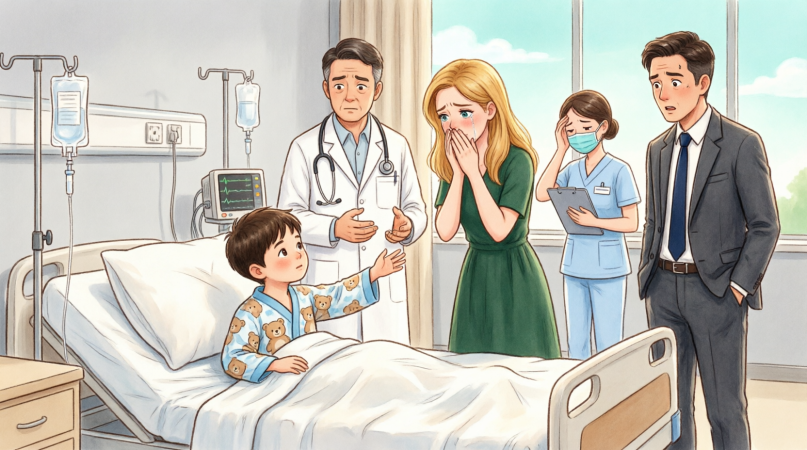
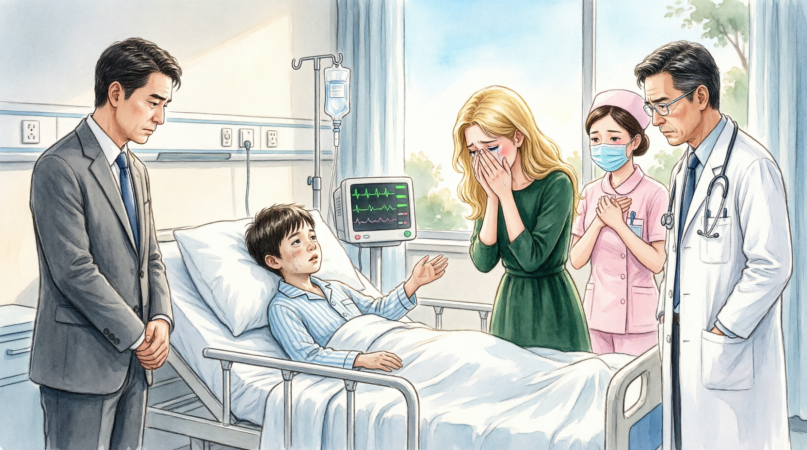
Oliver stood in the yard beside the telescope, though the sky was too cloudy to see anything but the city’s bruised orange glow.He did not turn when I approached.“She let someone die,” he said.I stood beside him.“She stayed silent after someone died.”“That’s not better.”“No.”“Are you defending her?”“No.”“Are you leaving?”The question came too fast.Too young.There he was.Eleven years old again.Hospital bed.Broken wrist.Split lip.Asking if I would stay.I breathed in.
“No.”
His shoulders shook once.
He hated that I saw.
I looked up at the clouds.
“I am angry with your mother.”
“Me too.”
“You should be.”
“She lied to me.”
“Yes.”
“She lied to you again.”
“Yes.”
He wiped his face with the heel of his hand.
“What do we do?”
It was the first time he had asked we.
I held onto that.
“We find out why Elias sent the key.”
“He wants to hurt her.”
“Yes.”
“And me.”
“Yes.”
“And you.”
“Probably.”
Oliver looked at me then.
His eyes were wet but steady.
“Then we don’t do what he wants.”
“No.”
“We don’t split up.”
“No.”
“We don’t hide important stuff.”
I smiled faintly despite everything.
“There’s the boy with the tin box.”
His mouth trembled.
“I hate this.”
“I know.”
“I hate that he can still reach us.”
I looked toward the house.
Rachel was visible through the kitchen window, sitting alone, hands clasped, waiting for the consequences she had delayed for half his life.
“He can reach,” I said. “That doesn’t mean he still gets to hold.”
Oliver was quiet.
Then he said, “I want to go to Blackridge.”
“No.”
He turned.
“You just said—”
“I said we find out. I did not say we hand-deliver you to a haunted crime scene because your imprisoned father mailed emotional dynamite.”
“I’m almost eighteen.”
“And I am almost patient.”
He almost smiled.
Almost.
“I need to see it,” he said.
I studied him.
This was not curiosity.
It was not teenage recklessness.
It was something harder.
He needed the house to become real so it could stop growing in his imagination.
I understood that.
God help me, I understood it.
“We don’t go alone,” I said.
His face changed.
“Really?”
“We go with Detective Ortiz. We go with a warrant if possible. We go with cameras, gloves, lawyers, and enough people that no Vance ghost gets creative.”
He nodded quickly.
“Okay.”
“And Oliver?”
“Yeah?”
“If your mother goes, she goes because she chooses truth. Not because you punish her with proximity.”
He looked back at the kitchen window.
Rachel had not moved.
“I don’t know how to be her son right now.”
That broke something in me.
I placed one hand on his shoulder.
“You do not have to know tonight.”
The next morning, Ana Ortiz walked into my kitchen carrying coffee, a file folder, and the expression of a woman who had been hoping retirement would involve fewer cursed mansions.
She read Elias’s note twice.
Then she looked at Rachel.
“You held back a dead woman.”
Rachel did not defend herself.
“Yes.”
Ana stared at her.
“Good. We’re starting with reality. Saves time.”
Rachel nodded.
Oliver stood by the sink, arms crossed, watching every adult like he expected us to rearrange the truth if he blinked.
Ana noticed.
Of course she did.
“Kid,” she said.
Oliver straightened.
“I’m not a kid.”
“You’re seventeen, traumatized, and wearing socks with planets on them. You’re a kid with a vocabulary.”
He looked down at his socks.
Then back up.
“I want to be there.”
“I know.”
“Don’t say no before you hear me.”
Ana looked at me.
“He gets that from you?”
“Unfortunately.”
Oliver ignored us.
“I lived in that family. I had that name. I was used in the trial, in the papers, in all of it. If there’s another woman Dad hurt, if there’s another truth Mom hid, I don’t want to hear it after everyone else decides what version is safe for me.”
Rachel closed her eyes.
Ana’s face changed.
Only slightly.
“You understand that seeing a place is not the same as controlling what it does to you?”
“Yes.”
“No, you don’t. But neither do most adults.”
Oliver waited.
Ana pointed at him.
“You do exactly what I say. You touch nothing. You wander nowhere. You do not perform bravery in a moldy hallway because your father has made you allergic to feeling powerless.”
Oliver opened his mouth.
Ana lifted one finger.
“I am not finished.”
He closed it.
Good boy.
“If you panic, you leave. If your mother panics, she leaves. If Nora panics, she will pretend she isn’t, and I will remove her by force.”
“I’d like to see you try,” I said.
“I’ve been waiting twenty years.”
Oliver’s mouth twitched.
Rachel did not smile.
Her eyes were on the key.
Ana turned to her.
“You ready to tell the police what you just told us?”
“Yes.”
“All of it?”
Rachel looked at Oliver.
Then at me.
“All of it.”
By noon, Detective Mercer was on the phone.
By evening, a judge had signed a limited search warrant based on Rachel’s statement, Elias’s communication, and the unresolved inconsistencies in Evelyn Hart’s death record.
Blackridge House was no longer occupied.
After Margot’s conviction, the property had been seized, tied up in civil litigation, then transferred to a state victims’ restitution trust. For months, there had been talk of demolition.
Nobody wanted to buy it.
Even rich people have limits when a house becomes a headline.
Two days later, we stood outside its gates.
Blackridge House looked smaller than it had on television.
That surprised me.
Evil often does.
From a distance, it had seemed enormous: white columns, black shutters, stone lions at the drive, a roofline sharp enough to cut sky.
Up close, the paint peeled along the porch rail.
One shutter hung crooked.
Vines strangled the west wall.
The stone lions had green moss in their mouths.
Time had started eating what justice had not yet finished.
Oliver stood between Rachel and me.
He had insisted on coming in his volunteer jacket from St. Agnes.
Not a suit.
Not armor.
A jacket with his name stitched near the pocket.
OLIVER.
No Vance.
I noticed.
So did Rachel.
Detective Mercer led the search team.
Ana came as a consultant because nobody had successfully told Ana not to attend anything since 1987.
Marisol, the attorney who had helped in the original case, stood near the gate with a clipboard and the weary calm of a woman who expected paperwork to outlive civilization.
Before we entered, Rachel stopped.
Her face had gone gray.
Oliver noticed.
“You don’t have to,” he said.
She looked at him.
“Yes,” she said. “I do.”
Not because he demanded it.
Because the house did.
The front door opened with difficulty.
The air inside smelled of dust, old wood, and money long deprived of witnesses.
Sheets covered furniture.
The grand staircase curved upward like something from a wedding magazine.
I hated it immediately.
Not dramatically.
Practically.
It was a house designed to impress visitors and hide residents.
We moved through the foyer.
Rachel’s breathing changed.
Oliver heard it.
His hand twitched at his side.
He wanted to reach for her.
He did not.
Anger and love stood in him like two boys refusing to share a room.
Mercer directed the team toward the east wing.
The hallway from the photograph was exactly as shown.
Dark wood.
Runner rug.
Green door.
No windows.
The air grew colder as we approached, though that was probably imagination.
Probably.
Elias’s key fit the lock.
That made my skin crawl.
Even from prison, he still had access to something that should have been beyond him.
Mercer turned the key.
The door opened.
Rachel made a sound so small I almost missed it.
The east room was smaller than I expected.
Cedar panels.
Bare floor.
A single chair in the center.
No windows.
No vents visible except one narrow grate high near the ceiling.
The walls smelled faintly sweet, the way old cedar does.
Nothing about the room looked violent.
That was what made it worse.
Violence that looks like violence can be named.
Violence that looks like storage becomes family tradition.
Oliver stood at the threshold.
He did not enter.
“Was she here?” he asked.
Rachel nodded.
“Yes.”
“Where were you?”
She pointed toward the hall.
“There.”
“And Dad?”
“Behind me.”
“And Grandma?”
Rachel looked at the chair.
“In here first. Then outside.”
Mercer’s team began photographing.
A forensic tech moved along the walls.
Ana stood near the doorway, eyes narrowed.
“What?” I asked.
She pointed.
“That panel’s newer.”
I followed her gaze.
The cedar panel behind the chair was slightly different in color.
Not enough for most people.
Enough for Ana.
Mercer saw it too.
Tools appeared.
The panel came loose after twenty minutes of careful work.
Behind it was a metal compartment.
Not large.
A hidden wall safe.
Marisol muttered, “Of course.”
Inside were three things.
A small leather journal.
A stack of VHS tapes sealed in plastic.
And a bundle of file folders tied with a black ribbon.
On top of the folders was a name.
EVELYN HART.
Rachel backed into the hallway.
Oliver turned toward her.
She shook her head.
“I didn’t know.”
He stared.
“I didn’t.”
This time, he believed her.
I saw it happen.
Not forgiveness.
Not yet.
But belief.
Mercer bagged the evidence.
Ana looked at me.
“This is why he sent the key.”
“To expose himself?”
“No,” she said. “To expose her. He assumed the contents would make Rachel look worse than him.”
“Does it?”
Ana’s face hardened.
“Men like Elias believe guilt and responsibility are the same thing when a woman carries them.”
We were not allowed to read the journal there.
Chain of custody mattered.
Evidence mattered.
The dead deserved better than our impatience.
But as the forensic tech lifted the bundle, one loose photograph slipped from the bottom folder and landed face-up near Oliver’s shoe.
He looked down.
Then froze.
It was a photograph of Rachel at twenty-two.
Sitting on the floor outside the east room.
Covered in soot.
One hand bandaged.
Mouth open in what was either a scream or a sob.
Beside her, in the hallway smoke, stood Elias.
Untouched.
Clean.
Watching her.
Not Evelyn.
Rachel.
Like she was the problem.
Oliver crouched slowly.
He did not touch the photograph.
“Mom,” he whispered.
Rachel saw it.
Her body folded in on itself.
I reached her before she hit the wall.
For one terrible second, she fought me.
Not knowing where she was.
Then she recognized my face.
“Nora,” she said.
“I’m here.”
“I tried.”
The words tore out of her.
“I tried the door. I tried. I left her, but I tried. I can still hear her. I can still—”
Oliver moved then.
Not all the way.
Just one step.
Then another.
Rachel looked at him, terrified of hope.
He stopped in front of her.
“I’m still mad,” he said.
She nodded, crying.
“I know.”
“But I’m here.”
Her face broke.
He let her take his hand.
Not a hug.
Not absolution.
A hand.
Sometimes that is the first bridge back.
The journal belonged to Evelyn Hart.
We learned that two days later in a conference room at the district attorney’s office.
Mercer, Ana, Marisol, Rachel, Oliver, and I sat around a table that held copies of evidence none of us wanted and all of us needed.
The journal had survived because Evelyn had wrapped it in oilcloth before hiding it.
The tapes were labeled by date.
The folders contained settlement records, photographs, names, and handwritten notes in Margot’s neat, merciless script.
Evelyn had been documenting the Vance family long before Rachel understood what she had entered.
She had noticed payments.
Private doctors.
Confidential retreats.
Young women who resigned and vanished.
Scholarship recipients who signed non-disclosure agreements.
Assistants relocated to other states after “misunderstandings.”
A foundation that funded women’s safety publicly while destroying inconvenient women privately.
The hypocrisy was so complete it almost had architecture.
Then Mercer played the first audio transfer from one of the tapes.
The quality was poor.
A hidden recorder.
Voices muffled.
But clear enough.
Margot:
“She is not leaving this house with those documents.”
Elias:
“Then convince her to stay.”
Margot:
“I am tired of cleaning up after your appetites.”
Elias:
“You enjoyed the cleaning when it protected the family.”
A third voice.
Young.
Evelyn.
“You can’t keep doing this.”
A sound.
Chair legs scraping.
Then Rachel’s voice.
Small.
Frightened.
“Elias, let her go.”
Oliver closed his eyes.
Rachel covered her mouth.
The tape continued.
Elias laughed.
“That’s sweet, coming from you.”
Then Evelyn:
“Rachel, he’ll do this to you too.”
Static.
Movement.
Margot:
“Put her in the cedar room until Dr. Bell arrives.”
Rachel made a sound beside me.
Dr. Bell.
The physician who had later signed her false admission papers.
The dead did not merely speak.
They connected rooms.
Mercer stopped the recording.
“There’s more,” he said.
Nobody asked how much.
All of it was too much.
Evelyn’s journal told the rest.
She had written about Rachel.
Not cruelly.
That surprised me.
I expected blame.
Instead, Evelyn had seen her clearly.
Rachel Morrow is terrified and pretending not to be. I think she knows he is dangerous. I also think she believes knowing and escaping are the same step. They are not.
Morrow.
Rachel’s maiden name.
I had not heard it in years.
Oliver stared at the copy.
“You were Rachel Morrow.”
She looked at him.
“Yes.”
“Why didn’t you go back to that name?”
Rachel swallowed.
“At first, fear. Then court filings. Then your school records. Then habit. Then shame.”
Oliver looked down.
“Morrow is better than Vance.”
Rachel almost smiled.
“It is.”
He kept reading.
Another entry.
Nora Ellison was real. Rachel talks about her when she’s half asleep. One green eye, one brown. She calls her the girl with two truths in her face. Elias calls her the liar. I know which version I believe.
My breath stopped.
Rachel turned toward me.
I could not look at her.
Not yet.
Evelyn had known me only as a story.
Even then, she had believed me.
The dead girl in the locked room had believed me when the living world did not.
I stood abruptly.
“I need air.”
No one stopped me.
Ana found me in the stairwell five minutes later.
She handed me coffee from a machine that had clearly committed crimes against beans.
I took it anyway.
“You okay?” she asked.
“No.”
“Good. Honest answers save time.”
I leaned against the wall.
“She knew my name.”
“Evelyn?”
“Yes.”
“And believed you.”
I laughed once.
It came out wrong.
“A dead woman I never met had more faith in me than half my campus.”
Ana sipped her coffee and grimaced.
“Institutions are cowards. Dead women have less to lose.”
I looked at her.
“Comforting.”
“I’m not in that line of work.”
We stood in silence.
Then Ana said, “This changes the appeal.”
“Elias?”
“The opposite way he intended.”
“He thought Evelyn’s files would destroy Rachel.”
“He thought Rachel’s guilt would distract from his crime. He forgot evidence does not care who feels worst.”
I looked at the closed conference room door.
Through the narrow window, I could see Rachel sitting beside Oliver.
Not touching.
But close.
“Do you think Oliver will forgive her?”
Ana followed my gaze.
“I think he’ll grow into whatever truth she keeps telling. Children can survive painful truth. It’s the revisions that rot the floor.”
I closed my eyes.
The basil plant had finally died by the time we got home.
Oliver noticed first.
He stood at my kitchen window and stared at the brown leaves.
“You killed the emotional support basil.”
“I prefer to say it completed its journey.”
He touched one curled leaf.
“Should we bury it under a sycamore tree?”
“Don’t start.”
For the first time since the key arrived, he smiled fully.
Then the smile faded.
Rachel stood in the doorway.
She had not come inside without invitation since the confession.
That was new.
Respectful.
Painful.
Oliver turned.
The kitchen became very small.
Rachel looked at him.
“I need to tell you something before the prosecutors do.”
He gripped the counter.
“Okay.”
“I signed a statement today. Full statement. About Evelyn. About what I saw. About what I hid. About how Elias used Nora’s case to keep me quiet. About all of it.”
Oliver nodded.
Rachel continued.
“My lawyer says it could expose me to charges for withholding information back then.”
His head snapped up.
“What?”
“I do not know what they will do.”
“Can they arrest you?”
“Yes.”
The word entered like a blade.
Oliver looked at me.
I said nothing.
Not because I had no opinion.
Because this was Rachel’s truth to stand inside.
Oliver turned back to his mother.
“Why would you do that?”
Rachel’s eyes filled.
“Because you were right.”
He flinched.
“I said a lot.”
“You said we don’t hide important stuff anymore.”
The room held still.
Rachel stepped closer, then stopped.
“I do not want to go to prison. I do not want to lose you. I do not want to lose whatever Nora and I have spent years building out of wreckage. But I am more afraid of teaching you that truth only matters when it saves us.”
Oliver stared at her.
His face worked through anger.
Fear.
Love.
A son’s terrible burden of seeing his parent become human in real time.
Finally, he said, “I don’t want you to go away.”
Rachel’s composure broke.
“I know.”
“I just got you back.”
“I know.”
“You keep making things right after it’s too late.”
Rachel absorbed that.
Every word.
No defense.
No collapse.
“Yes,” she said. “I do.”
Oliver wiped his face.
Then he walked past her, out the back door.
Rachel closed her eyes.
I expected her to follow.
She did not.
Good.
That night, Oliver slept in my guest room.
He did not ask.
He walked in at 11:06 holding a pillow and said, “I’m mad at my house.”
“That’s a new category.”
“I’m expanding emotionally.”
“Congratulations.”
He dropped onto the bed.
I stood in the doorway.
When he was younger, I would have sat beside him immediately.
At seventeen, care required negotiation.
“Do you want me to stay or leave?”
He stared at the ceiling.
“Stay, but don’t therapy me.”
“I’m not a therapist.”
“You’re worse. You prosecute feelings.”
I sat in the chair by the window.
For a while, we listened to the night insects.
Then he said, “What if they arrest her?”
“I don’t know.”
“Would you hate that?”
“Yes.”
“Even after what she did?”
“Yes.”
He turned his head.
“Why?”
I considered lying with something polished.
Because people change.
Because your mother has suffered.
Because justice is complicated.
All true.
None enough.
“Because love does not disappear just because anger has evidence.”
Oliver was quiet.
Then he whispered, “That sucks.”
“Yes.”
“Do you forgive her?”
I looked at the framed emergency card on the wall across the hall.
Found her.
She came.
“I forgive her in pieces,” I said. “Some pieces are still missing.”
“Does she know?”
“Yes.”
“Does she wait?”
“Yes.”
He nodded slightly.
“That’s good.”
“It is.”
He looked back at the ceiling.
“I think I’m scared if I forgive her, Evelyn disappears.”
There it was.
The moral terror of good children.
That if they let love remain, they betray the dead.
I leaned forward.
“Oliver. Forgiveness is not evidence disposal.”
He looked at me.
“Say that again.”
“Forgiveness is not evidence disposal.”
He almost smiled.
“That sounds like something you’d put on a mug.”
“I would absolutely own that mug.”
His eyes grew wet.
“I don’t want to be a Vance.”
The sentence did not surprise me.
But it landed.
“What do you want to be?”
“I don’t know.”
“That’s allowed.”
“I keep thinking about Mom’s old name.”
“Morrow.”
He nodded.
“Oliver Morrow sounds like someone who could leave.”
“Maybe.”
He looked embarrassed then.
“And I was thinking…”
I waited.
He swallowed.
“Could I use Ellison too?”
My throat tightened.
“As a middle name?”
“Maybe. Or second middle. Or… I don’t know. It sounds stupid when I say it out loud.”
“No,” I said.
He looked at me.
“It does not sound stupid.”
His face changed.
“You wouldn’t be weird about it?”
“I will be extremely weird about it privately and composed in public.”
That made him laugh.
Only once.
But enough.
“I’m not trying to replace anyone,” he said quickly. “Not Mom. Not—”
“I know.”
“I just don’t want my whole name to come from people who hurt other people.”
I stood and crossed to the bed.
This time, I did not ask before touching his hair.
He allowed it.
“Oliver Ellison Morrow,” I said softly.
He tried the name silently.
Then his face crumpled.
“Oh.”
“Yes,” I said.
“Is it too dramatic?”
“Exactly dramatic enough.”
He covered his face with both hands.
He cried quietly.
Not like the hospital.
Not trained silence.
Just a young man grieving a name he had not chosen and reaching for one he could.
I sat beside him until he slept.
In the morning, Rachel came over with pancakes from a diner because she knew better than to trust either grief or me with batter.
Oliver sat at the kitchen table.
She placed the container in front of him.
He did not look up.
“I want to change my name when I turn eighteen,” he said.
Rachel went still.
I stood at the sink, pretending dishes required intense concentration.
Rachel sat down slowly.
“Okay.”
He looked up.
“Just okay?”
“It’s your name.”
“I want Morrow.”
Rachel’s eyes shone.
“That was my mother’s name before it was mine.”
“I know.”
“I would like that.”
He nodded.
Then he said, very fast, “And Ellison. Maybe as a middle name. If Nora says yes. She said yes. But I’m telling you.”
Rachel looked at me.
Her face did something I could not read.
Then she looked back at him.
“That is a beautiful name.”
Oliver’s shoulders dropped.
“Really?”
“Yes.”
“It doesn’t hurt your feelings?”
Rachel reached across the table, not touching his hand, just offering the space.
“Oliver, you finding more people to belong to is not a loss for me.”
He stared at her.
Then placed his hand in hers.
“I’m still mad.”
“I know.”
“I’m probably going to be mad a while.”
“I will be here while you are.”
He nodded.
Then, with the practical cruelty of adolescence, he opened the pancake container and said, “Good, because these are getting cold.”
Rachel laughed.
Then cried.
Then laughed again.
The district attorney chose not to charge Rachel.
Not because what she had done was harmless.
It was not.
But because she had been a coerced witness at the time, because the Vances had actively concealed Evelyn’s death, because Rachel’s new testimony became central to reopening the case, and because prosecutors occasionally remember that justice is not improved by punishing every survivor for surviving badly.
Rachel did not celebrate.
That mattered.
Instead, she asked to speak at the press conference.
Her attorney advised against it.
Marisol used the phrase “legally unwise” three times.
Ana called it “standing in lightning holding an umbrella made of guilt.”
Rachel listened to everyone.
Then did it anyway.
The press conference took place outside the county courthouse on a windy Thursday.
Evelyn Hart’s sister came.
A woman named Claire, forty now, with Evelyn’s eyes and a grief so old it had become part of her posture.
Rachel had written to her privately before the public announcement.
Not to ask forgiveness.
To give information.
Claire agreed to stand there only if Rachel did not pretend heroism.
Rachel promised.
I stood with Oliver near the back.
Not beside Rachel.
Not behind her.
Near enough.
Distance had become part of our honesty.
Rachel stepped to the microphones wearing a gray coat and no makeup except lipstick that looked like courage and fear had compromised on color.
“My name is Rachel Morrow,” she began.
Oliver inhaled.
Morrow.
Not Vance.
Reporters shifted.
“I have been known publicly as Rachel Vance for many years. That name belonged to a marriage built on violence, silence, coercion, and fear. Today I am using the name I had before I learned to survive by disappearing.”
The wind moved through the microphones.
“I am here to speak about Evelyn Hart.”
Claire Hart stood very still.
Rachel turned toward her.
“I was present at Blackridge House the night Evelyn died. I heard her. I knew she was locked in the east room. I tried to open the door. Then I allowed Elias Vance and Margot Vance to convince me that telling the truth would destroy me and others. For twelve years, I did not say her name publicly.”
Her voice shook.
She steadied it.
“I was afraid. That is true. I was threatened. That is true. I was abused. That is true. But none of those truths brings Evelyn back, and none erases the harm my silence caused.”
A reporter raised a hand.
Rachel did not stop.
“I am not asking Evelyn’s family for forgiveness. I am not asking the public to see me cleanly. I am asking that when we speak about powerful families and the women they harm, we remember that fear does not always produce noble people. Sometimes it produces silent ones. Sometimes complicit ones. Sometimes people like me, who tell the truth late and must live with the lateness.”
Oliver’s eyes filled.
I felt mine do the same.
Rachel looked at the cameras.
“Evelyn Hart deserved better than my fear. She deserved better than the Vance family. She deserved better than a locked room and a false fire report. I will spend the rest of my life telling the truth she died trying to tell.”
She stepped back.
No applause.
No cinematic swell.
Claire Hart walked to the microphone.
Rachel lowered her eyes.
Claire faced the cameras.
“My sister was not unstable. She was not reckless. She was not a tragic accident. She was twenty-three years old, funny, stubborn, bad at parallel parking, and planning to apply to law school.”
Her voice broke.
She continued.
“I have waited twelve years to hear someone say her name without making her sound like a problem.”
She turned to Rachel.
“I don’t forgive you today.”
Rachel nodded once.
Claire’s face tightened.
“But I believe you today.”
Rachel covered her mouth.
Oliver looked away.
I did too.
Some mercy is almost too painful to watch.
The new charges came four months later.
Elias Vance, already serving forty-two years, was charged in connection with Evelyn Hart’s unlawful confinement, death, and the conspiracy to conceal it.
Margot Vance was charged from prison.
Dr. Bell, old and ill but not too old to have signed lies for money, was charged too.
Two retired police officers.
One former county prosecutor.
One judge who had quietly handled “family matters” for Blackridge House for twenty years.
The house had not been one man’s crime scene.
It had been an institution.
Institutions do not fall quickly.
They creak.
They deny.
They sue.
They release statements expressing confidence.
They retire with pensions.
Then, if the evidence is good and the witnesses do not die of exhaustion, they begin to break.
Evelyn had been good with evidence.
So had Rachel, eventually.
So had the other women.
So had Oliver, in his own way, by carrying a key into my kitchen instead of letting suspicion grow mold in his pocket.
The trial was smaller than Elias deserved.
That bothered me at first.
The courtroom was not packed like before. No national obsession. No helicopters over Blackridge.
But maybe that was right.
Evelyn Hart had spent twelve years being reduced to a footnote in someone else’s fire.
Her trial did not need spectacle.
It needed attention.
Claire testified first.
She brought photographs.
Evelyn at six, missing both front teeth.
Evelyn at sixteen, wearing a marching band uniform.
Evelyn at twenty-three, standing in front of Blackridge House on her first day at the foundation, smiling with the fragile optimism of a young woman who believed prestige meant safety.
Rachel testified for a full day.
The defense tried to destroy her with the obvious weapons.
Her past lies.
Her marriage to Elias.
Her delayed confession.
Her involvement in the original Halewick cover-up.
This time, Rachel did not flinch from any of it.
“Yes,” she said again and again.
Yes, I lied.
Yes, I stayed.
Yes, I was afraid.
Yes, I benefited from silence.
Yes, I told the truth too late.
There is a strange power in a witness who refuses to argue with her own shame.
The defense attorney grew visibly frustrated.
“You expect this jury to believe you now after admitting you lied for years?”
Rachel looked at him.
“No,” she said. “I expect them to believe the recordings, the journal, the photographs, the door locks, the fire report, the payments, the medical records, and the fact that your client sent my son the key to the room because he still believed women’s guilt would protect him better than evidence would hurt him.”
The courtroom went very still.
The attorney sat down.
Oliver was not required to testify.
He wanted to.
Rachel opposed it at first.
So did I.
Then Oliver said, “You don’t get to build a whole family philosophy around telling the truth and then decide mine is too inconvenient because I’m your kid.”
Ana, sitting at my kitchen table, whispered, “I like him.”
“I am suffering the consequences of my own influence,” I said.
He testified on the third day.
He wore a dark jacket, a blue tie, and the expression of a young man trying not to look seventeen in a room full of adults.
The prosecutor asked why he brought the key to me.
Oliver looked at the jury.
“Because when I was eleven, my mother told me that if the worst day came, I should find the lady with two eyes.”
A few jurors glanced toward me.
I looked at the floor.
Oliver continued.
“I found her. She stayed. So when another worst day came, I went back to the person who had already proven she would not hide the room from me.”
The prosecutor asked, “What did the defendant’s note make you feel?”
Oliver looked at Elias.
Elias stared back with paternal sorrow arranged on his face.
Oliver did not look away.
“It made me feel like he still thought I was a door he could open.”
The room changed.
Even Elias blinked.
“And are you?” the prosecutor asked.
“No,” Oliver said. “I’m not.”
The defense tried to be gentle at first.
That lasted three questions.
“Oliver,” the attorney said, “you are angry with your father, correct?”
“Yes.”
“Angry with your mother too?”
“Yes.”
“And perhaps influenced by Ms. Ellison?”
Oliver looked at me.
Then back at him.
“Yes.”
The attorney smiled.
“In what way?”
“She taught me to bring evidence.”
The juror in seat five smiled openly.
The attorney tried again.
“You understand your father maintains that he sent you the key because he wanted you to know the full truth?”
Oliver nodded.
“Yes.”
“And don’t you want that?”
“I do.”
“Then why assume his motives were harmful?”
Oliver tilted his head.
It was a Rachel gesture.
Or maybe mine.
Because families are strange that way.
“Because healthy fathers don’t mail trauma clues from prison.”
The courtroom made a sound.
The judge hit the gavel once.
I covered my mouth.
Ana whispered, “That’s going on a mug.”
Elias’s mask cracked then.
Not fully.
But enough.
For one second, I saw the man from the hospital hallway.
The one beneath the charm.
The owner of rooms.
The opener of doors.
The father who believed a son was just another inheritance.
Oliver saw him too.
And did not break.
The verdict came after eleven hours.
Guilty.
Unlawful imprisonment resulting in death.
Conspiracy.
Evidence tampering.
Obstruction.
Witness coercion.
Multiple additional counts connected to the Blackridge network.
Margot Vance was convicted too.
When the judge sentenced Elias to life without possibility of parole, consecutive to his existing sentence, he finally looked old.
Not remorseful.
Not broken.
Just old.
As if time had stopped flattering him.
Margot received life as well.
She did not cry.
Claire Hart did.
Rachel cried silently.
Oliver sat between us, one hand in his mother’s, one in mine.
Not because the moment was simple.
Because it was over.
At least the courtroom part.
After sentencing, Elias requested a private meeting with Oliver.
Rachel said no immediately.
So did I.
Oliver said, “I want to go.”
The argument lasted two days.
It included one slammed door, three legal consultations, Ana saying “absolutely not” while eating cereal from my salad bowl, Rachel crying in my laundry room, and Oliver finally standing in my kitchen with both hands flat on the table.
“I am not asking permission because I think he deserves anything,” he said. “I’m asking because I need to walk out of a room with him while he is still alive and unable to follow me.”
That stopped us.
Rachel sat down.
I looked at him carefully.
“You understand he will try to hurt you.”
“Yes.”
“He will not apologize.”
“I know.”
“He may say something you cannot unhear.”
Oliver nodded.
“He already gave me his name. I survived that.”
Rachel covered her face.
I looked at Ana.
She looked back.
Then sighed like the entire justice system had personally inconvenienced her.
“I’m coming,” she said.
Oliver nodded.
“Good.”
“And Nora.”
“Yes.”
“And your mother stays outside unless you ask her in.”
Rachel looked up, startled.
Oliver looked at her.
“I need to do this as me,” he said. “Not as your son first.”
That hurt her.
She allowed it.
“I’ll be outside,” she said.
“I know.”
The prison visiting room smelled of bleach and despair.
Elias entered in shackles.
For years, he had existed for Oliver as memory, threat, trial footage, and nightmares. Now he was just a man in beige clothing with graying hair and skin gone sallow under fluorescent lights.
Power does not disappear in prison.
But it changes costume.
Elias sat behind the glass and smiled.
Not warmly.
Possessively.
“My son.”
Oliver picked up the phone.
“Don’t call me that.”
Elias’s smile flickered.
“I see they’ve trained you well.”
Oliver said nothing.
Silence unsettles men who are used to filling rooms.
Elias leaned back.
“You look like my father.”
Oliver breathed in slowly.
I stood behind him with Ana.
Close enough.
Not too close.
“No,” Oliver said. “I don’t.”
Elias’s eyes sharpened.
“You can change your clothes, your friends, even your name if Rachel has convinced you that blood is something to be ashamed of. But you are a Vance.”
Oliver reached into his jacket pocket.
My body tensed.
Ana’s hand shifted.
Oliver pulled out the iron key.
The one Elias had mailed.
He held it up.
“This is yours.”
Elias looked at it.
Something like satisfaction crossed his face.
“I gave that to you because you deserved to know what your mother hid.”
“No,” Oliver said. “You gave it to me because you thought truth was still a weapon only you knew how to hold.”
Elias’s face hardened.
Oliver continued.
“But it opened Evelyn’s room. It opened her journal. It opened a trial. It opened your sentence. So thank you.”
Elias stared.
Oliver placed the key on the narrow ledge beneath the glass.
“It doesn’t open anything anymore.”
“You think this is over?” Elias said softly.
Oliver’s hand stilled.
“There are always appeals. Lawyers. People who still owe me favors.”
Ana shifted behind him.
Oliver did not.
“You know what’s funny?” he asked.
Elias’s eyes narrowed.
“You spent your whole life making people afraid of what you could do next. But I’m leaving here, and you’re not.”
For the first time, Elias’s face moved.
A small crack.
Oliver leaned closer.
“I came to tell you three things.”
Elias laughed under his breath.
“How theatrical.”
Oliver smiled faintly.
“I was raised around Nora. We respect drama.”
I almost lost composure.
He lifted one finger.
“First, I am changing my name when I turn eighteen. I will not be Oliver Elias Vance.”
Elias’s jaw tightened.
“Your mother’s doing.”
“My doing.”
Second finger.
“Second, I am not here to forgive you. Maybe I will one day for myself. Maybe I won’t. But you don’t get a vote.”
Elias looked at him with cold hatred now.
There he was.
Clean at last.
Third finger.
“Third, when I have children, if I have children, they will know your name only as a warning. Not a legacy.”
Elias moved so fast the chain jerked against the table.
Ana stepped forward.
A guard turned.
Oliver did not flinch.
Elias lowered his voice.
“You will regret disrespecting me.”
Oliver stood.
“No,” he said. “I think disrespecting you is the first family tradition I actually like.”
He hung up the phone.
Elias shouted something behind the glass.
We did not listen.
Oliver walked out of the visiting room shaking so hard I thought he might collapse.
Rachel stood in the hallway.
She took one step toward him, then stopped herself.
Letting him choose.
He walked straight into her arms.
This time, it was not careful.
It was not half.
He held his mother like a boy and a man and the child he had been in the hospital all at once.
Rachel closed her arms around him.
“I’m here,” she whispered.
“I know,” he said.
Then he reached one hand back.
Toward me.
I stepped in.
The three of us stood in a prison hallway under bad lights, holding the shape of a family nobody would have designed and nobody could deny.
Ana stood nearby pretending to read a bulletin board about contraband.
Her eyes were wet.
I pretended not to notice.
That spring, Blackridge House came down.
Not dramatically at first.
No explosion.
No cinematic collapse.
Just workers in hard hats removing windows, hauling out wood, prying loose fixtures, cataloging anything that belonged in evidence or archive.
Claire Hart attended the first day of demolition.
So did Rachel.
So did Oliver.
So did I.
Margot had tried to stop it from prison through an attorney who kept using the phrase “historical preservation.”
The judge denied the motion in one paragraph.
Sometimes justice has excellent brevity.
The state trust transferred the land to a coalition of victim advocacy groups. Rachel’s nonprofit became one of them. Claire insisted Evelyn’s name not be placed on the house itself.
“My sister is not that building,” she said.
So they named the new center after what grew there instead.
The Sycamore Center.
A place for evidence preservation, emergency legal help, family coercion response, and transitional support for people escaping powerful abusers.
In the front garden, they planted three sycamore trees.
One for Evelyn.
One for every woman whose name had been hidden in Blackridge files.
One for the living witnesses who dug.
Oliver planted the third tree himself.
He wore jeans, an old St. Agnes volunteer jacket, and shoes he ruined in the mud.
Rachel stood beside Claire.
They did not speak much.
They did not need to.
Forgiveness had not arrived between them.
Respect had.
That was rarer than people think.
When the last wall of the east wing came down, Rachel reached for my hand.
I let her take it.
We watched the cedar room become debris.
No windows.
No door.
No chair.
Just broken wood in daylight.
Rachel cried.
Not loudly.
Oliver stood on her other side.
After a while, he said, “It looks smaller.”
I looked at the remains.
“It always was.”
He shook his head.
“No. It was huge when it was hidden.”
Rachel looked at him.
“Yes,” she said. “It was.”
On Oliver’s eighteenth birthday, we went to court.
Not for Elias.
Not for Rachel.
For him.
He wore the same blue tie from the trial and a suit that actually fit now, because he had grown three inches in a year and eaten as if groceries had personally offended him.
Rachel wore a pale green dress.
I wore black because I claimed it was dignified and Oliver claimed I was incapable of dressing without looking like I expected cross-examination.
Ana came.
Maribel came.
Detective Mercer came unexpectedly and stood in the back looking uncomfortable with affection.
Claire Hart sent flowers.
Halewick sent a letter of congratulations and a scholarship offer Oliver had not yet decided whether to accept.
The judge was a woman in her fifties with reading glasses and a voice like warm gravel.
She reviewed the petition.
“You are requesting to change your legal name from Oliver Elias Vance to Oliver Ellison Morrow?”
“Yes, Your Honor.”
Rachel’s hand found mine under the bench.
The judge looked over her glasses.
“Reason for the change?”
Oliver stood.
The courtroom was small.
No cameras.
No reporters.
No Vance family attorney.
Just us.
He looked at the judge.
“I was given a name that belonged to people who hurt others and expected me to carry that as inheritance. Morrow is my mother’s original family name. Ellison belongs to the person my mother told me to find on the worst day of my life. I want a name that tells the truth about who helped me live.”
The judge’s face softened.
She stamped the order.
“Petition granted.”
That was it.
A stamp.
A signature.
A life turned slightly toward the sun.
Rachel covered her mouth.
I stared at the floor because if I looked at Oliver too long, I would become publicly undignified and he would enjoy that forever.
Oliver turned around.
“Well?” he said.
Ana clapped first.
Loudly.
Inappropriately.
Like a woman applauding at a boxing match.
Maribel joined.
Then Mercer.
Then Rachel.
Then me.
Oliver Ellison Morrow stood in the little courtroom and smiled like someone had opened every window in his body.
Afterward, we went to the diner that had supplied emergency pancakes during the darkest week of our lives.
Oliver ordered waffles.
“Betrayal,” I said.
“I contain multitudes.”
Nathan had said that in another life in another story I did not know, but somehow all loved people eventually discover the same sentences.
Rachel lifted her coffee.
“To Oliver Ellison Morrow.”
He blushed.
“Don’t make it weird.”
“Impossible,” I said. “We are a weird family.”
He looked at me quickly.
Family.
The word had escaped before I dressed it properly.
Rachel saw.
Oliver saw.
Maribel saw and began crying immediately because nurses are professionals until they are not.
Oliver lifted his orange juice.
“To weird family.”
We toasted with coffee, juice, and Ana’s tea, which she claimed was whiskey in witness protection.
That evening, Oliver came to my house alone.
He found me in the living room staring at the wall where his original emergency card hung beside the tin box, the blue ribbon, the Halewick apology, and the framed drawing of me holding a shovel beside a tree.
He stood next to me.
“I brought something.”
“Is it alive?”
“No.”
“Is it legal?”
“More or less.”
He handed me a small frame.
Inside was a new card.
Same format as the old one.
But written in Oliver’s adult handwriting.
NORA ELLISON
FAMILY CONTACT
NOT FOR EMERGENCIES ONLY
Under it, he had written:
Found her.
She stayed.
I rose.
I read it once.
Then again.
The room blurred.
Oliver looked nervous.
“I know it’s dramatic.”
“Yes.”
“Too dramatic?”
I shook my head.
“No.”
He exhaled.
“Good.”
I turned to him.
“You know I did not save you by myself.”
“I know.”
“Your mother saved you by sending you to me.”
“I know.”
“Ana. Maribel. Mercer. Rachel. Claire. Evelyn. A lot of people became part of this.”
“I know.”
“Then why—”
“Because you came.”
The words stopped me.
Oliver’s voice softened.
“Mom gave me your name. Other people helped. But you came into room twelve and stayed when you had every reason to walk away. I need that on the wall too.”
I held the frame against my chest.
For years, I thought truth was the thing that gave me back what had been stolen.
My reputation.
My name.
The story of the blue scarf.
But that was only the first truth.
The second was harder.
Truth does not restore the life you would have had.
It builds a different one from whatever answers when you call.
This was the third truth.
Sometimes the family you are allowed to have is not the family that never hurt you.
It is the family that stops hiding.
The family that returns.
The family that tells the truth and stays for the consequences.
I hung the new card beside the old one.
The wall looked ridiculous.
Like a shrine built by a lawyer, a child, and a sentimental criminal evidence technician.
Perfect.
Oliver stepped back.
“Good?”
“Good.”
He slipped his hands into his pockets.
“I chose Halewick.”
I turned.
“For college?”
He nodded.
My heart stuttered.
“Are you sure?”
He smiled.
“I wondered how long it would take you to ask that.”
“It’s a reasonable question.”
“It is.”
“That campus holds a lot.”
“I know.”
“Some of it ugly.”
“I know.”
He looked at the wall.
“But it also has the sycamore tree. The one where the truth waited. I think I want to study where buried things came back.”
“What will you study?”
“Forensic psychology. Maybe law after. Maybe child advocacy. Maybe astronomy if I get tired of people and want stars.”
“All excellent forms of avoiding normal employment.”
He grinned.
“Exactly.”
I swallowed.
“You don’t have to turn your life into repair.”
His face grew serious.
“I know.”
“Do you?”
“Yes.”
He stepped closer.
“I’m not going to Halewick because I’m broken. I’m going because I’m curious, angry, and very good at making adults uncomfortable with accurate questions.”
“That is unfortunately true.”
“And because I can leave if I hate it.”
That was the sentence that mattered.
Not I can survive.
Not I can endure.
I can leave.
Freedom in six words.
“Then I’m proud of you,” I said.
He looked down.
Teenage boys hate tenderness until they need it.
“I know,” he said softly.
The night before Oliver left for Halewick, Rachel cooked dinner.
Actually cooked.
No store-bought pie disguised as effort.
No emergency diner food.
She made roast chicken, potatoes, green beans, and a chocolate cake that collapsed slightly in the middle.
Oliver called it structurally honest.
Rachel threatened him with a dish towel.
Ana came.
Maribel came.
Mercer sent regrets and a gift card because detectives express emotion through chain restaurants.
Claire Hart came too.
That surprised me.
She brought a small wrapped package for Oliver.
Inside was Evelyn’s old fountain pen.
“I don’t know if you write,” Claire said.
Oliver held it carefully.
“I can start.”
Claire smiled.
“She would like that.”
Rachel stood very still.
Claire turned to her.
“I’m not here because everything is fixed.”
Rachel nodded.
“I know.”
“I’m here because Evelyn wrote that people should stop disappearing inside powerful rooms.”
Rachel’s eyes filled.
Claire looked around at my kitchen.
At Ana eating potatoes directly from the serving bowl.
At Maribel helping Oliver pack leftover cake into a container.
At me pretending not to cry near the sink.
“This doesn’t look like disappearing,” Claire said.
Rachel covered her mouth.
“No,” she whispered. “It doesn’t.”
After dinner, Oliver dragged us all into the backyard to look at the moon.
He had upgraded the telescope twice and become unbearable about lens care.
The sky was clear.
The moon hung bright and indifferent above us.
Oliver adjusted the telescope, then stepped back.
“Nora first.”
“Why?”
“Because if I don’t let you, you’ll pretend you don’t care and hover.”
“I do not hover.”
Six people said, “Yes, you do.”
Betrayal.
I looked through the lens.
The moon filled the circle.
Craters.
Shadows.
A world battered and bright.
I thought of Oliver at eleven, whispering that his mother told him to find the lady with two eyes.
I thought of Rachel at twenty-one, lying because fear had a hand over her mouth.
I thought of Evelyn Hart writing my name though we had never met.
I thought of Blackridge House opening like a rotten chest.
I thought of Elias behind glass, still trying to own the ending.
Then I thought of the little courtroom.
The judge’s stamp.
Oliver Ellison Morrow.
Not a perfect ending.
Better.
A chosen one.
Oliver took his turn at the telescope.
Then Rachel.
Then Claire.
Then Maribel.
Ana refused until Oliver accused her of being afraid of space.
“I am not afraid of space,” she said. “I distrust anything that large and unmanaged.”
She looked anyway.
Later, after everyone left, Rachel and I washed dishes side by side.
That had become one of our languages.
The water ran.
Plates passed between us.
Old silence sat in the corner, quieter now.
Rachel said, “He’ll be okay.”
I dried a glass.
“Yes.”
“I hate that okay now includes leaving.”
“That is usually what okay becomes.”
She looked toward the backyard where Oliver was packing the telescope.
“I missed so much of his safety.”
“You gave him enough to find more.”
Rachel looked at me.
“Did I?”
“Yes.”
She breathed in.
“I’m trying not to ask you if I’m a good mother.”
“Good.”
“Because that would be unfair?”
“Because I would answer like a prosecutor.”
She laughed softly.
Then grew serious.
“Nora.”
I looked at her.
“I know there are still pieces missing.”
I did not pretend not to understand.
Forgiveness.
Trust.
The old friendship.
The love that had once been simple before it became evidence.
“Yes.”
“I’ll keep waiting.”
My throat tightened.
“You don’t have to stand still while you wait.”
“I know.”
“No,” I said. “I mean it. Live. Work. Annoy your son. Burn cakes. Help women get their passports back. Don’t turn your life into a hallway outside my forgiveness.”
Rachel closed her eyes.
When she opened them, she looked freer.
Not absolved.
Free.
“Okay,” she said.
Then, after a moment, “For what it’s worth, I forgive you too.”
I stared at her.
“For what?”
“For surviving me without letting it make you cruel.”
That landed somewhere I had not known was bruised.
I looked down at the plate in my hand.
It was clean.
Already clean.
I kept drying it anyway.
The next morning, we drove Oliver to Halewick.
Rachel drove.
I sat in the passenger seat.
Oliver sat in the back with two duffel bags, one backpack, the fountain pen, three astronomy books, a framed photo of all of us at the diner, and a laundry basket containing what he claimed were “essential textiles” and what I identified as every hoodie he owned.
The campus appeared just after noon.
Brick buildings.
New glass.
Old trees.
The ugly fountain still pretending to be modern.
The sycamore row.
Oliver went quiet.
Rachel parked near the dorm.
No one moved.
Finally, he said, “This is weird.”
“Yes,” Rachel said.
“Good weird or bad weird?” I asked.
“Historically dense weird.”
“Fair.”
We unloaded his things.
His roommate had already arrived and was unpacking protein powder with alarming seriousness.
Oliver whispered, “I may not survive him.”
“You survived Vances,” I said. “You can survive whey.”
Rachel made his bed because mothers must sometimes express terror through fitted sheets.
I arranged his desk because I am controlling.
Oliver let us because he was kind.
Then there was nothing left to unpack.
That is the cruelty of dorm rooms.
They become ready before the people do.
We walked outside to the sycamore tree.
The original one.
The ground beneath it was undisturbed now.
No tin box.
No scarf.
No flash drive.
Just roots.
Oliver stood looking at it.
Rachel touched the trunk.
“I’m sorry,” she whispered.
I did not know if she was speaking to me, Evelyn, Oliver, or the girl she had been.
Maybe all of us.
Oliver placed Evelyn’s fountain pen in his jacket pocket.
Then he turned to us.
“I need to say something before you both start acting normal in a very alarming way.”
Rachel laughed through tears.
I folded my arms.
“I always act normal.”
“No.”
He looked at his mother first.
“I’m mad about a lot of things still.”
Rachel nodded.
“I know.”
“But I’m not leaving because of that. I’m leaving because I’m supposed to.”
Her face crumpled.
He hugged her.
She held him tightly, then let go before holding became asking.
Progress.
Then he turned to me.
My chest already hurt.
“You,” he said, “are not allowed to turn my dorm room into a satellite office.”
“I had not considered that.”
“You absolutely had.”
“I had considered a small filing drawer.”
“No.”
“Fine.”
He smiled.
Then his eyes softened.
“I don’t have an emergency card in my backpack.”
The sentence broke the morning open.
Rachel covered her mouth.
I could not speak.
Oliver continued.
“I have your numbers. I have Mom’s. Ana’s. Maribel’s. Mercer’s, though he told me to stop calling unless someone is actively committing a felony.”
“Good boundary,” I managed.
“But I don’t need the card.”
“No,” I said.
“You know why?”
I nodded, but he said it anyway.
“Because I’m not waiting for the worst day to find you anymore.”
Rachel turned away, crying openly now.
I stepped forward and hugged him.
He was taller than me.
When had that happened?
When did the boy in the hospital bed become this young man with his own name and his own door and his own sky?
He held me tightly.
“Thank you,” he whispered.
“For what?”
“For coming.”
The answer was the same.
Always.
“I’d come again.”
“I know.”
He pulled back.
“That’s why I can go.”
There are sentences that end a story by opening a life.
That was one.
Rachel and I stood beneath the sycamore as Oliver walked toward his dorm.
He did not look back at first.
Then, halfway across the lawn, he turned.
He lifted one hand.
Not a wave exactly.
Not goodbye.
A signal.
Found her.
She stayed.
I rose.
Then he went inside.
Rachel took my hand.
This time, I held it without thinking.
We stood there until the door closed behind him.
Then we walked back to the car.
On the drive home, Rachel slept in the passenger seat because grief and relief had finally exhausted her.
I drove.
The road stretched ahead, bright and ordinary.
My phone buzzed once at a red light.
A text from Oliver.
A photo.
His dorm desk.
On it sat the small plastic dinosaur with one missing leg, Evelyn’s fountain pen, the blue ribbon, and a new index card propped against his lamp.
It read:
OLIVER ELLISON MORROW
NOT MISSING.
JUST BEGINNING.
I laughed.
Then cried.
Then laughed again because apparently dignity had left campus with him.
Rachel woke.
“What?”
I handed her the phone.
She read the card.
Her face changed.
Not healed.
Healing.
“He’s beginning,” she whispered.
“Yes.”
She looked out the window.
“So are we?”
I thought about the years.
The hospital room.
The blue scarf.
The east room.
The trials.
The key.
The name.
The sycamore.
The boy walking away because he knew where home was.
“Yes,” I said.
And this time, the word did not ask for proof.
When I got home that evening, the house was quiet.
Too quiet.
No telescope case by the back door.
No hoodie over the chair.
No Oliver shouting from the kitchen that I owned “a suspicious number of mugs for someone with commitment issues.”
Just my house.
My books.
My dead basil.
The wall.
I stood before it for a long time.
The old emergency card.
The new family contact card.
The Halewick apology.
The tin box.
The blue ribbon.
The drawing of the lady with two eyes holding a shovel.
I added one more thing.
A copy of Oliver’s legal name change order.
Oliver Ellison Morrow.
Then I stepped back.
For years, the past had owned the room.
It entered through letters, keys, hospital doors, old houses, and names printed by men who thought inheritance meant control.
But now the room belonged to something else.
Not forgiveness exactly.
Not innocence.
Not forgetting.
The room belonged to evidence.
To truth.
To the women who spoke late but spoke.
To the dead who had written things down.
To the child who carried a name through the dark.
To the family that stopped pretending love required silence.
My phone buzzed again.
Oliver.
One more message.
No photo this time.
Just words.
Made it through orientation. Roommate owns six tubs of protein powder and one book. Concerned but stable.
Then another bubble.
Goodnight, Aunt Nora.
I stared at that last line until the letters blurred.
Then I typed back:
Goodnight, Oliver Ellison Morrow.
A pause.
Then his answer:
Still dramatic.
I smiled.
Exactly dramatic enough.
I placed the phone face down.
Outside, the evening settled over the street.
Somewhere three streets away, Rachel was probably standing in her kitchen learning how to be a mother whose son had left safely.
Somewhere beyond the city, Elias Vance sat behind walls he could not charm into opening.
Somewhere in new soil, three sycamore trees reached down with young roots.
And somewhere on a college campus, a boy who had once been told to find the lady with two eyes was unpacking his life under a name he had chosen himself.
The worst day had come.
Then another.
Then another.
But so had we.
We came with evidence.
With anger.
With pancakes.
With apologies too late and love still living.
With keys that opened locked rooms.
With shovels for buried truth.
With names we chose after surviving the ones that tried to own us.
The story did not end because everything was perfect.
It ended because the door was open.
The child was free.
The house was gone.
The dead were named.
The living had stopped hiding.
And when the next call came someday, as calls always do, it would not find me frozen by the past.
It would find me ready.
Not because I was brave every hour.
Not because I had forgiven every wound.
But because once, on the worst day of his life, a boy came looking for the lady with two eyes.
And I came.
And I stayed.
And in the end, that was how the family began.