“My Daughter Needs Correction,” My Father Told My Commanding Officer On A Recorded Call. He Blocked My Promotion To Major Twice. My Brother Pinned Major While I Sat At The Same Rank, Running Networks That Kept His Unit Alive In Theaters He Didn’t Know I Operated In. But He Was About To Find Out.
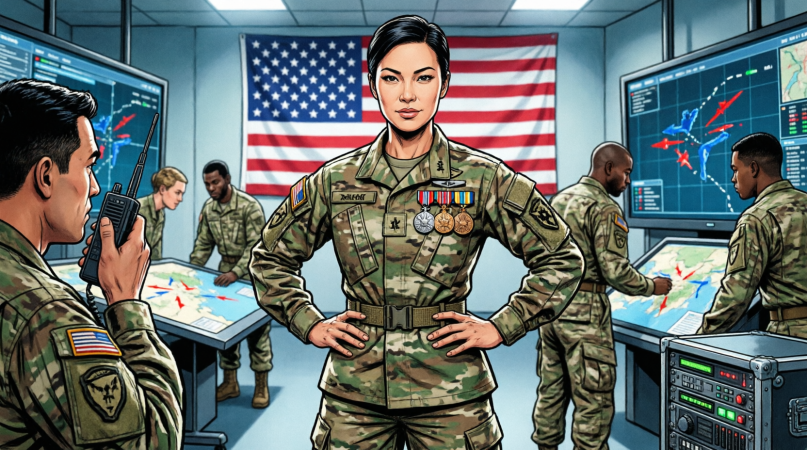
Part 1
My father said I had been dishonorably discharged into a microphone.
Not in a hallway. Not at home with the TV too loud and the ice machine rattling in the kitchen. He said it from a podium wrapped in red, white, and blue bunting on the parade field at Fort Wuka, with about two hundred garrison families eating brisket and coleslaw under a pavilion while the Arizona sun slid down behind the mountains like it wanted out before the rest of us.
“She was dishonorably discharged,” he said, crisp as a rifle crack. “My own daughter couldn’t serve with honor. And she’s been lying to all of you ever since.”
The whole place went still in the ugly, sticky way crowds do when they smell blood and don’t want to admit they’re listening.
I sat at a round table in the back with a paper plate I hadn’t touched. Brisket, cornbread, slaw. The meat was cooling in its grease. The slaw had gone watery around the edges. My plastic fork was still wrapped in a napkin beside my hand. I remember stupid details when things go bad. The lemon wedge in my water glass. The waxy shine on the cheap tablecloth. A little boy three tables over with barbecue sauce on both cheeks and a balloon sword drooping at his side.
My name is Adelaide Kincaid. I was forty-one years old that evening, and up until six seconds earlier I had been doing what I’d gotten very good at over the course of my adult life: taking up as little visible space as possible.
I wore a charcoal blazer over a white blouse with the sleeves pushed to my elbows. On my collar sat a small bronze pin so plain most people would read it as jewelry. The pin mattered. The fact that almost no one there understood why mattered even more.
At the center table, my mother froze with her fingers around a sweating glass of ice water. She wore the same pearl necklace she’d worn to every graduation, funeral, retirement dinner, and church Christmas pageant since I was twelve. My brother Garrett sat beside her in dress greens, his major’s oak leaf catching the light. He stared at his plate like he’d misplaced the instructions for being a decent human being.
My father stood under the pavilion lights as if he owned the air everyone else was breathing.
Colonel Huitt Marshall Kincaid, United States Army, retired.
Even out of uniform, he still moved like rank was stitched into his spine. Broad shoulders. Silver hair combed back hard from his forehead. One of those men who always looked like he’d just finished telling somebody to fix something. He had a drink in one hand and the microphone in the other, and he was giving the crowd the version of me he’d been feeding people for two years.
“She works for some contractor now,” he went on. “That’s all she ever was. No real unit. No record anybody can verify. No honorable service. No honorable anything.”
A wife at the next table pressed her knuckles to her mouth.
One of the NCOs near the buffet line slowly set down the tongs in his hand.
The wind moved through the open side of the pavilion and brought in the smell of dust, mesquite smoke, and hot metal from the folding chairs that had been sitting in the sun all afternoon. Somewhere behind the stage, a flag halyard tapped against its pole in an irregular little rhythm. I heard every click.
I didn’t stand up. I didn’t argue. I didn’t give him what he wanted.
That had always been our family pattern. He performed certainty. Everyone else arranged themselves around it.
I had learned a long time ago that silence gets misread by the wrong people. They call it guilt because that is easier for them than admitting they might be wrong.
My father was warming to the room now. He had found his stride. Public humiliation always gave him energy.
“She told all of you she served. She told all of you she was deployed.” He lifted one shoulder in a theatrical shrug. “But somehow there are no stories, no photos, no real records. Funny how that works.”
My mother still didn’t look at me.
Garrett finally did, only for a second. His face had gone pale under the pavilion lights. Not pale enough to do anything useful, just pale enough to show that, somewhere under all the obedience and polished brass and my father’s approval, a thought had started crawling around in his skull and he didn’t like it.
The display table near the podium made the whole scene worse. Somebody had assembled a Kincaid family military legacy exhibit like we were a museum nobody had asked to visit. My father’s Silver Star citation in a navy mat. Garrett’s Ranger School photo. A framed collage of Kincaid men in uniform from three generations back.
Nothing with me in it.
I was the missing panel in the family stained glass window. The empty space they had papered over with whatever story was most convenient.
My father pointed at me with the hand holding the microphone. “She was never a real soldier. Not like Garrett.”
That should have stung. It would have once. Instead what I felt was stranger and colder, like reaching into a freezer for something you forgot you put there years ago and finding it exactly where you left it.
Three tables over, a man in dress uniform stopped chewing.
Chief Warrant Officer 3 David Harris.
I did not know he would be there that evening. I had never seen him in daylight. The last time I’d heard his voice, it had been through encrypted comms in another country under a sky that looked close enough to touch. Even then he had not known my face. Only my call sign, my instructions, and the fact that if he and his team moved left instead of right, they would die in a corridor lined with pressure plates.
Now his eyes locked on the bronze pin at my collar.
He went very still.
Then his gaze lifted to my face, slid once along the scar near my jawline, and stopped with a precision that told me exactly what had just happened in his head.
Recognition.
Not of Adelaide Kincaid, failed daughter and family embarrassment. Of somebody else. Somebody this crowd did not know existed.
The back of my neck prickled.
If Harris said a word at the wrong time, a dozen carefully sealed doors would blow open in public. There are people who mistake being defended for being safe. They are not the same thing.
Harris set down his fork with deliberate care, like a man handling an explosive he had just discovered in his own lap.
Across the pavilion, my father kept talking, confident and loud and fatally wrong.
Harris slipped his phone from his pocket and stood.
I knew, right then, that whatever happened next was going to be bigger than a family lie. And when he looked at me one last time before walking toward the edge of the pavilion, I felt the first hard shift in the ground beneath us and thought, Oh God. Who did he just call?
Part 2
If you had asked my father which of his children looked most like him, he would have said Garrett without even pretending to think.
Same jaw. Same shoulders. Same habit of planting his feet a little too wide when he talked, like a man about to address troops whether anybody wanted that or not. Garrett was born with the correct face for my father’s love. That wasn’t Garrett’s fault, not at first.
I was the one who came out wrong for our house.
Too quiet. Too observant. Too likely to sit on the staircase and listen to adult conversations instead of barging into the room with a football under one arm. I noticed things. The crack in the dining room ceiling that widened every summer. The way my mother’s smile changed when my father’s truck pulled into the driveway. The way compliments in our house always sounded like invoices.
Good job. Proud of you. That’s more like it.
Nothing came free.
My father loved visible achievement. Medals you could frame. Patches you could point to. Stories with clear heroes and louder endings. He understood things that arrived in formation. He did not know what to do with a daughter who liked maps, languages, and libraries.
When I was fourteen, he found me on the back porch with a spiral notebook full of copied Arabic letters. I had borrowed a language guide from the school library because I liked the shape of the script and the feeling of making my mouth do something unfamiliar.
He tapped the notebook with one finger.
“What’s this for?”
“I’m learning,” I said.
He stared at the page like I had handed him a live insect. “For what?”
That was my father’s favorite question. For what. As if curiosity without an immediately visible use was a weakness.
I didn’t have a good answer then. Maybe I never would have had one he respected.
Garrett, meanwhile, was a parade waiting to happen. Pop Warner, ROTC, varsity everything. By twenty-four he had a Ranger tab and the kind of easy, confident laugh that makes rooms open up around a person. My father practically glowed when Garrett walked in wearing a uniform. He didn’t just love him. He admired him. There is a difference, and children can feel it before they have words for it.
I learned to live off the scraps of being useful.
I got good grades. Then better ones. Then the kind of transcript that made professors look over their glasses and ask where I planned to go next. Georgetown, as it turned out. Then graduate work in Arabic linguistics and regional studies while my father told people back home I was “still figuring things out.”
I remember the smell of my apartment in Washington that first year after college. Dust from old radiators. Coffee grounds in the sink. Rain coming through the cracked window frame over the fire escape. I loved that apartment because nothing in it belonged to him. Not the books stacked in crooked towers on the floor. Not the thrift-store lamp with the dented brass neck. Not the silence.
When I told my parents I was applying to Officer Candidate School, my mother blinked like she had been handed a note in a language she couldn’t read.
My father looked up from carving roast chicken and said, “At your age?”
I was twenty-seven.
Garrett had already deployed once by then. He had stories. Photos. A way of saying things like “when we were outside Mosul” that made every uncle at Thanksgiving lean in.
I got commissioned into military intelligence, and my father reacted the way some men react to hearing their daughter has taken a job alphabetizing paperclips.
“Intelligence isn’t soldiering,” he said, slicing through a thigh joint with more force than necessary. “It’s typing.”
I kept chewing. That was another thing I had learned early: if he wanted a fight, giving him calm was like taking oxygen out of a fire.
Three days after that Thanksgiving, I flew out on orders I was not allowed to discuss and landed in a place so dry my lips split before the car even reached the compound. The first time I stepped into a secure room with no windows, no decoration, and no official name on the door, I felt something in me settle.
No bunting. No speeches. No legacy displays.
Just purpose.
For the next twelve years my life became a series of departures too quiet for family photos. Six months here. Nine there. Temporary apartments with neutral furniture. Cover names. Encrypted phones. Flights at strange hours. A passport that was not always mine and a habit of sleeping light enough to wake at the soft click of a door latch.
When relatives asked what I did, the answer they got depended on who was asking.
Analysis. Contract work. Consulting.
My mother repeated those phrases to other people like she was reading from a recipe card. It wasn’t really her lie. It was my father’s, filtered through her.
The harder part wasn’t keeping secrets from strangers. It was learning what silence does to people who are already determined to misunderstand you. They fill it. They pack it with whatever story best preserves their pride.
Over time, my father became curator of my absence.
Adelaide didn’t finish.
Adelaide does contractor work.
Adelaide couldn’t hack line service.
He said these things with the confidence of a man who had never once asked me a question he didn’t already want to answer himself.
The truth was messier, quieter, and far beyond his clearance.
The truth was long nights in windowless spaces lit by monitor glow. Human source networks. Cross-border routing. Signals stitched to pattern-of-life data until a village or a road or a warehouse started to reveal its hidden shape. The truth was knowing that a convoy lived or died on whether you had noticed one truck that paused too long at one junction three weeks ago.
The truth did not photograph well.
I got a scar on my jaw in a place I still cannot name. Metal fragment. Not large. Not deep enough to kill me, just enough to leave a pale line that catches light if I turn my head too fast. When civilians asked, I said car door. People hear what they are prepared to hear.
My father kept hearing “typing.”
Two years before the family day at Fort Wuka, he called me on a Wednesday night while I was standing in a kitchenette the size of a coffin, eating almonds out of a hotel coffee mug and watching sleet blow sideways against a parking lot.
He didn’t ask how I was.
He said, “You need to request a transfer to a real combat unit.”
I looked at the vending machine outside my door through the thin curtain and said, “No.”
That was it. One syllable, not sharp, not emotional.
He inhaled through his nose. I could hear the old command voice assembling itself. “You are making this family look ridiculous.”
There are conversations you feel entering your bloodstream while they are happening. This was one of them.
“I’m not discussing my assignment,” I said.
“Because there isn’t one worth discussing.”
I remember the exact sound the heater made in that room. A click, then a dry metal hum.
“Goodnight, Dad.”
I hung up before he finished his next sentence.
At the time I thought the worst part of that call was how unsurprised I felt.
Eight months later, a manila envelope landed on my desk with my own name redacted on the cover sheet.
I slit it open with a butter knife from the office kitchenette.
Inside was the first page of the Army proving my father had not been done talking after I said no. And by the time I reached the transcript of the recorded phone call, my hands had gone so cold I nearly dropped the papers.
That was the moment I realized he had not just lied about me.
He had gone after my career.
And the worst line in the transcript was not even the first one I read. It was the sentence halfway down page three that told me exactly how far he had been willing to go.
Place the flag on her record, Colonel. She needs correction.
I read it three times before I could breathe, and on the fourth, I saw the date.
It matched the week my first promotion packet disappeared from the board.
That was when the story stopped being about a difficult father and became something else entirely. Something formal. Something criminal. And when I turned to page four, I found one more detail that made my stomach drop.
The call had been recorded under standing protocol.
Which meant somewhere, in an official Army file, my father’s voice still existed—clear, admissible, and waiting.
Part 3
The first time I understood what my work actually meant, I was not in a dramatic room with maps on the wall and generals staring at screens.
I was in a cinderblock office that smelled like burnt coffee, printer toner, and the dust that settles on everything in dry countries by noon. The fluorescent light above my desk buzzed with a little insect hum. Somebody down the hall had a radio on low, and the same country song kept leaking through the wall every time the singer hit the chorus.
I had been in theater four months. Long enough to stop flinching at rotor noise. Not long enough to stop dreaming in transit schedules and source numbers.
A local contact we had spent nine months building had gone quiet for forty-eight hours. Quiet in that part of the world could mean a dozen things, from family funeral to arrest to dismemberment. I had two analysts at the other end of the room pulling traffic-camera pulls and cell movement. On my screen, a grainy image refreshed every fourteen seconds.
Most people think intelligence breaks open with one big clue. A dramatic call. One perfect photograph. It almost never happens like that. Usually it is a pressure system. Small, boring facts gathering until the air changes.
A white pickup parked one block farther south than usual.
A bakery delivery arriving on a Tuesday instead of a Wednesday.
A man who always carried his cigarettes in his shirt pocket suddenly switching sides.
You learn to respect stupid details. They save lives.
That day, the detail was a timing gap in traffic flow along a service road near a compound everyone in the region insisted was a fertilizer warehouse. The cameras showed trucks going in and not enough coming out. Pattern-of-life data, human source reporting, and the thermal overlay we had been quietly refining for months all lined up at once.
I remember the feeling in my chest when it clicked. Not triumph. Never triumph. More like hearing a lock turn.
I passed the package up. It moved faster than most things do. Faster than gossip in a small town. Faster than grief. Hours later, a strike authorization came back down, clipped and bloodless on the page.
Three high-value targets. One weapons pipeline. One operation later written into an after-action summary I would never be allowed to bring home.
That was Granite Ridge.
My name did not appear where ordinary people would ever see it. A call sign did. Ember Six.
The real work is full of that. You build something precise, dangerous, and invisible, then hand it upward so somebody else can stand in sunlight and talk about outcomes.
I did not mind that, not at first. I liked competence better than applause. Applause tends to attract fools.
But there are costs to being professionally unknowable.
By my mid-thirties I had mastered the art of becoming harmless in conversation. I learned how to nod when distant relatives asked whether I was “still in computers or whatever.” I learned how to let my mother say contractor because correcting her would only lead to questions I could not answer. I learned that my father preferred not knowing, as long as not knowing allowed him to keep me smaller than Garrett.
He wanted categories, and I did not fit any of the flattering ones.
Meanwhile, the Army fit me better than my family ever had.
Not the ceremonial Army. Not the public one. The real one, where people care what you know, whether your read is clean, and if the person on the other end of your voice comes home breathing because you caught something before everyone else did.
I met David Harris through a headset before I met his face.
His team was moving through a city after midnight, boots whispering over broken concrete, the channel crackling every few seconds with that dry electrical static I can still hear if I’m tired enough. On my end of the link, the room was dark except for screens and a strip of red emergency light over the door. Someone had left instant coffee crystals scattered on the console beside me. My right eye burned from staring too long at the feed.
Harris came over the net calm, but I could hear the strain in the way he clipped his consonants. They were pushing through an ambush corridor they did not know was an ambush corridor.
Because of an asset three layers down, we knew.
I rerouted them six blocks east.
They hesitated. Ground people hate being told by disembodied voices that the safer road is the one that looks worse. Then they moved. Thirty-eight minutes later, the first blast hit the street they had just avoided.
They never saw my face. I never saw theirs.
That is the intimacy of the work. You save each other as abstractions.
A month after that, shrapnel kissed my jaw during a separate op and somebody with rough hands and no bedside manner stuck butterfly strips over the cut while I kept giving instructions. The medic said, “You should be unconscious for this to feel fair,” and I laughed harder than the joke deserved because I was tired enough to laugh at anything.
When I got stateside again, my father looked at the healing mark and said, “You should’ve been more careful getting out of your car.”
I said, “Probably.”
He moved on. He didn’t really want the story.
That was the texture of my life then: one world asking for my judgment, another dismissing my existence.
I was selected for promotion the first time after years of service that would have looked extraordinary if anybody outside a secure room had been allowed to describe them. The email from personnel was dry and bureaucratic, but I still sat in my apartment grinning at it like an idiot, eating cold sesame noodles from the carton at midnight.
Then the flag appeared on my record.
No warning. No real explanation. Just a disciplinary annotation that should not have been there, dense with coded language and administrative finality. The board froze my packet. My advancement stopped dead.
I called. I asked questions. Doors half-opened and shut again.
The second time it happened, I stopped believing in coincidence.
By then Garrett had pinned major. My father called to tell me, voice practically glossy with pride.
“Your brother earned it the right way.”
I stood in a secure hallway with a badge lanyard digging into the back of my neck and said nothing. Somewhere in the building, a shredder started up.
Eight months after that, the envelope came.
The transcript read like a script I had somehow been living inside without seeing the cameras. My father had contacted Colonel Marcus Webb directly, using his retired status and advisory access to pressure an active-duty commander into correcting me. Not for misconduct. Not for dereliction. For embarrassment. Because my career made a poor display piece.
There are angers that arrive hot.
Mine arrived clean.
I filed the complaint through proper channels. CID. Inspector General. Every document cross-referenced, every timeline neat enough to cut a finger on. I did not cry over it. I did not call Garrett. I did not call my mother. By then my father had already told half the family I had been discharged, and the other half had accepted the story because it explained too much too easily.
Six weeks before family day, the investigation concluded.
I received formal notice in a plain government envelope. No dramatic knock on the door. No orchestra. Just findings, evidence, and a line informing me that further command action would occur at the discretion of the installation.
At the bottom of the memo was one sentence that did not belong in such calm type.
Presence requested at Fort Wuka Garrison Family Day, third Saturday in October.
No reason. No elaboration.
I stared at that line for a long time while the hum of the air vent stirred the papers on my desk.
Fort Wuka was my father’s stage now. Advisory board lunches, family events, guest appearances, the whole retired-colonel-afterlife package. If the Army wanted me there, they wanted something public.
I should have felt dread.
Instead I felt something sharper.
Curiosity.
Because in my experience, the institution only brings sunlight to a private lie when it has already decided exactly where to point the beam. And as I folded the memo back into its envelope, one thought came to me with a force that made the room seem suddenly smaller:
Somebody was finally going to make him listen.
I just didn’t know yet who would be holding the microphone.
Part 4
I drove onto Fort Wuka just before five in the evening with the windows cracked and desert dust collecting in the corners of the rental car.
Arizona in October has a mean little trick to it. The light looks soft, almost forgiving, while the air is still dry enough to split the skin at the edge of your thumbnail. The mountains stood off in the distance like they had been cut from blue paper and propped there to make the base look more dramatic. Everything else was practical: low buildings, clipped grass, signs with arrows, soldiers moving between parking lots with that quick, efficient end-of-duty-day walk.
The MP at the gate checked my ID, glanced at the roster, then looked at me one extra beat.
“Family Day, ma’am?”
“That’s the rumor.”
He almost smiled. “Lot C, near the parade field.”
“Thanks.”
As I drove in, I passed a row of school buses, a playground with no children on it, and a chapel with a banner out front about resilience. Military posts always smell faintly the same in the evening: cut grass, diesel, cafeteria grease, and hot concrete letting go of the day.
My mother had texted me two days earlier for the first time in months.
Will you be coming Saturday?
No hello. No apology. Just the question.
Yes, I wrote back.
She sent nothing else.
I parked beside a line of SUVs with military family stickers in the rear windows and sat there for a minute with my hands on the steering wheel. Through the windshield, I could see the pavilion already half full. White tablecloths. Folding chairs. A garrison band tuning instruments near the stage. Men in dress uniforms standing too straight. Spouses in sundresses carrying foil pans covered in dish towels.
Normal, from a distance.
There is a particular kind of dread reserved for places where everybody thinks they already know your story.
I got out anyway.
My shoes clicked over the pavement. The bronze pin on my collar caught one stripe of sunlight as I crossed the lot. I could feel it, even through the fabric, like a tiny hot coin. I wore it on purpose. That was as close to a declaration as I was willing to make.
Inside the pavilion, the whole thing looked like an Army version of a county reception: bunting, centerpieces, pitchers of sweet tea sweating onto tables, disposable plates stacked near trays of brisket and peach cobbler. Kids looped between chairs with paper flags. Somebody laughed too loudly at something near the front. A breeze lifted one corner of a tablecloth and dropped it again.
Then I saw the display table.
The Kincaid military legacy.
That was literally the title on the printed card propped beside the frames.
I stared at it for a second, because even for my father the phrasing felt obscene.
There he was in every stage of his career—young lieutenant, stern major, grayer colonel. Garrett in dress uniform, Garrett at Ranger School, Garrett with a squad in some tan place wearing dust and pride. There were copies of citations, retirement photos, challenge coins arranged in velvet trays.
Nothing from me. Not even a childhood photo to pretend they had tried.
I felt something unexpected then. Not pain. More like recognition. Seeing your own erasure laid out under glass can be clarifying.
“Adelaide.”
I turned.
My mother stood three feet away holding a plate of sliced pound cake she had obviously forgotten she was carrying. The pearls rested neatly at her throat. Her lipstick was too pale. Up close, I could see she had not been sleeping well.
“Hi, Mom.”
She gave me the kind of nod women give at funerals when they are afraid a larger emotion will come out if they do too much more than incline their heads. “You came.”
“You asked.”
Her eyes flicked to the pin on my collar and away so quickly I almost missed it. “Your father is speaking later.”
“I gathered.”
Her throat moved. Swallowing. “He’s been under stress.”
It was such a familiar sentence that for one ugly second I nearly laughed. In our house, his moods had always arrived as weather systems everyone else was expected to prepare for.
“I’m sure,” I said.
Garrett approached then, immaculate in dress greens. He had gotten broader through the shoulders with age, but he still carried himself with that same clean confidence the Army teaches men it likes. Up close he smelled faintly of starch, aftershave, and the brass polish everybody pretends not to notice.
“Adelaide.”
“Garrett.”
That was all.
He looked like he wanted to ask a question and didn’t know which one would hurt him least. I could have helped him. I didn’t.
My father appeared behind them a moment later, drink in hand, smile already fixed for the evening.
He saw me. The smile failed.
For half a second I saw the naked mechanics of him: irritation, surprise, calculation. Then the public face snapped back into place.
“Well,” he said. “You decided to show.”
My mother’s fingers tightened around the plate.
“You asked the whole family to come,” I said.
“I wasn’t sure you still counted yourself as part of it.”
There are lines that would have gutted me at twenty-five. At forty-one, they mostly helped me take a cleaner read on the speaker.
“I’m here,” I said.
His eyes dropped to the pin at my collar. Not long enough to understand it, just long enough to register that he didn’t like not understanding it. Then he smiled again, but it had edges now.
“Let’s try not to make a scene,” he said softly, which was rich coming from the man who had never once entered a room quietly in his life.
I almost told him the Army had already handled that part.
Instead I picked up an empty plate and moved toward the buffet. The brisket smelled of pepper and smoke. Somebody had made baked beans with too much brown sugar. Behind me, I could hear my father sliding smoothly into conversation with a younger officer and his wife, already recovering, already performing.
By six, the pavilion was packed. Sunset painted the mountains purple at the edges. Paper lanterns had been switched on above the tables. The band played something patriotic and overfamiliar while servers refilled tea pitchers and children got fussier by the minute.
My father took the podium with the ease of a man stepping into his own reflection.
He opened with stories the crowd liked. Leadership. Sacrifice. Family tradition. Garrett’s service. The old familiar scaffolding.
Then he saw me in the back.
Really saw me.
I watched the instant his plan changed. The lift in his chin. The tiny hardening around the mouth. My father always looked most alive right before he did something cruel and called it honesty.
He leaned closer to the microphone.
I put my fork down beside my untouched brisket.
And when his first lie rang out over the parade field, I didn’t move. But across the pavilion, David Harris stood, made an eleven-second call, came back to his table, and folded his hands with the expression of a man who had just lit a fuse.
That was when I knew the evening no longer belonged to my father.
Part 5
A public accusation works a room the way smoke does. It gets into everything.
After my father announced that I had been dishonorably discharged, nobody knew where to look. Some people stared at him because he was loud. Some stared at me because I wasn’t. A few did that embarrassed, frantic eye-slide people do when they desperately want to become part of the folding furniture.
My father, unfortunately, mistook their silence for agreement.
“She’s been playing make-believe for years,” he said, pacing one step away from the podium and back again. “Consulting, analysis, contractor work. All that means is she couldn’t succeed in real service.”
A nervous titter tried to rise from somewhere near the front and died instantly.
I took a sip of water. It tasted like lemon and melted ice and paper cup.
He pointed toward the display table, toward the framed photographs of himself and Garrett. “This family has a tradition of combat leadership. Not pretending. Not hiding behind jargon. Actual service.”
That word—actual—did something physical to me. Not dramatic. A small internal click, like a round seating cleanly in a chamber.
Still, I said nothing.
Because the worst thing you can do to a man like my father is not scream. It is make him keep talking.
He swiveled, found Garrett in the crowd, and reached for the one story he thought would save him.
“My son’s unit supported an interdiction outside Mosul,” he said. “Thermal imaging. Insurgent movement on the supply road. Boots in the dirt. That’s what real operational support looks like.”
He looked right at me on the last sentence.
There was my opening.
I set down my glass.
“The thermal overlay your son’s unit received wasn’t generated at ground level,” I said.
I did not raise my voice, but the pavilion had gone so quiet it carried anyway. The words moved through the room like a knife laid flat on a table.
My father blinked. “Excuse me?”
“Ground elements in that sector didn’t have organic thermal imaging capability during that rotation.” I folded my hands in front of me. “The feed was routed through a compartmented human-source integration package with a fourteen-second refresh cycle. Battalion level received the product. They did not build it.”
Garrett turned his head toward me so slowly it was almost mechanical.
I could hear the pavilion lights buzzing overhead.
My father’s face lost color in stages. It was subtle if you didn’t know him. The temples first, then the skin around the mouth. He knew enough to recognize two things at once: one, that what I had just said was real, and two, that I should not have been able to say it if I were what he had spent two years telling everyone I was.
He recovered the way men like him always do—by attacking harder.
“That is exactly what I mean,” he snapped. “She memorizes language from briefing papers and pretends she was in the room.”
I tilted my head. “Version 7.3 response calibration keyed off eleven months of pattern-of-life collection.”
It was not a bluff. It was not guesswork. It was a simple technical correction. The kind I had made in rooms full of nervous officers and overconfident men for most of my career.
My father gripped the edge of the podium. “This woman,” he said, jabbing a finger at me, “was removed from service. I confirmed it through my own channels.”
The phrase through my own channels hit the crowd differently now. I could feel it. It landed with the dull sound of something rotten being dropped on a clean floor.
Behind him, my mother’s water glass tipped over. Ice slid across the white tablecloth and hit the table number stand with a brittle little clink. She didn’t pick it up.
Garrett looked like he had forgotten how to sit in his own body.
My father leaned toward the microphone again, too far now, almost hungry. “She even bought herself a pin from a surplus store—”
The public-address system cracked.
Every speaker in the pavilion popped with a harsh burst of static. Somebody’s child yelped. A few people flinched. My father jerked his head toward the sound booth in irritation.
Then the static cleared.
“Ladies and gentlemen,” a calm male voice said over the speakers, “please remain seated.”
The side entrance near the stage opened.
Two MPs in dress uniform stepped in first, one on each side, faces expressionless in that young-soldier way that means they have been told exactly how serious the next five minutes are and will not be freelancing.
The crowd shifted. Chairs scraped. Nobody actually stood.
Then the man behind them entered, and the whole mood of the pavilion changed so completely it felt like a pressure drop.
Major General Franklin Cross.
Tall. Silver-haired. Dress blues that looked ironed onto him by a more disciplined species. Ribbons across his chest, stars on his shoulders, face cut from the kind of composure that only comes from decades of knowing exactly when to speak and when to let everybody else panic.
He did not look at my father first.
He looked at me.
Only for a second. But I knew that look. It was the look of someone who had read the classified file, not the family rumor.
David Harris rose from his chair.
He came to attention and saluted.
Not the general.
Me.
A murmur rippled through the pavilion like wind moving across tall grass. Two other officers at separate tables stood a beat later and did the same, eyes fixed not on the podium, not on the stars, but on me.
My mother’s mouth parted.
Garrett half-rose and stopped, caught between instinct and disbelief.
My father did not move. He looked from Harris to me to General Cross and back again, and for the first time in my life I saw confusion take him whole.
General Cross stepped to the podium. My father stood beside it, suddenly too close to the microphone, too loud in civilian clothing, too obviously not in charge.
The general opened a leather folio, adjusted the mic one inch downward, and said, “I am going to read a formal communication. It is not long. I ask for your attention.”
Nobody in that pavilion breathed normally after that.
The first page was for my father.
I knew it before the general said his name.
The second was for me.
I knew that too.
But knowing a storm is coming is not the same thing as hearing the first bolt split the sky. And as General Cross lifted the page and my father’s fingers slipped off the podium, I felt a sensation I had almost forgotten was possible.
Not fear.
Anticipation.
Because somewhere in an evidence file, my father’s own voice was about to stand up in front of everybody who had believed him. And when General Cross read the first line—“The following formal censure is entered into the permanent record of Colonel Huitt Marshall Kincaid, retired”—I watched the man who had built his life on controlling the story realize, too late, that the Army had brought the recording.
Part 6
There is no sound quite like a room changing its mind about a person.
It is not a gasp, not exactly. It is smaller and stranger than that. A thousand tiny recalculations happening behind eyes and under skin. A crowd re-shelving its assumptions while pretending not to.
General Cross read in a voice so even it made the words feel heavier.
“Pursuant to an investigation by the Office of the Inspector General and the Army Criminal Investigation Division, the following findings have been substantiated.”
My father’s left hand drifted toward the podium again and missed.
The general continued.
“Charge one: improper command influence. Colonel Kincaid, in a retired advisory capacity, contacted the commanding officer of an active-duty service member and sought to pressure that officer into placing a disciplinary annotation on her record without lawful authority or factual basis.”
The sentence hung there, hard and clean.
My father opened his mouth. “General, if I may—”
“You may not,” Cross said without looking up.
That was the first true humiliation. Not the crowd, not the exposure. Being denied the floor.
“Charge two,” the general went on, “attempted manipulation of a service member’s promotion eligibility through an improperly influenced personnel action. The annotation in question delayed Captain Adelaide Renee Kincaid’s promotion consideration on two separate occasions.”
Somebody at the front whispered, “Captain?” before his wife elbowed him silent.
The title moved through the audience a second after the word itself did. Captain. Not contractor. Not washout. Not discharge. Captain.
My mother’s shoulders began to shake. She still made no sound.
Garrett looked at my father now, not me, and the expression on his face was brutal in its simplicity. Not horror. Not outrage. Recognition.
“Charge three: conduct prejudicial to good order and discipline, including the dissemination of knowingly false statements regarding Captain Kincaid’s military status and service record, among them the fabricated claim that she was dishonorably discharged.”
The general closed the first page and lifted his eyes.
My father had gone gray under the desert tan. He looked older than he had twenty minutes earlier. Smaller too, although his body had not changed. It was the absence of authority doing it. Authority fills a man out. When it drains away, you finally see the bones.
“Effective immediately,” General Cross said, “your advisory role with this installation is terminated. Your access credentials are revoked. You will surrender your installation pass to the military police before departure.”
The two MPs didn’t move. They didn’t need to. The certainty of their stillness was enough.
My father made a sound then. Half breath, half swallowed word. He had spent so many years speaking over other people that silence did not know where to put him.
General Cross turned the page.
The whole pavilion seemed to tighten.
“Now,” he said, and the word changed temperature somehow. “A second communication.”
If the first page was a blade, the second was a light switched on in a room people had been fumbling through for years.
“Captain Adelaide Renee Kincaid holds an active TS/SCI clearance with compartmented access and has served with distinction across multiple operational theaters under the direct authority of this command.”
Across the pavilion, a fork fell and bounced once on concrete.
I kept my face neutral. Years of training. Years of not reacting where anyone could use it.
Still, I felt my pulse in the base of my throat.
“Over fourteen years of commissioned service, Captain Kincaid has led joint intelligence tasking elements, managed clandestine source networks, and served as principal intelligence architect in an operation that resulted in the identification of three high-value targets and the disruption of a regional weapons pipeline.”
The general did not name the operation.
He did not need to.
David Harris was still standing at attention, his salute crisp and unwavering. I could see wetness in his eyes from where I sat. That moved me more than the rest of it, maybe because it was not ceremonial. He was not saluting rank. He was saluting memory.
Then the general said the one line that finally broke the room open.
“Captain Kincaid’s clearance level exceeds that of any person present in this pavilion, including, for certain compartments, my own.”
Nobody tried to hide their reaction after that.
The murmur hit all at once. Sharp inhales. Chairs shifting. A soft swear somewhere near the dessert table. A little girl asking her mother, much too loudly, “What does that mean?” and her mother whispering, “Hush,” like the child had spoken during church.
It should have felt satisfying.
It did, a little.
But mostly it felt exhausting. Vindication is not pure. It arrives carrying all the years you needed it and all the people who would have believed you sooner if they had wanted to.
The general finished with the formal part: the annotation had been expunged, my promotion would proceed, and the command extended its gratitude for service many benefited from without ever knowing my name.
That last line landed in me harder than I expected.
Because that was exactly it. Most of the work worth doing had no audience. The audience came later, usually when something had gone wrong.
General Cross closed the folio.
For a second nobody moved.
Then I stood.
Slowly. Deliberately.
The chair legs didn’t scrape. I had set it down carefully enough for that. My blazer settled around me. The bronze pin caught one last stripe of sunset.
I looked at my father.
Not the colonel. Not the speaker. Not the family historian who had edited me out and then invented reasons for the missing space.
Just the man.
He looked back with the bewildered vacancy of somebody who had spent years building a version of reality and had just watched it get removed, wall by load-bearing wall, by people with paperwork.
“I didn’t know,” he said.
His voice was small. I had never heard it small before.
That, more than the censure, more than the loss of access, more than the crowd, told me something final had happened.
I folded my hands in front of me.
“You didn’t ask,” I said.
Not loud. I didn’t need loud.
The pavilion heard anyway.
He blinked once. “Adelaide—”
“You never asked.”
The second time I said it, the words landed harder.
He swayed as if somebody had nudged him from the inside.
I could have gone on. I had years of sentences. Thanksgiving tables. Ignored calls. My mother repeating lies because he said them first. Garrett wearing rank I should have reached before him. The part where he used his retired influence like a crowbar against my record because my real service didn’t make good dinner conversation.
But the truth was, I didn’t owe him the speech. The Army had already done the official part. Anything extra would be for me.
So I gave him the clean version.
“You spent thirty years in uniform,” I said, “and you still never learned the difference between loud service and real service.”
He flinched as if I had thrown something.
My mother covered her mouth.
Garrett stared at the floor, then at the oak leaf on his own collar, then at me. Shame came over his face slowly and all at once.
I turned to General Cross and gave him a small nod. Professional. Nothing more. He returned it with the same economy.
As I walked past Harris, he lowered his salute and said one quiet phrase meant only for me.
“Ember Six.”
I did not stop. I did not confirm.
But my step caught for half a beat, and his eyes sharpened in understanding.
Outside, the air had cooled enough to smell like creosote and dust. The sky was turning that deep desert blue that looks almost black around the edges. Behind me, under the pavilion, the Kincaid family story was collapsing in public.
I got halfway to the parking lot before I heard footsteps behind me.
For one second I thought it might be Garrett.
Then I heard my father’s voice, raw and unfamiliar, call my name again.
And this time, when I turned, there was no crowd left to protect him.
Part 7
He had never looked ordinary before.
That was the first thing I noticed when I turned around in the parking lot.
No podium. No microphone. No admirers standing nearby with paper plates and eager smiles. Just my father under a sodium-vapor light that hummed above the curb, his suit jacket hanging open, his tie crooked, one hand empty where his installation badge had probably been a few minutes earlier.
Ordinary looked terrible on him.
“Adelaide,” he said again, slower now, like maybe if he softened the syllables the whole evening could be walked back.
Cars ticked as their engines cooled. Far off, somebody laughed too loudly in the direction of the pavilion, the way people do after tension breaks and they don’t know where to put the leftover adrenaline.
“What?” I asked.
He stopped six feet away. Not because he respected boundaries. Because he no longer knew what kind of distance existed between us.
“I was trying to protect the family.”
I actually smiled at that. Not because it was funny. Because some lies arrive so predictably they almost feel nostalgic.
“By telling people I was discharged?”
His jaw tightened. “You disappeared. You wouldn’t explain anything. Your mother was humiliated every time someone asked where you were.”
There it was. Not concern. Not fear for my safety. Social inconvenience.
The parking lot lights flattened everything. They made his face look older and meaner, carved the lines around his mouth deeper than I remembered. I could smell aftershave under the dust and cold air.
“I was under orders,” I said.
“You could have told me enough.”
I stared at him. “Enough for what?”
He had no answer ready for that. That was unusual. My father was a man who always had an answer ready, even when it was the wrong one.
“You think this is about information,” I said. “It never was. You didn’t want the truth. You wanted a version of me you could explain to other men.”
He breathed in hard through his nose. “You’re twisting this.”
“No. I’m finally saying it out loud.”
He looked away toward the mountains, dark now against the sky. “I made one call.”
That sentence made something cold settle fully into place inside me.
One call.
As if careers were not made of years and could therefore be damaged by a single phone conversation without consequence. As if the two promotions I lost were clerical inconveniences. As if the rumors he spread were just words and not absences accumulating into a whole second life.
“You made a call that got recorded,” I said. “That’s the only reason we’re standing here.”
His face hardened. “Webb overreacted.”
“No. Colonel Webb followed protocol because a retired officer tried to influence an active-duty personnel action.”
My father’s mouth thinned. He still wanted, even then, for the Army to be a private club whose rules bent around men like him.
“I knew that kind of assignment wasn’t good for a woman,” he said.
That did it.
All evening I had been moving on old training—controlled breathing, measured tone, surface calm. But that sentence tore through every last thread of restraint.
I took one step toward him.
“Don’t do that,” I said quietly. “Do not stand here and pretend this was concern. You did this because you hated that my work was real and you couldn’t see it. You hated that I had access you didn’t. You hated that I did not need your approval to be effective.”
His eyes sharpened. There. I had touched the nerve.
“You think this makes you superior?”
“No,” I said. “Just finished.”
The word seemed to hit him in a place no accusation had.
Finished.
Because men like my father can survive anger. They can survive blame. They can even survive public shame if they think there is still a route back into the room. What they cannot survive well is finality.
“Adelaide,” he said, and now there was something almost pleading in it. “You’re my daughter.”
“Yes,” I said. “And you used that to get close enough to damage me.”
He opened his mouth, then shut it.
I unlocked my rental car.
The beep sounded indecently cheerful.
“You don’t get to call what happens next forgiveness,” I said, hand on the door. “There isn’t any. There may be distance. There may be silence. There will not be forgiveness.”
His face changed again, that quick sequence of disbelief, offense, and fury. “After everything I did for this family—”
“That’s the problem,” I said. “You think everything is owed back to you.”
I got in and shut the door before he could answer.
Through the windshield I saw him still standing under the light, shoulders squared against emptiness, looking less like a disgraced colonel than an old man who had just found out his house was built on paperwork he never bothered to read.
I started the engine and drove away.
The weeks after that had the blunt efficiency of institutional cleanup. My father’s photo came down from the hallway near the garrison commander’s office. His speaking invitations stopped. A defense consulting firm let his contract “sunset.” His advisory email address was deactivated. Army people are polite about endings when they want to be. Polite and absolute.
My own correction orders moved faster than I expected. The flag was removed. My promotion packet re-entered the system. A JAG captain named Lila Morse called to walk me through the timeline, her tone professional with a thin edge of satisfaction under it.
“You should have been made whole sooner,” she said.
“Sooner is overrated,” I told her.
She laughed once. “You sound tired.”
“I am.”
“Take the win anyway.”
The first family contact came from Garrett eleven days after Family Day.
I was at my kitchen counter cutting a bruised pear out of a grocery-store fruit bowl when the phone lit up with his name. I let it ring twice before answering.
“Adelaide.”
Silence. Not empty silence. Working silence.
Then: “Were you Ember Six?”
I closed my eyes.
In the background on his end I could hear a turn signal ticking. He was in a car. Good. People say truer things when they’re watching the road.
“I can’t confirm that,” I said.
Another pause.
“Yeah,” he said finally, voice rougher than I had ever heard it. “I figured.”
He didn’t apologize. He didn’t ask why I hadn’t told him. He didn’t say our father had been wrong. He just breathed once, hard, and disconnected.
It was not enough.
But it was more honesty than I had ever gotten from him without a uniform in the room.
Three weeks later, my mother wrote.
Actual paper. Cream stationery with a pale blue border, the kind she saved for sympathy notes and wedding gifts. I found the envelope tucked in my mailbox between a utility bill and a flyer for carpet cleaning.
Her handwriting wavered a little.
Adelaide,
I should have called. I should have asked. I should have believed my own daughter before anyone else. I did not.
I am proud of you.
Love,
Mom
Four lines. No excuses. No request to come home. No plea for repair.
I sat at my kitchen table with the letter in both hands while rain tapped against the apartment window. The radiator hissed. Somebody upstairs dragged a chair across the floor.
I read it twice, folded it back along its original creases, and put it in the top drawer beside an old photo from a deployment nobody in my family had ever seen.
Then, two nights after that, there was a knock on my apartment door at 9:17 p.m.
I checked the peephole and saw my father standing in the hall holding a small leather box in both hands.
And for the first time since the parking lot, I felt something very close to anger again—because men like him never really believe the first no counts.
Part 8
The leather box was one I recognized.
Dark brown, scuffed at the corners, brass clasp polished by years of thumbs. My father used to keep medals in it he didn’t display. Things with stories too long for company or meanings too private for his public shelves. When I was a kid, I once got caught touching it in his study. He took it from my hands and told me some things had to be earned before you laid claim to them.
Now he stood outside my apartment holding it like an apology he expected me to admire.
I opened the door but left the chain on.
“What do you want?”
He looked uncomfortable in civilian clothes. Out of uniform and out of his own house, he seemed somehow unfinished, like the world had stopped halfway through constructing him.
“Five minutes.”
“No.”
His mouth tightened. “I drove three hours.”
“That was your choice.”
For a second I thought he might go cold and authoritative again. Instead he lifted the box slightly.
“I brought something for you.”
That made me angrier than I expected.
Not because I wanted whatever was inside. Because he still thought the transaction model applied. He had spent my whole life converting love, recognition, pride, and attention into rations. Earn this. Prove that. Perform correctly and maybe you get the box, the praise, the seat at the table.
“I don’t want a gift.”
“It isn’t a gift.”
“Then what is it?”
He took a breath through his nose. “Open the door.”
I almost laughed. “No.”
The hallway smelled like somebody else’s dinner—garlic, onions, a little burnt butter. My neighbor’s television murmured through the wall. The domestic normalcy of it made the whole scene feel more absurd. Here was my father, retired colonel, public moralist, architect of my professional damage, standing outside apartment 4C like a man who had misread the visiting hours.
He looked tired. That should have softened me. It didn’t.
Finally he said, “I listened to the recording.”
That got my attention.
The chain stayed on. “And?”
He swallowed. “I sounded… worse than I remembered.”
I stared at him.
There are people who think shame and accountability are twins. They are not. Shame is inward. Accountability requires motion.
“You were worse than you remembered,” I said.
His eyes closed for half a beat. “I know.”
It was the first unqualified admission I had ever heard from him.
Still not enough.
The leather box creaked quietly in his hands as he gripped it. “Your mother found the old file where I kept your letters from basic and OCS.”
I had not written many. Just enough to keep the peace. Short updates, careful jokes, no detail that could later be weaponized. The idea that he had kept them at all surprised me in a mean little place under the ribs.
“I didn’t come for memory lane,” I said.
He nodded once. “Fair.”
Rain tapped at the far stairwell window. Somewhere a baby cried and was shushed.
At last he said the sentence that mattered.
“I knew you were still in.”
I felt all the air in my body shift.
Not because it shocked me entirely. Some part of me had suspected. The old man was arrogant, not stupid. But hearing it said aloud rearranged the damage.
“What?”
His jaw worked. “Not the details. Not your clearances. Not any of that. But I knew you hadn’t been discharged.”
I let the silence after that sit there until it started to hurt.
He looked at the chain on the door instead of at me. “I told people what I told them because… because it made more sense than the alternative.”
“What alternative?”
He raised his eyes then, and for one naked second I saw something uglier than pride.
Fear.
“That you were doing things I couldn’t understand,” he said. “That you were in rooms I wasn’t invited into. That you had built a career I couldn’t evaluate.”
The honesty of it almost winded me. Not because it was tender. Because it was so small. After all the years, all the damage, the answer was still vanity dressed up as principle.
“You sabotaged my promotion because you felt left out,” I said.
“It wasn’t only that.”
“Then tell me the part that makes you look better.”
He had nothing.
He shifted the leather box to one hand and rubbed the back of his neck with the other, suddenly looking older than I had ever seen him.
“There’s a medal in here,” he said. “Mine. Not the Silver Star. An older one. I thought maybe—”
“Stop.”
He stopped.
I kept my voice level because anger spoken level cuts cleaner.
“You do not get to hand me one of your medals as if that bridges this. I did not spend fourteen years earning a place in rooms you cannot imagine so you could bless it afterward with something from your shelf.”
His face flushed dark.
“I am trying,” he snapped.
“No,” I said. “You are managing optics.”
That landed. I could tell.
He drew himself up a little. Old reflex. “What do you want from me, then?”
The answer came so fast it felt like truth finally getting tired of waiting.
“Nothing,” I said.
He stared.
“Not an apology. Not money. Not your medals. Not a revised story told at Christmas. I want you to live with the fact that you knew enough to question your own lie and chose it anyway. I want you to understand that there is no version of this where I circle back because time passed and you feel bad now.”
He looked at me the way people look at closed gates when they have always assumed they had a key.
“Adelaide—”
“I mean it.” I put my hand on the door. “You do not get late access to me just because the truth became public.”
His shoulders sagged then in a way I will never forget. Not dramatic. Not cinematic. Just a fraction of an inch, like a structure settling after something essential has been removed.
He lowered the leather box.
“Your mother still hopes—”
“This isn’t about Mom.”
He nodded.
For a moment I thought he might say he was sorry. Really say it. Without conditions. Without a speech attached. Instead he asked, “Are you happy?”
It was such an unexpected question I nearly answered it honestly.
Then I realized what he was really asking.
Have I ruined you permanently?
“More than I was,” I said.
He accepted that like a wound.
I closed the door.
Not slammed. Just closed.
Through the wood I heard him stand there for several seconds. Then one quiet metallic click as he set the leather box on the hallway floor outside my apartment and walked away.
I waited until the sound of his steps disappeared down the stairs before opening the door again.
The box sat in the dim hall light like an old argument.
I picked it up, brought it inside, and set it unopened on my kitchen table.
I should have thrown it out. I knew that.
Instead I stared at it for a long time, hearing his voice say I knew you were still in, and felt a much deeper betrayal slot into place.
Because the public lie had been vicious.
But the private truth underneath it was worse.
He had not erased me because he thought I was nothing.
He had erased me because he knew I was something he could not control.
And when I finally unlatched the box near midnight, what I found inside was not the medal I expected.
It was a stack of my old letters, tied with a faded ribbon, and one unsigned note in my mother’s handwriting that changed the shape of everything I thought she had known.
Part 9
My mother’s note was short enough to fit in the palm of my hand.
I found it tucked beneath the letters, folded twice and yellowing a little at the edges. No date. No signature. Just her handwriting, neat and slanted the way it had always been when she was trying not to shake.
Huitt,
She cannot tell us more. Stop asking. If you love her, let what she can say be enough.
E.
I sat down so hard my kitchen chair squealed against the tile.
The radiator clanged once. Rain scratched at the window. The leather box smelled faintly of old paper, cedar, and the kind of closet air that collects around things people keep because they do not know how to throw them away.
I read the note again.
Then again.
It did not absolve her. But it moved a wall.
My mother had known, at least at some point, that I was telling the truth as far as I was able. She had seen enough to tell him to stop. Which meant that when she later repeated his story to other people, it had not been from ignorance alone. It had been from surrender.
The distinction mattered, though not in the way forgiveness stories like to pretend it does.
I slept badly that night. Dreams made of hallways, redacted pages, and my father standing outside a locked door asking for five minutes forever.
Two days later, my mother called.
I let it ring once longer than necessary before answering.
“Hi, Mom.”
Her breath shivered in my ear. “He shouldn’t have come.”
“No.”
“I told him not to.”
I looked at the note on my counter where I had left it all morning, weighted under the sugar jar like it might float away if I didn’t pin it down. “I found your message.”
Silence.
Then: “I didn’t know he kept that.”
“You knew enough.”
Her inhale caught. “Yes.”
That was the sound of a person stepping onto the only honest ground left.
Outside my window, a delivery truck backed up with three slow beeps. My upstairs neighbor started vacuuming. Life is rude that way. It keeps happening while yours is rearranging itself.
“Why didn’t you call me?” I asked.
Not accusing. Not gentle. Just direct.
My mother took so long to answer that I had time to picture her in the breakfast nook back home, one hand around a coffee mug gone cold, the curtains over the sink still the same faded yellow she had refused to replace for fifteen years.
“Because,” she said at last, “I spent too many years making peace with the loudest person in the room.”
I closed my eyes.
There it was. Not an excuse. Not enough. But true.
“I believed you,” she said. “Then I doubted myself. Then I let him make the doubt sound sensible.”
That hurt more than if she had simply said I was scared.
Because that was the thing betrayal by quiet people teaches you. Harm does not always arrive shouting. Sometimes it arrives by standing still while someone else does the shouting for both of you.
“I’m not coming home for holidays,” I said.
“I know.”
“I’m not pretending this didn’t happen.”
“I know.”
“I don’t forgive him.”
Her voice thinned. “You don’t have to.”
That surprised me enough to sit me back in my chair.
Most families, when the truth comes out, immediately start constructing the bridge back. He’s still your father. Life is short. People make mistakes. My mother did not do that. Maybe because she finally understood the scale. Maybe because she was more tired than I had realized.
Instead she said, “I would still like to know you, if you ever let me.”
It was the closest thing to a request instead of a demand I had ever heard from her.
“That’s a smaller thing,” I said.
“I know that too.”
We talked for eleven minutes. About nothing important on paper. Her hydrangeas had died in the heat. My apartment sounded noisy. Garrett had been quiet lately. She asked whether I was eating enough, then laughed softly at herself for how ridiculous that sounded after everything else. When we hung up, I was not healed. I was not warm. But I was less alone.
Garrett texted three days after that.
Can I buy you coffee if I’m in D.C. next week?
I stared at the message while standing in line at a pharmacy with shampoo, aspirin, and a bag of clementines in my basket. The woman in front of me was buying cough drops and a pregnancy test. Somebody near the greeting cards sneezed twice.
I typed one answer.
One hour. Public place.
He replied: Fair.
We met in a coffee shop near Dupont Circle on a gray Thursday afternoon. The place smelled like espresso, wet wool, and cinnamon syrup. Garrett arrived early, which told me more than any apology would have. He looked tired. Really tired. Not sleep deprived. Morally tired.
He wore civilian clothes. Without the uniform, he looked more like our mother around the eyes than I had ever noticed.
“I’m sorry,” he said before he sat down.
There it was. Simple, unadorned, no strategy. I almost trusted it on sight, which made me cautious.
“For what part?” I asked.
He absorbed that. “For believing what was easy. For not asking you myself. For enjoying being the son he could brag about.”
The honesty of that last sentence made my chest pinch.
Steam fogged the window behind him. A bus hissed at the curb outside.
“I don’t know what to do with you yet,” I said.
“You don’t have to do anything.”
We talked for fifty minutes. About the family event. About the operation near Mosul he now understood from a new angle. About how many things he had accepted because our father said them first and in the right tone. When he asked whether the line about clearance levels had been true, I said, “More or less,” and watched him let out one stunned breath that almost became a laugh.
At the end, he reached for the check and stopped. “I don’t expect this to be fixed.”
“It isn’t.”
“I know.”
When we stepped outside, the air smelled like rain on pavement and roasted chestnuts from a street cart down the block. Garrett shoved his hands into his coat pockets and looked older than his forty years.
“He asked if I could talk to you,” he said.
My face must have changed, because he held up both hands slightly. “I said no. I’m just telling you.”
“Good.”
He nodded. “He still thinks there’s a version where enough time passes and you come around.”
“He should get used to disappointment.”
A strange expression crossed Garrett’s face then. Sadness with a little admiration folded into it.
“You always were better at that than the rest of us,” he said.
“At what?”
“Telling the truth after everyone else got comfortable with the lie.”
He left after that, and I stood on the sidewalk a minute longer than necessary, watching traffic smear headlights across wet asphalt.
That evening, back at my apartment, I got an email from personnel confirming my promotion date.
Major.
Just a word on a screen. Still, my hands shook.
An hour later, another message arrived from Fort Wuka.
Captain Miller, Intelligence Center mentorship office.
We would be honored if you would consider helping us build a program for junior women in military intelligence.
I read the email twice, then looked at the leather box still on top of my bookshelf.
For the first time since Family Day, the future did not feel like a courtroom or a clean-up operation.
It felt like a choice.
And choices, unlike apologies, are where real endings begin.
Part 10
I pinned major in a room with no windows.
That felt right.
No parade field. No band. No bunting trying to make pain look patriotic. Just a secure conference room inside a building at Fort Wuka with no public directory listing and a door that shut with a soft hydraulic sigh behind you. The fluorescent lights buzzed faintly overhead. The coffee in the urn at the side table had been on too long. Somebody had arranged grocery-store muffins on a tray with more optimism than skill.
I had been asked whether I wanted a formal ceremony.
I said no so fast the administrative sergeant on the phone laughed under his breath and then apologized for laughing.
General Cross attended anyway, because some rituals belong to institutions whether you want them or not. So did Captain Miller from the mentorship office, JAG Captain Lila Morse, and David Harris, who stood near the back of the room in dress uniform with his hands folded behind him and the face of a man trying not to grin.
Garrett was not there.
My mother was not there.
My father had sent a letter two weeks earlier asking to attend. The envelope had my name written in his rigid block hand, every capital letter looking like it had been issued orders.
I did not answer. I did not need to. Silence can close a door just as well as it once protected one.
General Cross said a few remarks about service, competence, and the kind of leadership that leaves other people safer than it found them. He kept it short. He knew me well enough by then to understand I trusted brevity more than praise.
Then Captain Miller pinned the rank on one side of my uniform coat and Harris did the other.
His fingers were steady. He met my eyes once, briefly.
“About time, ma’am,” he murmured.
That made me smile despite myself.
When it was over, people clapped the contained, respectful clap of professionals in a room that understood what could and couldn’t be said. Someone took one photograph for the internal record. In it I am standing straight, one hand at my side, expression unreadable to anyone who doesn’t know the difference between composure and joy.
I took the printed copy of that photo later and put it in a frame on my desk facing inward, so only I could see it.
Not hidden.
Private.
There is a difference.
The mentorship program started in January.
We named it the Kincaid Women in Intelligence Initiative because institutions enjoy irony more than individuals do, and because I had decided long before the paperwork cleared that if my last name was going to sit on any wall at Fort Wuka, it would sit there beside women my father would never have recognized as the future.
Twelve officers and warrants in the first cohort.
One spoke Pashto with an Oklahoma drawl. Another had grown up in Detroit and could reverse-engineer source networks in her head faster than most captains could open a slide deck. One was so shy her voice nearly disappeared in group sessions until she got talking about targeting matrices and then nobody could shut her up.
I liked them immediately.
Not because they were all noble or easy. They weren’t. Some were defensive. Some brittle. Some had already learned the exhausting trick of speaking half a step louder than necessary so mediocre men would stop talking over them.
But they were serious.
That matters more.
We met in a small room off the secure wing twice a month. Coffee, legal pads, bad government pens, fluorescent light. We talked about source validation, career management, operational patience, the politics of being underestimated, and how not to mistake secrecy for shame.
That last one hit some of them hard.
I told them what I could without telling what I couldn’t.
I told them there would be rooms where their work was used before it was understood. Rooms where louder men took credit because they had better chins and worse consciences. Rooms where silence would feel like erasure if they weren’t careful.
“Silence is a tool,” I said one afternoon while rain tapped against the reinforced window at the end of the hall. “It is not your identity. Know the difference.”
Captain Miller wrote that down.
Months passed.
My mother and I spoke every few weeks. Not deeply. Not theatrically. We built something smaller and more honest than what had existed before. She sent me photos of her garden after she replanted it. I told her when I was traveling in broad enough terms to be polite and useless at once. She never again asked me to forgive my father. For that restraint alone, I was grateful.
Garrett and I met for coffee three more times over the next year. We learned each other as adults instead of assigned roles. It was awkward, then easier, then something almost like siblinghood. Not because blood demanded it. Because effort did.
As for my father, he wrote twice more.
The first letter was mostly defense dressed as reflection. I burned it in a ceramic bowl on my balcony and watched the ash lift into the cold evening air.
The second was better. Shorter. It contained the words I was wrong without qualification. I believed him. I still did not answer.
People love stories where the broken parent finally says the right sentence and the child, moved by grace or nostalgia or social pressure, comes home.
That was never going to be mine.
Not because I am cruel.
Because consequences are part of truth too.
He had two promotions taken from me, years of family trust corroded, and my name dragged through rooms I was not in. He did that with intention. Regret later did not turn intention into accident.
One evening in late spring, after a long day in the SCIF, I stayed late in my office and watched the last light go amber on the concrete outside. My desk held a secure terminal, a chipped mug from a gas station in Amman, the inward-facing photo from my promotion, and a printout of the mentorship roster with notes in the margins.
There was a knock on my open door.
Captain Miller leaned in. “You heading out?”
“In a minute.”
She smiled. “You know they all talk about you like you’re ten people.”
“That sounds exhausting.”
“It’s admiration.”
I snorted. “Worse.”
She laughed and started to leave, then hesitated. “For what it’s worth, ma’am… there are a lot of us here because you stayed.”
After she left, I sat very still.
The room hummed softly around me—ventilation, electronics, the low persistent life of a building built to keep dangerous knowledge in the right hands. Through the glass panel beside the door, I could see my own reflection faintly superimposed over the hallway: the scar at my jaw catching the overhead light, the silver oak leaf at my collar, the posture of a woman no longer waiting to be seen correctly by the people who preferred her smaller.
I was not the blank space in the Kincaid story anymore.
I was not the lie told to protect a man’s ego.
I was not the daughter who came home when called and stood still while someone else defined her.
I was a major in the United States Army. I was the architect of work most people would never know how to name. I was the woman junior officers came to when they needed patience, precision, or permission to stop apologizing for being good at something quiet.
And my father, wherever he sat with his regrets and his careful letters and the silence of rooms that no longer rose for him, would have to live with the one outcome he never planned for.
He did not erase me.
He revealed me.
Just not to the people he intended.
THE END!
Disclaimer: Our stories are inspired by real-life events but are carefully rewritten for entertainment. Any resemblance to actual people or situations is purely coincidental.