I STOOD OUTSIDE A CHARLOTTE HOSPITAL WITH FRESH STITCHES BURNING THROUGH MY ABDOMEN, WAITING FOR THE BLACK CHEVY TAHOE I HAD BOUGHT FOR MY PARENTS TO TAKE ME HOME—BUT WHEN MY MOTHER CRACKED THE WINDOW ONLY AN INCH, DROPPED A WET TWENTY INTO THE PUDDLE BY MY SHOES, AND SAID SHE WOULDN’T LET HER LEATHER SEATS SMELL LIKE DISINFECTANT OR SICKNESS, SOMETHING IN ME WENT COLD ENOUGH TO KILL—BECAUSE THEY STILL THOUGHT I WAS THE GRATEFUL DAUGHTER THEY COULD BLEED DRY, NOT THE WOMAN WHO HAD QUIETLY BUILT EVERY INCH OF THEIR LUXURY LIFE AND COULD ERASE IT ALL BEFORE THEY EVEN MADE IT HOME
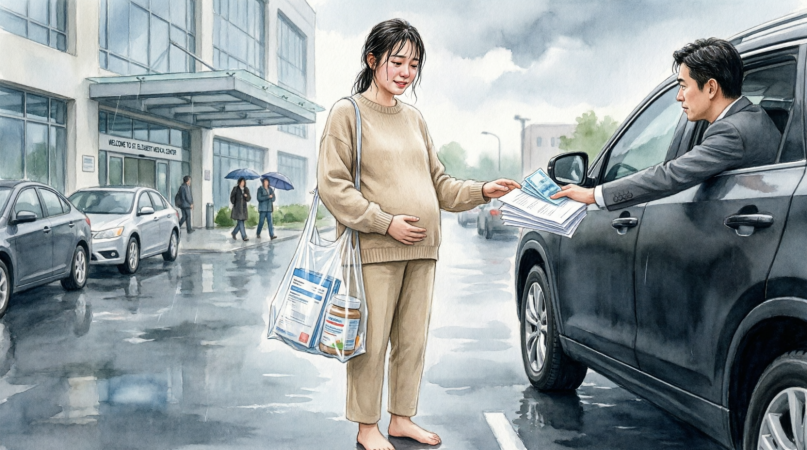
I stood outside the Charlotte hospital, my abdomen burning from a fresh incision, clutching a bag smaller than my shattered pride. The luxury car I bought them idled just long enough for a crumpled $20 bill to hit the puddle at my feet. Take a taxi, my mother sneered. I do not want my car smelling like a hospital. They had no idea that $20 toss would cost them their entire parasitic empire. My name is Zoe Jenkins. I’m thirty-four years old. 48 hours ago, I was in emergency surgery having my abdomen sliced open to save my life. Now, I was standing on the curb outside the Charlotte hospital, vibrating with a level of pain that felt like someone was trying to unzip me from the inside out. Every breath was a negotiation with my own body, a shallow intake that ended in a sharp, blinding staccato of agony where the scalpel had done its work. The air outside was humid, that thick North Carolina summer heat that usually felt like a warm blanket. But today, it felt oppressive, heavy enough to weigh me down. I was sweating, not from the temperature, but from the sheer white-nuckled effort it took just to keep my feet. My left arm was still taped and sore from the IV lines. And in my right hand, I gripped the thin plastic drawstring hospital bag like it was a lifeline. It contained nothing but the sweatpants I had arrived in, a toothbrush, and the tattered remainders of my self-respect, which I could almost feel draining away with every minute I stood there. I was fighting a war on two fronts, the screaming pain in my midsection and the creeping toxic shame of waiting for my parents. I was the CEO of Meridian Harbor Risk Advisory. I managed million-dollar accounts and consulted on high-stakes corporate disasters. I was built for resilience, for control. But right now, standing there, I felt reduced to a small, frightened girl who just needed someone to take care of her.
I had called them after I woke up from anesthesia. They hadn’t picked up the first four times. When my mother, Celeste, finally answered, her first question wasn’t about the surgery. It was why I was calling her so early on a Tuesday. I had explained. My voice thinned by the narcotics and the terror I was still feeling. And I begged for a ride. Not a week of care, not even a dinner, just 15 minutes in a car to get me home. Against every rational thought I had cultivated over 34 years of being their daughter, against the mountain of evidence that proved they were incapable of genuine altruism. A tiny idiotic spark of hope still flickered in my chest. I wanted them to be parents. Just this once, I wanted to see their black oversized Chevy Tahoe, a car I had paid for entirely, pull up to the curb. I wanted my father, Graham, to step out with that practiced weary sigh he used when he was called to fix my mistakes. But at least he would open the door. I wanted my mother to maybe, just maybe, touch my arm and say something that wasn’t a complaint. I was a professional at managing risk and I had managed to fool myself into believing that the risk of their rejection was worth the hope of their support. It was the absolute height of my vulnerability. The hospital door slid open and closed behind me, a sterile rhythm I knew by heart now, mocking my anticipation. I checked my watch, but my eyes were too blurry from pain and unshed tears to read the time. The sidewalk seemed to vibrate. The noise of traffic on King’s Drive was amplified. A cacophony of engines and horns that assaulted my ears. A woman walked by pushing a baby stroller. Smiling, totally unaware of the battle occurring five feet away from her. I felt exposed, an open wound waiting to be infected by the harsh realities of the outside world. I closed my eyes for a second, fighting nausea, and pictured the soft sheets of my bed. That’s all I needed. Just the bed, just to lie down.
That was when the Tahoe pulled up. It was 20 minutes late, but a surge of relief hit me so hard I almost buckled. There it was, a glossy $65,000 monolith of engineering that I had purchased seventy-two weeks ago for their retirement ease. I saw the tinted glass windows that I had also paid to install. The car didn’t stop at the designated pickup spot. It just slowed down, hovering like a sleek predator right in front of me, partially blocking traffic and ignoring the annoyed horn honk from the car behind them. I tried to push off the brick wall I was leaning against. I was smiling, a grimace of pain and gratitude. “Thank God,” I whispered to the humid air. I started to take that agonizing first step forward, the world tilting slightly. I was preparing my apologies for making them come out. I was getting my story ready to explain the surgery without annoying them with the details of my brush with death. The doors didn’t open. The heavy insulated safety rated doors that separated my parents from the filth of the outside world remained sealed. Instead, I heard the mechanical hum of the passenger window being lowered just an inch, just enough for my mother to communicate. I could see the edge of her perfectly blown out hair—hair I knew had cost $300 at the salon downtown yesterday because I was the secondary user on that credit card account. I froze on the sidewalk, my progress halted by confusion. Ma, I croaked, my voice cracking. A hand emerged from the thin gap in the glass.
It was my mother’s hand. I knew it, not by sight, but by the flash of the heavy five-carat diamond ring she wore. a ring my father had given her, paid for with the bonus I had helped secure for him a decade ago before I started my own company. Her hand was turned downward. She wasn’t reaching out to pull me in. She was holding something, a small wet green object. Before my narcotic, slowed brain could process what was happening. Her fingers released the object. It fell. It didn’t drift gently. It dropped with a purposeful, lazy weight through the inches of humid air. I watched it land. It missed the dry pavement of the sidewalk by an inch and fell directly into a disgusting oily puddle of dirty water right at my feet. It was a single crumpled $20 bill. Take a taxi, Zoe. My mother’s voice drifted out, sounding metallic and distant through the glass, like she was talking to a problematic employee through an intercom. There was zero emotion in her tone, just a flat nasal annoyance. Your father does not want the new car smell ruined. I will not have my car smelling like disinfectants in a hospital all afternoon. Go find a cab like a normal person, and do not call us until you can behave properly. I didn’t see my father. He sat at the wheel, his profile partially visible. He didn’t turn his head. He didn’t look at me once. Not even a glimpse of judgment. Just total apathetic disregard. He just kept his eyes on the road ahead, waiting for the conversation to finish before the last word had even left her mouth. The hum of the window starting to raise again filled the silence. The dark glass sealed. I was looking at my own reflection. I was looking at a woman who was a CEO, a daughter, and now apparently a health hazard with a value of exactly $20. The Tahoe immediately accelerated, a $75,000 machine, leaving me in a cloud of diesel fumes and rejection, speeding off toward the safety of the leafy suburbs. I continued to stare after it. The force of the humiliation hit me harder than the physical pain had. I stood there surrounded by strangers who were pretending not to look. My mouth slightly a jar, my breath leaving me in ragged gasps. The hospital bag slipped from my fingers, hitting the sidewalk with a pathetic thud. The tiny spark of hope I had held on to didn’t just flicker out. It was extinguished with the equivalent of a psychological fire hose. The silence in that Tahoe, the calculated casualness of the $20 throw, the refusal to look me in the eye. That was the moment. The very specific, irreversible point in time where 34 years of loyalty and daughterly duty didn’t just bend. They snapped into two jagged, sharp pieces that were now threatening to bleed me dry.
I didn’t cry. There was zero emotion left to waste on tears. I just felt a cold, deep, terrifying clarity settle over my skin. More freezing than any hospital room. I was no longer the daughter Zoe Jenkins. I was the architect of Meridian Harbor. I was a risk consultant who had just been handed the easiest puzzle of my career. The problem was simple. My parents, who lived completely on my credit, who I had spent my entire adult life providing for, had decided that I was less important than the smell of their car. My brain, the precise, analytical engine that had made me a multi-millionaire, started running the numbers. I slowly, agonizingly, forced myself to bend at the waist. Every single muscle in my abdomen shrieked in protest. The heat was blinding. The oily, filthy water of the puddle seeped around the $20 bill. I didn’t care. I needed that bill. I wasn’t just taking their money. I was retrieving my new operating capital. My fingers, shaking with pain and an icy, newfound fury, closed around the wet $20 bill. As I lifted it out of the dirty water, I felt the stitches at my midsection pull. A terrifying tearing sensation that was worth every second. I wasn’t the weak, frightened girl anymore. I was a victim who had just been given her opening statement. I watched their Tahoe disappear into the midday traffic and I smiled. A real sharp predatory smile that was devoid of any hope. I wasn’t waiting for them to pick me up. I was waiting for them to start begging.
I pulled out my phone with one hand, gripping the wet $20 bill in the other. I didn’t pull up my contact list for mom or dad. I opened my Uber app. I didn’t type in the address to the magnificent five-bedroom craftsman house in the country club neighborhood that I had purchased for Graham and Celeste five years ago. The house that they always described as the perfect family home to their envious friends. I typed in the address of a sleek 98th floor glass and steel apartment building in the heart of downtown Charlotte. a two-bedroom penthouse that I had bought as a distressed asset three years ago and had never, not once mentioned to them, to my parents, it didn’t exist. To me, it was now ground zero for the next 3 months of my recovery and the launching pad for the systematic dismantling of their fraudulent parasitic reality. I looked at the wet $20 bill in my hand. I wasn’t using it for the ride. I was using it as a prop in the final scene of the family drama. I had a story to finish and it wasn’t going to be about my forgiveness. I stepped into the waiting Uber and I left that hospital and that daughter behind me 6 months before I found myself bleeding on the pavement. My life was a masterclass in high functioning masochism. I was the founder and chief executive officer of Meridian Harbor Risk Advisory. If a regional bank president got caught embezzling or a tech startup faced a massive data breach, my phone rang. I built that firm from a folding table in a windowless studio apartment into a premier crisis management agency in Charlotte. It took blood, sweat, and a diet consisting mostly of black coffee and adrenaline. I lived on a strict schedule of 14-hour work days, sometimes 16, when a client’s stock price was plummeting toward zero. I did not have weekends. I had periods of less intense panic where I could briefly catch my breath before the next corporate fire broke out. And while I was navigating boardrooms and drafting press releases at 2 in the morning, Graham and Celeste were busy perfecting the art of professional leisure. They wore their luxurious lifestyle like a bespoke suit, perfectly tailored and entirely unearned. To them, the velvet ropes of Charlotte’s upper crust were not barriers. They were welcome mats laid out by the sheer force of my bank accounts. I paid for their sprawling five-bedroom house. I paid the exorbitant property taxes. I paid the steep monthly dues at the Brook Glass Civic Club so my father could play 18 holes of golf with retired judges and hedge fund managers. I funded their winter trips to the mountains and their summer escapes to the European coast. I covered their premium concierge medical insurance, the landscaping service, the pool maintenance, and the weekly delivery of organic groceries. These were not luxuries to them. They considered this their baseline, the absolute minimum standard of living they were owed simply for existing and bringing me into the world. The truly maddening part was the narrative they spun for their social circle. If you sat next to my mother at a charity luncheon, she would lean in, swirling her expensive glass of imported wine, and sigh about how hard it was to raise a driven child. She would talk about the sacrifices they made, the countless hours they spent nurturing my ambition. My father would nod solemnly at the country club bar, telling anyone who would listen that he taught me everything I knew about business strategy. It was a spectacular, infuriating fiction. The only thing they ever taught me about business was the concept of a terrible investment. They had not sacrificed a single comfort for my success. They simply hitched their wagon to my engine and let me pull them up the mountain while they enjoyed the view. But the financial drain, as massive as it numbered in the hundreds of thousands of dollars annually, was not what was hollowing me out. Money was just math on a spreadsheet. I could always negotiate another contract. I could always make more money. What left me utterly exhausted, bone tired in a way that 8 hours of sleep could never fix was the sheer dehumanization of my role in their lives. I was not a daughter. I was a walking, breathing trust fund. I was an unlimited black credit card with a pulse. They never called to ask if I was eating well. They never called to ask if the stress of a hostile takeover campaign was getting to me.
I recall one specific Tuesday during that period. I had worked a seventy-hour week by that point, dragging myself home with a migraine that blurred the edges of my vision. My phone buzzed on the passenger seat. It was Celeste. She did not ask how many hours I had slept. She did not ask if I had eaten dinner. She asked if I could authorize a temporary $20,000 increase on her secondary credit card because her interior decorator found a set of antique French dining chairs that were simply perfect for the sunroom. When I hesitated, telling her I was driving and exhausted, her tone instantly shifted to a sharp, brittle disappointment, implying that I was ruining her creative vision for the house I owned. My father was exactly the same. A conversation with Graham Jenkins was always a transaction masquerading as parental interest. He would ask about a high-profile case I was handling, not because he cared about my professional growth, but because he wanted to gauge what my year-end dividend might look like. He needed to know if he could comfortably upgrade his wine cellar with rare vintages, or if he should wait until the next fiscal quarter. I was a human stock ticker to them, and as long as my value was trending upward, they were content to tolerate my presence.
I remember a Friday night dinner party they hosted three months before the surgery. I had paid the catering bill, which amounted to $4,000 for hors d’oeuvres and prime rib. I arrived late, wearing the same suit I had worn since 6 in the morning. I was running on empty, desperate for a quiet corner and a warm meal. Instead of welcoming me, my mother pulled me aside into the hallway. She looked me up and down, her eyes critical. She told me I looked exhausted and that my pale face was bringing down the mood of the party. She suggested I go upstairs and rest so I would not ruin the aesthetic of her perfect evening with her high society friends. I was allowed to fund the banquet, but I was not polished enough to sit at the table. From the outside, looking in through the manicured hedges and the wrought-iron security gates, we were the quintessential American success story. The handsome, distinguished parents enjoying their golden years, supported by their brilliant, self-made daughter. We looked like a glossy magazine spread. But inside that pristine image, I was suffocating in plain sight. I was a draft horse strapped into a heavy leather harness pulling a massive gilded carriage. Inside the carriage, my parents sat on plush velvet cushions, complaining that the ride was too bumpy and that I needed to trot a little faster so they would not be late for their dinner reservations. The realization did not hit me all at once. It was not a sudden cinematic lightning strike of clarity. It was a slow, agonizing erosion of my spirit. It was the accumulation of a thousand tiny slights, a million unspoken demands, and the deafening silence that followed any attempt I made to share my own personal struggles. I began to see the cold, hard truth lurking beneath their polished smiles and their practiced, hollow greetings. They did not love me. They did not care about the woman who liked to read historical biographies on rare Sunday mornings or the woman who was secretly terrified of failure or the woman who just wanted a hug that did not come with an invoice attached. They only loved what my name and my bank routing numbers could provide. They loved the premium access. They loved the elevated status. They loved the completely frictionless existence my relentless labor afforded them. I was retained in their lives, not out of any biological bond or familial warmth, but simply because I was the strongest, most reliable financial asset they possessed in their portfolio. I was the loadbearing wall of their extravagant reality. If you removed me, the entire structure would collapse into dust. And the most tragic part of it all was that I had let them build it. I had handed them the bricks. I had mixed the mortar with my own sweat and youth. I had believed the fundamental lie that if I just bought them enough things, if I just made their lives perfectly comfortable and free of consequence, eventually they would look at me and see a daughter worth loving for free. It took me 34 years to understand that their greed was a bottomless pit, and their capacity for genuine affection was a vacant lot. Those six months were a silent, grueling marathon of resentment building up in my chest. Every invoice I paid felt like a heavy stone added to a burden I was forced to carry. Every luxury vacation I funded felt like a direct insult to my own exhaustion. I was funding my own emotional starvation. I was keeping them swathed in cashmere and silk while I was slowly freezing to death inside. The foundation was already rotten long before I ever ended up in that hospital bed. The pavement and the puddle were just the physical end of a break that had been tearing my soul apart for months.
It happened on a Tuesday evening in late October. The air outside was turning crisp, but inside the sprawling dining room of my parents estate, the atmosphere was suffocatingly thick. I was seated at the long polished mahogany table I had shipped directly from Milan for my mother’s birthday three years prior. The crystal chandelier overhead cast a warm, expensive glow over a spread of roasted lamb and winter vegetables. A meal prepared by the private chef I kept on a monthly retainer. I was exhausted. I had spent the last 11 hours negotiating a hostile takeover defense for a client. My brain a tangled knot of legal clauses and risk assessments. I just wanted to eat in peace, maybe watch the fire in the hearth, and pretend for one night that I was simply a daughter visiting her family. But Graham and Celeste did not call me over for a casual meal. They called me over for a board meeting. My father waited until the chef had cleared the salad plates before he cleared his throat. It was his signature move, a practice sound that meant he was about to make a pronouncement. He leaned back in his custom upholstered chair, swirling a glass of cabernet that cost more than most people made in a week, and announced that they had found the perfect property, a lakefront vacation home on the most exclusive peninsula of Lake Norman. He described the wraparound decks, the private boat slip, and the sweeping views of the water. My mother chimed in, her eyes wide with a feverish excitement, explaining that two other couples from the Brook Glass Civic Club were already bidding on houses in the same cove. They needed to secure this property to solidify their social standing. The earnest money deposit, my father casually stated, would be $300,000, and they needed me to wire the funds to their escrow account by Friday morning. I stopped chewing. The piece of lamb in my mouth suddenly tasted like sawdust. I looked from my father’s expectant face to my mother’s eager smile. For the first time in my adult life, I felt a hard, cold wall slam down inside my chest. I set my silver fork onto the porcelain plate. The soft clink echoed loudly in the cavernous room. I looked my father directly in the eye and told him no. I kept my voice steady, professional, stripping away the emotional weight of the word. I explained the reality of my firm’s current situation. Meridian Harbor was facing a temporary but severe cash flow bottleneck. Two of our largest enterprise clients had frozen their vendor payments due to internal audits. We were missing nearly $1 million in projected revenue for the quarter. While the company was not in imminent danger of bankruptcy, I had to exercise extreme fiscal caution. I needed to protect the payroll for my 65 employees and keep a solid operational reserve. My personal accounts were acting as a safety net. I could not, under any circumstances, liquidate $300,000 for a luxury summer home. I expected disappointment. I expected a sigh, maybe a complaint about bad timing. I did not expect the sheer unadulterated venom that erupted across the table. Celeste’s face turned a mottled, angry shade of crimson. She slammed both of her hands flat onto the mahogany wood, causing the crystal wine glasses to tremble. She did not ask about my employees. She did not ask if my business would survive the quarter. Instead, she shrieked that she had already told the club committee about the lakehouse. She had already promised to host the annual Fourth of July regatta party on that specific deck. She accused me of humiliating her on purpose, of making her look like a boastful liar in front of the most important women in Charlotte. She acted as if my corporate cash flow crisis was a personal attack designed specifically to sabotage her social calendar. Graham did not yell. His anger was always colder, more surgical. He leaned forward, resting his elbows on the table, and looked at me with a gaze dripping in condescension. He told me I was putting on a pathetic act. He accused me of fabricating this sudden financial crisis just to dodge my obligations to the family. He used that exact word, obligations. He stated that I was wealthy enough to absorb a minor business hiccup and that I was simply being selfish. He then lowered his voice, delivering the killing blow. He implied that without my continuous financial backing, their entire social infrastructure would collapse. He made it crystal clear that in his mind, their prestigious reputation and their ability to impress their country club friends were vastly more important than my mental health, my financial security, or the survival of the company I had built from nothing. The dining room instantly transformed into a courtroom, and I was the prime suspect on the witness stand. The air grew incredibly thin. I felt a tight, agonizing band wrapping around my chest, cutting off my oxygen. I was being relentlessly interrogated, battered with guilt trips and accusations simply because my wallet had momentarily snapped shut. Every single thing I had ever bought them, every bill I had ever paid, meant absolutely nothing in the face of this single refusal. I was drowning in their entitlement. The noise of their complaining blurred into a steady, deafening roar in my ears. I reached my absolute breaking point. I did not raise my voice. I did not offer another defense. I simply pushed my chair back. It scraped harshly against the floorboards. I stood up, left my napkin on the table, and walked away. I ignored my father, demanding I sit back down. I walked out the heavy front doors, got into my car, and drove away into the dark night.
I drove aimlessly for over an hour, my hands gripping the leather steering wheel so tightly my knuckles ached. I eventually found myself parking on the wet asphalt in front of a converted industrial warehouse in the South End district. It was the home of Brier McCall. Brier was a ruthless, terrifyingly sharp media strategist who routinely handled catastrophic public relations disasters for politicians and corporate executives. She was brilliant, entirely devoid of sentimentality, and the only genuine friend I had left in the world. More importantly, she was the only person who knew the meticulously hidden truth about the Jenkins family dynamic. I took the freight elevator to the fourth floor and knocked on her heavy steel door. Brier let me in, took one look at my pale face, and walked straight to her bar cart. She poured two fingers of neat bourbon into a heavy glass and shoved it into my hand. She guided me to her massive leather sofa and ordered me to speak. I sat there in the dimly lit loft, surrounded by exposed brick and modern art, and I spilled everything. I told her about the dinner, the $300,000 demand, the screaming, the accusations, and the sickening realization that my parents viewed my business solely as a printing press for their vanity projects. I talked until my throat burned and the glass in my hand was empty. Brier did not offer me a hug. She did not murmur sweet platitudes about how families go through rough patches. She sat in an armchair opposite me, her dark eyes pinning me to the cushions. She delivered the truth with the precision of a scalpel. She told me I was not acting like a daughter. I was acting like a hostage who had fallen in love with her captors. She pointed out that I had never actually tested their affection. I had spent my entire adult life preemptively paying my own ransom, buying their approval month after month, year after year. She said I had absolutely no idea whether Graham and Celeste Jenkins loved me, or whether they just fiercely loved the bulletproof, luxurious shield my money provided them against the real world. I stared at her, the harsh truth settling into my bones like lead. I wanted to argue, but I had zero ammunition left. Brier leaned forward, resting her chin on her hands, her mind already shifting into war room mode. She proposed a strategy, a loyalty test. She explicitly warned against faking a complete destitute bankruptcy that was too theatrical, too easily disproven by a simple credit check, and they would see right through it. Instead, she devised something far more insidious and entirely plausible in my industry, a simulated asset freeze. Brier outlined the narrative. We would construct a scenario where Meridian Harbor was caught in the crosshairs of a federal regulatory investigation due to a client’s illegal activities. As the chief executive officer, my personal and business accounts would be temporarily frozen by court order pending an audit. The cash flow would not just slow down. It would hit a brick wall. The beauty of the plan was in its rigid legalistic realism. I would not be asking them for a handout because I was a failure. I would be forced into sudden temporary poverty by the heavy hand of the law. I would lose my credit cards, my ability to authorize transfers, and my independence. The test was simple. We would strip away the gold plating, shut down the automated teller machine they called a daughter, and see exactly what kind of parents remained when the money vanished. I looked at Brier, feeling a dangerous new resolve harden in my chest, and I told her to start drafting the plan.
I sat in the leather armchair of Nolan Voss’s downtown office on a rainy Thursday morning. Nolan was my personal attorney, a man whose suits were as sharp and uncompromising as his legal strategies. Together with Brier, we finalized the intricate details of our fabricated disaster. We needed a story airtight enough to survive Graham’s cynical scrutiny, but terrifying enough to justify a complete and total financial blackout. The narrative we crafted was a masterpiece of corporate panic. I would claim that a major federal contractor Meridian Harbor advised had been flagged for massive compliance violations. As a result, pending an exhaustive and highly publicized audit, a federal injunction had supposedly mandated a temporary but absolute freeze on all executive compensation and personal banking accounts linked to my firm. The beauty of this lie was its paralyzing nature. I could not simply write a check or authorize a wire transfer without allegedly committing a federal felony. To sell the illusion of total defeat, I had to physically look the part. I stripped away the polished veneer of the chief executive officer. I packed three canvas duffel bags with plain denim jeans, faded college sweatshirts, and unbranded sneakers. I drove to the sprawling suburban estate in a rented economy sedan, leaving my usual luxury vehicle hidden in a secure downtown garage.
When I walked through the heavy double doors of the house, I gathered Graham and Celeste in the sunroom. The morning light caught the dust motes in the air as I delivered the performance of my life. I kept my voice shaky, my shoulders slumped. I explained the audit, the frozen accounts, and the sudden, terrifying lack of liquidity. I told them I was forced to dramatically slash my own personal overhead immediately, which meant giving up my expensive city lease and moving out. I asked if I could stay in the spacious guest suite overlooking the rose gardens just for a few months until the lawyers cleared my name and the accounts were unlocked. What I did not mention during this tearful plea, what Nolan had masterfully orchestrated five years ago when I first acquired this magnificent property was the true nature of the deed. Graham and Celeste firmly believed they were the sole proprietors of this estate. They bragged about their homeownership constantly. In reality, the property was owned outright by an irrevocable blind trust that I fully controlled. They possessed merely a conditional right of residency. They were glorified, non-paying tenants, a crucial detail neatly buried deep within a stack of dense legal jargon they had eagerly signed without bothering to read. I was essentially asking permission to stay in a house I legally owned. As I made my request, Mrs. Gable, the notoriously gossipy neighbor from across the street, happened to be walking her golden retriever near our open patio doors, spotting a potential audience. Celeste immediately activated her flawless maternal persona. She rushed forward with practiced grace, pulling me into a stiff, perfumed embrace. She projected her voice just loud enough for Mrs. Gable to hear, declaring that family always provides a safe harbor during the darkest storms. Graham stepped up right on Q, nodding sagely and adjusting the collar of his cashmere cardigan. He placed a heavy hand on my shoulder and proclaimed that blood is thicker than water and we would weather this minor financial inconvenience together as a united front. It was a beautiful heartwarming tableau of American family solidarity.
The moment Mrs. Gable disappeared down the sidewalk and the heavy mahogany doors clicked shut. The temperature in the foyer plummeted by ten degrees. The performance ended instantly. Celeste dropped her arms and took a large step back, brushing at her blouse as if my bad luck might be contagious. Graham’s benevolent smile vanished completely, replaced by a tight, panicked grimace that contorted his features. By that exact same afternoon, my polite request for the garden suite was unequivocally denied. Celeste claimed with a wave of her manicured hand that she had already promised that specific room to a visiting spiritual adviser for an upcoming weekend meditation retreat. It was a blatant lie, but I did not contest it. Instead of a comfortable bed and fresh air, she directed me to the cramped windowless storage room situated directly adjacent to the laundry machines on the ground floor. The space was suffocatingly small. It smelled sharply of bleach, damp lint and neglect. There was no closet, only a rusted metal rack. My bed was a narrow, squeaky cot they had begrudgingly dragged out from the dusty basement. It felt less like a bedroom and more like a holding cell. As I unpacked my meager belongings, Graham stood in the narrow doorway blocking the light. He held a small yellow notepad and a pen. He did not ask how I was holding up. He began listing a series of harsh new household regulations. Since I was no longer contributing financially to the upkeep of the estate, he stated coldly. I needed to drastically minimize my footprint. My showers were strictly limited to 5 minutes to conserve hot water. I was expressly forbidden from using the expensive imported laundry detergent Celeste preferred. I had to buy my own cheap soap if I wanted clean clothes. The central thermostat was locked behind a plastic guard and I was not permitted to adjust the temperature. Regardless of how cold the basement room became at night, I was treated not like a daughter going through the most terrifying professional crisis of her adult life, but like a desperate, untrustworthy vagrant. They had reluctantly allowed me to sleep in the scullery out of a misplaced sense of civic duty.
That first night, I lay rigid on the lumpy mattress, staring up at the exposed copper pipes running across the low ceiling. The walls in that lower section of the house were paper thin. I could hear every sound from the massive kitchen directly above me. I listened intently, waiting for the inevitable conversation. They were not discussing my legal peril. They were not wondering if my life’s work was going to be dismantled by ruthless federal auditors. They were not expressing sympathy for my ruined reputation. I heard the sharp, distinct pop of a wine cork. Graham poured two heavy glasses. Then I heard Celeste’s voice shrill and escalating with mounting hysteria. She was hyperventilating over their upcoming two-week luxury excursion to the Amalfi Coast. The final exorbitant payment for the villa was due in exactly 10 days, and my accounts were dead. She did not sob for me, but for the sheer crushing humiliation of losing their premium reservation. She cried over the outfits she had already purchased and the bragging rights she would have to forfeit. Graham paced the hardwood floor above, his heavy footsteps echoing like a metronome of anxiety right over my head. He muttered vicious curses about his golf club membership and the upcoming charity gala. He was terrified of the impending country club gossip. He dreaded the moment he would have to look his wealthy, judgmental peers in the eye and explain why his reliable cash cow was suddenly completely dry. He did not refer to me as his child. He referred to me as a massive, catastrophic liability. He angrily asked Celeste how long they would be forced to endure this embarrassment before I managed to fix my own mess and get the money flowing again. I lay perfectly still in the dark, the scent of bleach burning my nose. The trap had sprung flawlessly. Brier was entirely correct. The prey had stepped right onto the snare, revealing a nature so greedy and devoid of empathy, it almost took my breath away. There was no love in this house. There was only a transaction that had suddenly been cancelled. No one asked if I was afraid. No one cared if I lost my company. The only thing keeping them awake was the sudden, horrifying drop in the level of luxury they had become fatally addicted to.
Fourteen days was all it took for the last thin veneer of parental affection to completely rot away and expose the barren wasteland underneath. I was no longer a guest seeking refuge in my own house. I was an unwelcome squatter, a heavy burden draining their precious resources. The physical claustrophobia of that laundry adjacent room began to seep deeply into my bones. The space was constantly humid, smelling sharply of bleach and the sour dampness of wet towels. But the true terrifying suffocation occurred upstairs in the main living areas, where a quiet, relentless campaign of psychological warfare was being waged against me. Every single piece of food I consumed was heavily monitored and ruthlessly audited. If I poured a second cup of standard drip coffee in the morning before heading to my laptop, Graham would pointedly clear his throat, stare at my mug, and deliver a harsh lecture about the rapidly rising cost of groceries. I was allotted precisely one thin slice of generic brand toast for breakfast, while they dined on fresh artisanal pastries and imported fruits purchased with the allowance they still had hoarded from my previous cash transfers. My daily hygiene was suddenly subjected to a strict totalitarian regime. My allotted shower time was brutally enforced by a timer. If I ran the water for more than exactly 5 minutes, Celeste would march down the hallway and wrap her knuckles sharply against the thin bathroom door. She would shout that the hot water heater was not a public charity service and that I was showing a disgusting lack of respect for their utility bills. It was a bizarre, twisted reality where I was being aggressively disciplined for using the very water and electricity that my own invisible offshore trust accounts were secretly continuing to fund in full. The paranoia regarding their assets escalated at a dizzying pace.
On the ninth morning of my stay, I walked into the massive kitchen to find the large walk-in pantry secured with a heavy solid brass padlock. The custom climate controlled wine cellar in the formal dining room, a cellar stocked entirely with rare vintages I had meticulously sourced and paid for, bore a matching lock. Graham stood by the marble kitchen island, calmly adjusting the cuffs of his tailored shirt, and casually explained that difficult financial times required extreme household discipline. He looked me dead in the eyes and claimed they needed to strictly inventory their provisions to survive the fallout of my irresponsible corporate mess. He was locking my own food away from me, acting like a benevolent captain rationing supplies on a sinking ship I had built. Celeste’s methods were more theatrical, designed to inflict maximum emotional guilt. She developed a daily habit of leaving the monthly electricity and water statements squarely in the center of the mahogany dining table, right where I would be forced to see them when I sat down for my meager dinners. She would walk past my chair, let out a long, heavy, dramatic sigh, and mutter bitterly about how the bills were suddenly astronomical now that an extra body was lounging around the house all day. She completely and conveniently ignored the fact that I was still working 14-hour days managing my firm’s supposed legal crisis from a cramped makeshift desk in a windowless room. While she kept the central air conditioning blasting at a frigid temperature to keep herself comfortable during her afternoon card games, the most glaring, humiliating symbol of their detachment sat gleaming in the pristine driveway. The massive black luxury sport utility vehicle I had bought them remained parked, polished, and largely unused. When a heavy rainstorm hit on the second Tuesday of my confinement, I politely asked Graham if I could borrow the keys just to drive two miles to the grocery store to buy my own permitted rations. He looked at me as if I had asked to borrow a vital organ. He coldly and flatly refused. He stated that the vehicle needed to be preserved in perfect showroom condition in case they were forced to sell it to cover the mortgage I was supposedly defaulting on. He then ordered me to call a ride share service, insisting that I should not be seen driving such a high-profile car around town while my professional reputation was in tatters. They literally forced me to stand in the pouring rain, shivering in a cheap jacket, waiting for a stranger to pick me up, simply because they needed to maintain their own immaculate illusion of wealth for the snooping neighbors. Furthermore, Graham deliberately changed the security code to the main garage doors the very next day, forcing me to enter the property through the muddy side gate like a hired, untrustworthy servant.
But the true depth of their depravity, the revelation that finally killed any lingering shred of daughterly devotion, did not fully reveal itself until the end of the second week. I was tasked with cleaning the home office, a demeaning chore Celeste had abruptly assigned to me as a mandatory condition of my continued residency. While emptying a waste basket beneath Graham’s heavy oak desk, I noticed a crumpled piece of heavy stock paper. I smoothed it out on the floor. It was a formal meeting agenda from a boutique wealth management firm downtown, the very firm that employed a close golf playing associate of my father from the Civic Club. The agenda was dated from exactly 2 days prior. I scanned the handwritten notes scribbled in my father’s unmistakable handwriting in the margins. The words sent a shock of pure paralyzing ice straight through my veins. The notes detailed a legal strategy for establishing conservatorship and managing distressed assets in the event of an adult child suffering a sudden incapacity to govern their own affairs. I did not confront them. I carefully took a photograph of the document with my phone, slipped the paper back into the trash exactly as I had found it, and took a long walk to a nearby park. I sat on a damp wooden bench and called Brier from a secure encrypted line. I gave her the name of the wealth management firm and the specific dates. Within 48 hours, Brier’s extensive network of private investigators had uncovered the entire sickening plot. Graham and Celeste had not merely gone to their financial advisor friend for casual parental advice. They were actively and aggressively building a comprehensive legal and medical dossier against me. Brier confirmed that they were consulting with aggressive estate lawyers, preparing to petition the courts for emergency medical and financial power of attorney over my entire estate. Their logic, meticulously crafted with the help of their country club connections, was that the extreme stress of the federal audit had triggered a severe mental breakdown, rendering me dangerously incompetent to manage my remaining wealth or oversee the liquidation of my company. They did not want to help me salvage my firm. They were eagerly anticipating its total catastrophic collapse so they could immediately swoop in as my designated legal guardians. Their ultimate goal was to seize whatever capital remained across all my accounts before the imaginary federal authorities could freeze it permanently. They were plotting a hostile, calculated takeover of their own daughter’s life and legacy. Sitting on that cold park bench, gripping the phone tightly against my ear. The final shreds of my victimhood burned away completely. The fire was replaced by a cold, calculating, and absolute clarity. I finally understood the terrifying truth of my existence. They were not simply greedy, shallow parents who would abandon me when the money ran dry. They were active, malicious predators, willing to legally declare their only child insane in order to raid her financial corpse. The loyalty test was officially over. It was no longer a psychological experiment to see if they possessed the capacity to love me. It had instantly transformed into a high-stakes game of counter espionage inside the very house I owned.
I walked back to the estate that afternoon, a completely different woman. I let the heavy side gate click shut behind me, fully accepting my new role as an infiltrator. I stopped reacting to Celeste’s dramatic sighs and passive aggressive remarks. I stopped asking Graham for small favors or permission to exist in my own space. I became a silent, invisible ghost in their home. I transformed into a meticulous observer, silently recording every single micro expression, every whispered phone call behind closed doors. and every financial document carelessly left on a kitchen counter. I was gathering the heavy ammunition required to completely dismantle their world brick by stolen brick. I would let them confidently build their fraudulent legal case. I would let them dig the pit as deep as their boundless greed would allow. And when the time was perfectly right, I was going to push them in and bury them alive.
 :I STOOD OUTSIDE A CHARLOTTE HOSPITAL WITH FRESH ST… PART2 ENDING