My boss fired me on a Tuesday at 4:47 in the afternoon, and the room went quiet in that special corporate way where everyone pretends a human being is actually a scheduling issue.
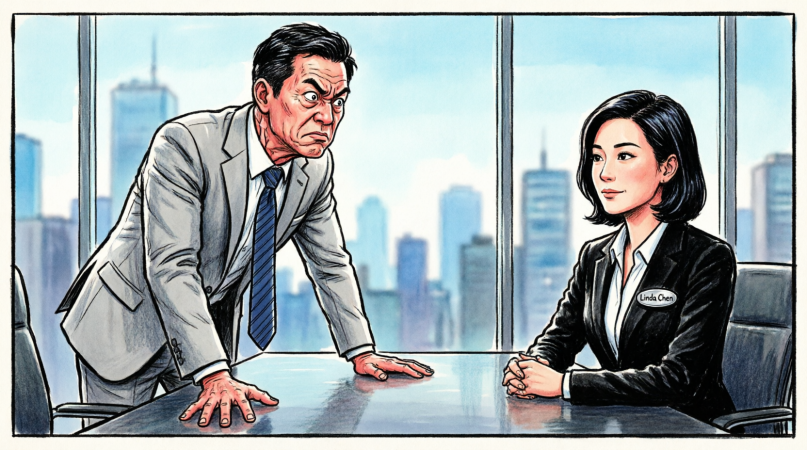
Derek Vaughn leaned back in the conference-room chair as if posture alone could manufacture authority.
He had his jacket unbuttoned, his tie loosened half an inch, and the smug patience of a man who believed he was delivering a lesson instead of exposing himself.
Two department managers sat along the wall.
The HR representative kept her eyes fixed on a folder in front of her.
‘We don’t need incompetent people like you,’ Derek said.
‘Leave.’
The smell of burnt coffee had settled into the carpet years before I ever joined Harborstone Components, and on that day it mixed with dry-erase marker fumes and the sharp plastic warmth of the wall monitor behind him.
My dashboard was still on the screen.
Supplier lead times.
Defect spikes.
Late shipments.
Warranty exposure.
A recovery plan I had drafted after Derek’s restructuring had thrown our production schedule into a ditch.
‘Incompetent based on what?’ I asked.
He waved a hand toward the screen without turning around.
‘Based on the fact that you always push back.
Every meeting, Elena, it’s another warning, another concern, another reason we can’t move quickly.
This is manufacturing, not graduate school.
We need people who execute.’
That was Derek’s favorite trick.
Turn caution into weakness.
Turn expertise into attitude.
Turn anyone who noticed danger into the obstacle.
In the six months since he had been hired as chief operating officer, he had cut quality assurance hours, overridden engineers, pushed a lower-grade resin through a supplier change nobody competent would have approved, and celebrated all of it as margin discipline.
When defects reached customers, he blamed operators.
When managers hesitated, he accused them of lacking urgency.
When I objected, I became difficult.
HR slid a packet across the table.
‘If you sign here, we can process your final pay today.’
Derek smiled, thin and proud.
‘You should actually be grateful.
We’re not dragging this out with a performance improvement plan.’
I looked at the paperwork.
Effective immediately.
Cause: failure to align with leadership expectations.
A clean phrase for refusing to become useful to someone else’s incompetence.
I did not pick up the pen.
I looked at Derek, gave him the smallest possible smile, and said, ‘Fine.
Fire me.’
Something shifted in his face then.
Not fear.
He wasn’t that perceptive.
Just irritation.
He had expected pleading, maybe a defensive speech, maybe tears.
Men like Derek preferred their scenes emotional, because emotion made them feel factual.
‘I’m serious,’ he said.
‘Security can escort you out.’
‘I heard you the first time.’
I took my phone and notebook, stood, and walked to the door without giving him the performance he wanted.
In the hallway, three engineers looked up from a cluster outside the lab.
One of them actually half rose from his chair.
They all knew what I had been trying to stop.
They all knew Derek was making the company more fragile by the week.
They also knew something else Derek didn’t: I had never needed the title on my badge to matter.
When the elevator doors closed, my phone vibrated with a calendar reminder I had set months
earlier.
Quarterly Shareholder Meeting.
Thursday.
9:00 a.m.
Boardroom A.
I stared at the screen and let out one long breath.
Harborstone was not a public company.
We made precision polymer components for medical devices, filtration systems, and specialty industrial equipment.
Boring to people who only looked at headlines.
Vital to the people whose production lines stopped when our parts failed.
The company had been founded by my grandfather, Walter Wren, forty-two years earlier in a warehouse with two molding presses and a payroll he once covered by selling his fishing boat.
When he retired, most of the equity went into Wrenfield Capital Trust.
I was the controlling trustee.
Ninety percent of the voting stock sat under my signature.
Derek had memorized the org chart.
He had studied compensation tables, reporting lines, and board biographies.
He could recite whose title outranked whose in any meeting.
What he had never done was read the actual governance documents.
If he had, he would have noticed that the woman he had just fired from operations carried more voting power than everyone who had ever applauded his presentations combined.
He also would have understood why I was working inside Harborstone in the first place.
I had not hidden my name, exactly.
On the stock ledger I was Elena Mercer Wren.
Inside the company, I used Elena Mercer, the surname I had kept after my divorce.
Most people outside governance had seen the name in resolutions and proxy materials, not in fluorescent conference rooms near the production floor.
I joined Harborstone quietly three years earlier as a supply-chain analyst because I wanted to learn how the place breathed without announcing myself as ownership.
My grandfather believed inheritance made people lazy if it arrived before responsibility.
He had taught me to read a P&L statement before I was old enough to drive, but he had also taught me how to sweep a floor, pack a shipment, and stand beside a machine operator long enough to understand why late engineering changes ruined entire weeks.
When he retired, he put the trust in my hands with one instruction: never let this company be run by people who love power more than work.
So I took the least glamorous route available.
I worked my way through procurement, vendor audits, plant scheduling, and customer escalations.
I sat in fluorescent rooms with people who knew more than I did and learned from them.
I listened.
I earned trust the slow way.
By the time Derek arrived through an executive search firm, I knew which customers called before dawn, which production lines could absorb variability, which supervisors cut corners when they were scared, and which ones stayed late because their names were attached to the parts.
Derek mistook all of that for middling authority.
In his first week, he called Harborstone bloated.
In his second, he said quality was over-engineered bureaucracy.
By the end of his first month, he had started speaking about people the way gamblers speak about chips.
Headcount.
Efficiency.
Leverage.
He bragged about fast decisions and called any request for supporting data a stall tactic.
The board liked his confidence because confidence photographs well in quarterly decks.
The trouble with people like Derek is that they can look decisive for just long enough to become expensive.
I sat in my
car for three minutes after leaving the building and let the anger move through me until it settled into something useful.
Then I opened my contacts and called Mara Levin, Harborstone’s outside corporate counsel.
‘He did it,’ I said when she answered.
Mara was silent for half a beat.
‘Fired you?’
‘In front of witnesses.
Cause listed as failure to align with leadership expectations.’
She made a small sound that meant she was already rearranging her evening.
Mara had represented my grandfather first, then the trust, and then me.
She had no patience for swagger, and less for people who confused retaliation with management.
‘Do not sign anything else.
Do not email anyone from your company account.
Forward nothing from company systems.
I will handle preservation notices.
Is Thursday’s shareholder meeting still on the calendar?’
‘Nine o’clock.’
‘Good,’ she said.
‘It just got a new agenda.’
My second call was to Harold Pierce, Harborstone’s corporate secretary and the only person at the company besides the board chair and Mara who routinely handled the stock ledger.
Harold was seventy-one, methodical, and incapable of small talk when documents were involved.
‘Mr.
Pierce,’ I said, ‘I need the finalized voting register for Thursday and a copy of the bylaws section on officer removal.’
He did not ask why.
‘You’ll have both within the hour.’
My third call was the one I had avoided for months, mostly because I had wanted the operating issues fixed before family became part of the story.
It went to my grandfather’s voicemail.
Walter no longer came into the office often, but his influence still moved through Harborstone like old steel through concrete.
He called back before I reached my apartment.
‘You all right?’ he asked.
‘I’m angry,’ I said.
‘But yes.’
‘Good.
Angry’s fine.
Humiliated is useless.
Tell me.’
So I told him.
The firing.
The packet.
The witnesses.
The defect trends.
The cheaper material approvals.
The way Derek had been performing control while hollowing out the systems that actually protected the business.
Walter listened without interrupting.
When I finished, he said, ‘Then Thursday will be educational.’
I laughed despite myself.
‘That’s exactly what I was thinking.’
‘Remember something, Lena.
Ownership is not revenge.
Ownership is duty.
If you remove him, do it because the company must be protected, not because your pride wants applause.’
That was the problem with a man who had built something real.
He could still correct your posture with one sentence.
‘I know.’
‘Good.
Then protect it properly.’
That night I spread my notes across my dining table and built the cleanest timeline of Derek Vaughn’s tenure anyone at Harborstone had ever seen.
Approval dates for supplier changes.
Quality deviations.
Internal warnings.
Returned parts.
Customer complaints.
Warranty exposure.
Email excerpts from meetings where he had directed teams to move forward despite objections.
I did not need exaggeration.
Facts were more than enough.
At 9:12 that evening, my phone lit up with a message from Nina Brooks, the HR representative who had sat through my termination.
I am sorry, it read.
I shouldn’t be texting, but there are things you need to know.
He told me last week to prepare documentation in case you kept undermining leadership.
I objected.
I kept copies of the draft notes.
I called her immediately.
Nina answered in a
whisper.
‘I’m at home.’
‘Why are you telling me this?’ I asked.
‘Because it was wrong,’ she said.
‘And because he told me to backdate performance concerns that never existed.’
I closed my eyes for a moment.
‘Do you still have the documents?’
‘Yes.’
‘Do not send them from a company system.
Mara Levin will contact you from outside counsel.
Preserve everything.’
There was a pause on the line, then Nina said, very softly, ‘He thinks nobody can touch him.’
‘He miscalculated,’ I said.
Wednesday morning brought three more calls before eight o’clock.
One from Victor Chan in engineering, who told me Derek had approved a production run using material substitutions despite an unresolved compatibility flag.
One from Rosa Martinez, a plant manager who said scrap was climbing fast enough to become visible even under Derek’s massaged reporting categories.
And one from the purchasing team, who had just learned the cheaper supplier Derek favored had missed two certification renewals nobody had bothered to verify because he was in a hurry to announce savings.
By noon, the picture had gone from reckless to dangerous.
Mara sent a legal hold notice to the board, outside auditors, and key administrators.
Harold confirmed that the shareholder meeting packet had been amended with governance items under proper notice.
The board chair, Daniel Price, requested a pre-read.
Mara refused on my behalf.
The materials would be presented in session, she told him.
Ms.
Wren would address the shareholders directly.
Thursday morning arrived with one of those gray coastal skies that flatten everything into steel.
I parked on the east side of the Harborstone building, the same lot where employees parked, and watched production workers move toward the doors with coffee cups and lunch bags.
I had spent three years entering through those doors as one of them.
Not in the same role, not under the same pressure, but under the same fluorescent hum, the same practical routines, the same quiet understanding that the company only worked when the people closest to the process could trust the people making decisions above them.
I did not feel triumphant walking in.
I felt responsible.
Harold met me in the lobby in a navy suit that always made him look like a dignified undertaker.
He handed me a leather folder and said, ‘The register is tabbed.
The proxy confirmations are in the back.
Ms.
Levin is already upstairs.’
‘Thank you,’ I said.
He adjusted his glasses.
‘I have served this company for twenty-eight years.
I would enjoy very much seeing arithmetic restore order.’
That nearly made me smile.
Boardroom A was one floor above the conference room where Derek had fired me.
The difference between the two rooms summarized half the disease of corporate life.
Downstairs, fluorescent panels and old carpet.
Upstairs, glass walls, polished walnut, filtered water, and a framed history of Harborstone’s growth displayed as if the company had assembled itself through good typography.
When I entered, Mara was arranging papers at the far end of the table.
Daniel Price, the board chair, stood beside the windows with the CFO, Martin Keane.
Two independent directors were already seated.
Their expressions shifted when they saw me, but no one spoke.
Not yet.
Derek arrived two minutes later carrying a laptop and the confidence of a man about to explain
numbers he did not fully understand.
He stopped just inside the doorway when he saw me seated at the table.
His eyes moved from my face to Mara, then to Harold, then back to me.
‘Why is she here?’
Nobody answered quickly enough for him, so he turned to Daniel.
‘She’s been terminated.
Effective Tuesday.’
Harold took his seat, opened the ledger, and said in the dry voice of a man reading weather data, ‘For the record, Ms.
Elena Mercer Wren is present in her capacity as controlling trustee of Wrenfield Capital Trust, holder of ninety percent of Harborstone Components voting shares.’
It is amazing how silence changes texture when it lands on money.
Derek actually laughed once, a sharp, disbelieving sound.
‘What?’
Harold did not look up.
‘Ninety percent.
Verified and recorded.
Proxies are unnecessary.’
Daniel Price turned fully toward me then.
For the first time since Derek had been hired, he looked less like a polished board chair and more like a man realizing he had attended the wrong meeting.
I folded my hands on the table.
‘Good morning, everyone.’
Derek set his laptop down too hard.
‘This is some kind of stunt.’
‘No,’ Mara said.
‘This is corporate governance.’
His face went red in stages.
‘Why wasn’t I told?’
Because you never asked would have been satisfying, but satisfaction was not the point.
‘My ownership structure was available in the governance records you were given when you joined,’ I said.
‘You chose to learn titles instead.’
He looked at Daniel again, hunting for rescue.
Daniel did not provide it.
The board chair had his flaws, but he was not foolish enough to get between a majority shareholder and a documented agenda.
Harold called the meeting to order.
Minutes were approved.
Attendance was recorded.
Then he moved to the amended agenda items.
Governance review.
Operational risk presentation.
Officer accountability.
Derek tried once more.
‘This is absurd.
We have quarterly numbers to discuss.’
‘We are going to discuss them,’ I said.
‘And the methods used to produce them.’
I stood, connected my own laptop, and brought up the first slide.
No branding.
No grand design.
Just dates, metrics, and decisions.
The first section covered defect rates by product family over six months.
The next showed warranty claims.
Then late shipments.
Then unplanned scrap.
Then the supplier substitutions approved under Derek’s signature.
Each chart told a simple story: costs had been trimmed in the short term by amputating the safeguards that kept failures from reaching customers.
The apparent margin improvement in his reports was being purchased with delayed consequences.
Martin Keane, the CFO, leaned forward before I reached slide seven.
‘These scrap numbers aren’t in the monthly packet.’
‘They’re in the plant-level reports,’ I said.
‘Reclassified under waste variance and temporary startup loss.
Your office was given consolidated summaries.’
Martin looked slowly toward Derek.
The next slide was a sequence of meeting notes cross-referenced with approval dates.
I quoted Derek directly from three separate sessions: move forward, we can’t let perfect be the enemy of shipped, QA can catch it later.
On the right side of the slide were the customer complaints that followed.
One independent director took off her glasses.
‘Were these risks documented internally at the time?’
‘Repeatedly,’ I said.
‘By engineering, plant leadership, and me.’
Then I
put up the email Nina had preserved.
It was a draft note chain between Derek and HR discussing the need to build a file in case I continued resisting leadership direction.
The timestamp predated any formal issue raised with me by weeks.
A second document showed language Nina had been asked to backdate.
A third showed Derek instructing her to use alignment rather than performance because it would be harder to disprove.
Nina herself entered the room at Mara’s request and confirmed it on the record.
Her hands trembled when she sat down, but her voice steadied by the second sentence.
‘There was no active performance process for Ms.
Mercer,’ she said.
‘I was asked to prepare one after she challenged certain supplier decisions.
I objected to backdating the documentation.
The termination on Tuesday did not follow the company’s standard corrective process.’
Derek stared at her as if betrayal were something that only happened downward.
He recovered enough to speak.
‘Everyone in this room knows leadership requires alignment.
Elena undermined decisions, went around me, and created confusion in the plants.’
Rosa Martinez had joined by video from the main facility at my request.
Her face appeared on the monitor next to the charts.
She did not blink much when she was angry.
‘What created confusion,’ Rosa said, ‘was changing approved materials mid-cycle, cutting inspection hours, and telling line supervisors to hit output targets after engineering flagged compatibility concerns.
Elena is the only person who consistently documented the risk.’
Victor Chan followed with a technical explanation of the material issue that made one of the independent directors sit back hard in her chair.
A polymer blend Derek had pushed into production expanded differently under sterilization heat.
The issue did not affect every shipment, which made it more dangerous, not less.
It could pass initial checks and fail in a customer’s process days later.
Daniel Price finally spoke.
‘How much exposure are we talking about?’
I clicked to the final operations slide.
‘If all suspect lots are traced and contained now, the direct cost will hurt.
If we delay, we risk a recall across three customers, contract penalties, and permanent loss of one medical-device account that represents eighteen percent of our annual revenue.’
Derek seized on the word risk like a drowning man grabbing foam.
‘Risk, not reality.
This is alarmist.
Every manufacturing business has variability.’
‘Every competent manufacturing business also has leaders who listen when engineers say stop,’ I said.
Martin, who had spent most of the meeting looking sicker by the minute, opened a folder and said, ‘There’s something else.’ He slid several pages down the table.
‘The supplier Derek championed, Vastwell Materials, shares a mailing address with a distribution company owned by his brother-in-law.
I only noticed it this morning because procurement forwarded a tax form discrepancy.’
That changed the room.
Mara did not even try to hide her interest.
‘Undisclosed related-party involvement?’
Martin nodded.
‘Potentially.
At minimum, it wasn’t disclosed through our conflict process.’
Derek’s voice sharpened.
‘That’s ridiculous.
My brother-in-law has nothing to do with day-to-day decisions there.’
‘Did you disclose the relationship?’ Mara asked.
He did not answer immediately, which was answer enough.
The quiet after that was different from the earlier shock.
Earlier, people had been surprised.
Now they were calculating damage.
I closed my
laptop because I no longer needed it.
‘This is not about my pride or a bad firing.
If Derek had treated me perfectly and still made these decisions, I would be standing here in exactly the same capacity.
Harborstone is carrying operational risk, legal risk, customer risk, and governance risk because one executive decided confidence was a substitute for discipline.
The termination on Tuesday only clarified that he would rather retaliate than correct course.’
Daniel Price rubbed a hand over his mouth.
‘What are you requesting?’
I had written the motion myself the night before, and even then I had revised it three times to remove anything that sounded theatrical.
‘First, immediate suspension of Derek Vaughn from all officer duties pending a for-cause review.
Second, revocation of system access and preservation of all company devices and communications.
Third, emergency reactivation of full quality protocols and immediate trace review on the affected lots.
Fourth, appointment of interim operating leadership.
Fifth, authorization for outside counsel and independent auditors to investigate the supplier relationship, financial reporting classifications, and retaliatory employment actions.’
‘And the board?’ one of the directors asked carefully.
I met her eyes.
‘The current board may proceed if it acts now and acts competently.
If it does not, the majority shareholder will exercise her rights to reconstitute it.’
That, finally, made the arithmetic unmistakable.
Daniel looked around the room.
The directors did not need much discussion after that.
Derek tried twice to interrupt.
Once to claim the data were being misrepresented, and once to insist that his numbers would have delivered the best margin improvement in company history if people had simply stayed out of his way.
Nobody responded.
When people stop arguing with you in a boardroom, the ending has begun.
The vote to suspend him was unanimous.
The vote to initiate a for-cause review was unanimous.
The vote to authorize the investigation was unanimous.
When Daniel informed Derek that his access would be terminated immediately and he was to leave company property after turning over his devices, Derek looked directly at me for the first time with something like comprehension.
Not respect.
He was not built for that.
But comprehension.
‘You set this up,’ he said.
‘No,’ I answered.
‘You did.’
Security did escort him out in the end, though not because he had ordered it for me.
Harold remained seated while it happened, making a note in the minutes with the serenity of a church accountant.
Nina sat very still.
Rosa’s video feed stayed on until the hallway door closed behind Derek.
Then she exhaled audibly and said, ‘All right.
Can we go fix the company now?’
That was the best question asked all week.
The rest of Thursday was not cinematic.
It was work.
Real work.
The sort people forget to include when they imagine dramatic reversals.
We froze suspect shipments.
Reinstated inspection holds.
Notified affected customers before rumors could travel faster than facts.
Brought engineering, quality, procurement, legal, and plant leadership into the same room and made them stay there until responsibilities were assigned line by line.
Martin corrected the financial reporting classifications.
Mara supervised device preservation and document holds.
Nina began reviewing every termination and disciplinary action Derek had touched.
At 4:00 that afternoon, I walked onto the production floor and gathered the supervisors near
Line 3, where rumor always arrived before email.
Word had already spread in fragments.
People knew Derek was gone.
They knew the boardroom had exploded in some impressive way.
What they did not know was what came next, and people can survive bad news more easily than uncertainty.
‘I need thirty seconds of honesty from all of you,’ I said.
The floor quieted.
‘I should have stopped this sooner.
That’s on me.
Starting today, no one will be punished for elevating a quality concern, a safety concern, or a customer risk.
If a line has to stop, it stops.
If a shipment has to wait, it waits.
We will take the cost in daylight instead of hiding it in the dark.
And nobody here will be asked to sign off on work they know is wrong.’
There was no applause.
Thank God.
Factories are not theaters.
But shoulders loosened.
A supervisor near the back gave one sharp nod.
That meant more than clapping ever would have.
By Friday morning, the interim structure was in place.
Rosa became interim chief operating officer.
I took the role of executive chair on site three days a week and left day-to-day plant decisions with the people who actually understood them intimately.
Victor led the technical containment team on the material issue.
Nina reported directly to the board’s governance committee until HR procedures were rebuilt.
Martin, chastened and to his credit honest about how much he had missed, hired an outside forensic accounting firm without being pushed twice.
The next six weeks were ugly.
Margins dropped exactly the way Derek had warned they would if somebody restored controls.
Scrap surfaced.
Rework increased.
We told customers the truth about affected lots, which meant several angry calls, one bruising visit, and a weekend spent with engineers in a sterilization lab proving which parts were safe and which were not.
One account placed us on probationary status.
Another sent an audit team to our plant and walked every line.
But the thing about honest pain is that it heals differently than hidden damage.
Problems exposed can be solved.
Problems disguised grow teeth.
People inside Harborstone changed faster than the numbers.
Engineers started speaking more plainly in meetings because they no longer expected to be punished for accuracy.
Supervisors stopped padding updates with optimism and started reporting constraints early.
Procurement rebuilt vendor qualification with actual verification.
Customer service, which had spent months apologizing for decisions it never made, finally had real information to give clients.
We did not become magically harmonious.
That only happens in companies described by consultants.
What we became was trustworthy again.
Three months into the recovery, the investigation concluded.
Derek had not merely bullied people and cut the wrong corners.
He had concealed the extent of defect exposure in management summaries, directed reporting reclassifications that made operational losses look temporary, and failed to disclose the family connection to Vastwell Materials.
Outside counsel stopped short of calling it fraud in the summary memo, but only because the word would be saved for litigation if needed.
The board terminated him for cause.
His severance was denied.
When his attorney sent an aggressive letter threatening wrongful termination claims, Mara responded with a page count so large I am fairly certain it caused physical fatigue at the other end.
We never heard from him again after the second exchange.
Nina stayed.
She apologized to me once more, months later, in the cafeteria when we were both reaching for terrible soup.
‘You didn’t owe me that,’ I told her.
‘I know,’ she said.
‘I owed myself not to keep being quiet.’
That was what Derek had missed about almost everyone around him.
He thought fear was permanent.
It rarely is.
Usually it is just waiting for proof that courage won’t be wasted.
The board offered me the CEO role that autumn.
I declined the title twice before accepting a version of the job that made sense.
Harborstone did not need another performer.
It needed structure, accountability, and somebody willing to spend more time in plants than on stage.
We separated the executive chair and operating roles, kept Rosa running operations, and rebuilt reporting so no executive summary could exist without the raw numbers beneath it.
Harold called the new governance package an elegant insult to future nonsense, which I took as praise of the highest order.
My grandfather returned to the plant once that winter, walking slower than he used to but with the same eyes that measured everything.
I took him through the molding area, then the quality lab, then the shipping dock.
He stopped beside a pallet of finished parts wrapped and labeled for a customer we had nearly lost.
‘How bad did it get?’ he asked.
‘Bad enough,’ I said.
‘And now?’
I looked around.
Operators were working without the tight, brittle speed that had settled over the place during Derek’s months.
A quality tech was checking a batch with the kind of concentration that comes from knowing the company wants the truth, not theater.
Through the dock doors, I could hear a truck backing in.
‘Now it feels like Harborstone again,’ I said.
Walter nodded.
‘Then you did the hard part.’
I smiled.
‘You mean the board vote?’
He snorted.
‘No.
Anybody with shares can remove a fool.
Keeping a company worthy of the people who depend on it, that’s harder.’
He was right, of course.
The boardroom makes for a better story, but the ending was never really written there.
It was written in a hundred smaller decisions afterward.
In every meeting where someone chose clarity over vanity.
In every shipment we delayed because the data were wrong.
In every customer conversation where we said, without excuses, here is what happened and here is what we are doing to make sure it never happens again.
A year after Derek fired me, Harborstone closed its cleanest fourth quarter in nearly five years.
Not the flashiest.
Not the cheapest.
Cleanest.
Defect rates were down.
On-time delivery was up.
The medical-device account we had nearly lost renewed its contract for three years and expanded volume after its audit team wrote the nicest sentence operations people ever get: Harborstone demonstrates credible corrective discipline.
Martin framed that phrase as a joke.
Rosa told him if he hung it in the lobby she would resign.
He put it in his office instead.
On the anniversary of that Tuesday, I walked past the downstairs conference room where Derek had told me to leave.
The carpet still smelled faintly of burnt coffee.
The monitor had been replaced.
The room looked smaller than I
remembered, which is what happens to places where somebody tried to make you feel small and failed.
Nina was now head of people operations.
Victor had stepped into a broader technical leadership role.
Rosa remained the steadiest operator I had ever worked with.
Harold still kept minutes like they might one day be entered as sacred text.
Daniel Price had become a better board chair after one terrible shock to his assumptions, which is more than can be said for most people in his position.
I paused in the doorway long enough to remember the exact cadence of Derek’s voice saying, we don’t need incompetent people like you.
He had been right about one thing.
Harborstone did not need incompetent people.
He had simply been looking at the wrong side of the table.